
China Top 10 Organic Arrow Root Powder Suppliers
Organic Arrow Root Powder is gaining attention among food manufacturers, gluten-free bakers, and health-conscious households. Its fine texture, neutral flavor, and smooth thickening performance make it useful in sauces, soups, desserts, and infant-friendly recipes. Yet product quality can vary widely between suppliers.
A reliable supplier should provide current organic certification, complete ingredient specifications, microbial testing, heavy-metal screening, and traceable harvesting records. Buyers should also examine processing conditions, moisture levels, packaging strength, and batch consistency. These details matter when powder travels through humid warehouses or sits on a busy production line.
Small differences matter.
Food scientist Dr. Kantha Shelke has stated, “Transparency is the foundation of consumer trust.” This principle fits the Organic Arrow Root Powder market closely. Suppliers should explain where the arrowroot grows, how the rhizomes are washed, and whether drying occurs under controlled conditions. Clear answers often reveal stronger operational discipline.
This guide reviews China’s leading suppliers through practical purchasing criteria, not promotional claims alone. It considers certification credibility, export experience, laboratory documentation, private-label support, pricing, and communication quality. Some suppliers may offer attractive prices but limited technical records. Others may provide excellent documentation while serving smaller order volumes.
There is no flawless supplier.
A careful buyer should request samples, compare dispersibility in cold and hot water, and inspect the powder’s color and aroma. A simple bench test can expose inconsistencies before a full shipment is approved. The ranking offers a useful starting point, but independent verification remains necessary. Supplier performance can change with seasons, raw-material availability, and changing certification status.
What Is Organic Arrowroot Powder?
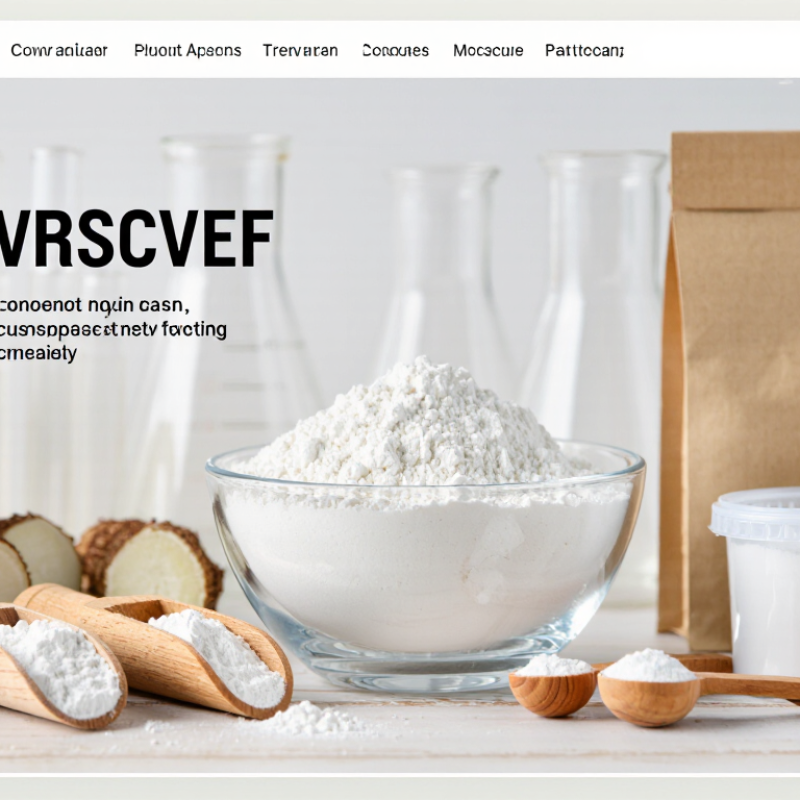
Organic arrowroot powder is a fine starch made from the rhizomes of the arrowroot plant. It usually comes from Maranta arundinacea, a tropical plant cultivated for its underground roots. Processors wash, peel, grate, and mix the roots with water. The starch settles naturally before filtration and drying. The result feels silky between the fingers and looks bright white.
In practical cooking, arrowroot powder works as a gentle thickener for sauces, soups, fruit fillings, and desserts. A small spoon can create a smooth texture. It thickens quickly, so high heat may reduce its effectiveness. Unlike some grain-based starches, it is naturally gluten-free. However, shared processing equipment can still create contamination concerns. I once assumed every white powder performed identically. That assumption was wrong.
“Organic” describes farming and processing standards, not guaranteed nutritional superiority. Reliable suppliers should provide current organic certification and clear origin details. Batch testing can help verify purity, moisture, and unwanted residues. Packaging matters too. Moisture, heat, and strong odors can damage its delicate texture. For buyers comparing suppliers, consistent milling and traceable batches are practical quality signals. The best powder should dissolve evenly without a stale smell or gritty residue. Still, “best” depends on the recipe, certification needs, and storage conditions. A careful choice requires checking documents, not trusting appearance alone.
How to Evaluate Organic Arrowroot Powder Suppliers in China
Evaluating organic arrowroot powder suppliers in China requires more than comparing export prices. Start with the raw material trail. A reliable supplier should identify the growing region, harvest season, processing site, and lot number. Ask for current organic certificates, not scanned documents from an old shipment. Check the certifier, certificate scope, and expiration date. Small details matter. Request a sample from the same lot proposed for production. Examine its color, aroma, fineness, moisture, and dispersibility in water. Natural variation is normal, but unexplained differences deserve questions.
Professional verification should include a recent certificate of analysis. Review microbiological results, heavy metals, pesticide residues, moisture, and foreign matter. Test methods should be named clearly. Independent laboratory reports add confidence, especially when results seem unusually perfect. Ask how workers control cross-contact during milling and packing. The facility should provide cleaning records, allergen controls, pest-control logs, and metal-detection checks. A video tour helps, but it cannot replace an on-site audit. Photos can be staged. Records are harder to fake.
Evaluate communication as carefully as the powder. Good suppliers answer technical questions directly and disclose limitations. Confirm minimum order quantity, lead time, packaging material, storage conditions, and complaint handling in writing. I once focused too heavily on price and overlooked weak batch documentation. That mistake could have delayed approval. A second sample and a small trial order may reveal consistency better than a polished sales presentation. Ask for references from comparable buyers when confidentiality permits. Some suppliers may not have perfect English. That is manageable. Vague answers are not.
China’s Top 10 Organic Arrowroot Powder Suppliers
China’s Top 10 Organic Arrowroot Powder Suppliers should be judged by evidence, not polished catalogues. Arrowroot is usually sold as a fine, pale starch, but quality can change with soil, drying temperature, and milling speed. FiBL and IFOAM reported that global organic food sales reached about €135 billion in 2022. That growth increases demand, but it also makes verification more important.
A credible supplier should provide a valid Chinese organic certificate, production records, and batch-level traceability. Buyers should check moisture, ash, microbiological limits, pesticide residues, and foreign-matter controls. A recent market report from Grand View Research identifies clean-label starches as a growing ingredient segment, although arrowroot-specific figures remain limited. That gap matters. Some online market estimates appear too precise for such a specialised crop.
The strongest candidates among China’s top ten suppliers should offer sealed samples, recent certificates, and a clear factory address. Ask whether roots are washed with controlled water and dried on food-grade equipment. Request a certificate of analysis from an independent laboratory, not only an internal sheet. Packaging should protect the powder from humidity, especially during sea transport. A ranking is never perfect. Small farms may lack polished documentation, while larger processors may provide better paperwork but weaker product character. Sensory testing still matters: the powder should feel smooth, dissolve evenly, and show no musty smell. Suppliers that accept audits and explain limitations deserve closer attention.
Supplier Comparison: Certifications, Quality, Pricing, and Capacity
When comparing China’s top ten organic arrow root powder suppliers, certification should be checked before price. Request a current organic certificate, production address, certification scope, and expiry date. HACCP or ISO 22000 systems can indicate stronger process control, but they do not replace organic verification. Ask for a recent COA covering moisture, microbiological limits, heavy metals, pesticide residues, and mesh size. A clear traceability code should connect the powder to its harvest and processing batch.
Quality becomes visible in small details. Good powder should show a consistent cream color, mild root aroma, and smooth texture after sieving. Request samples from two or three batches, not one attractive sample. Compare moisture after shipping, because damp packaging can change flowability and shelf life. Pricing usually depends on organic raw material availability, processing depth, packaging, order volume, and testing requirements. The cheapest quotation may exclude laboratory analysis or export-grade packing. Capacity also needs evidence. Ask for monthly output, current utilization, lead time, and backup drying arrangements. Large capacity sounds reassuring, yet consistency can weaken during peak harvest periods.
Tips: Put certification, COA, sample testing, price, minimum order quantity, and lead time in one comparison sheet. Visit or independently audit the facility when practical. I have found that written claims often look stronger than production records. That gap deserves attention. Also, do not treat a single successful sample as proof of permanent quality. Supplier performance should be reviewed across several shipments.
How to Select the Right Chinese Arrowroot Powder Supplier
How to Select the Right Chinese Organic Arrowroot Powder Supplier
China’s organic food market is expanding, but supplier quality remains uneven. FiBL and IFOAM reported that global organic sales reached €134.8 billion in 2022. This growth increases the need for careful ingredient verification. Ask for the arrowroot’s botanical name, farming region, harvest season, and processing method. Genuine suppliers should provide valid organic certificates covering the exact facility and product scope. A certificate alone is not enough.
Request recent certificates of analysis for several production lots. Check moisture, microbiological limits, heavy metals, pesticide residues, and identity testing. Arrowroot powder should have a fine texture, mild aroma, and consistent cream-white color. Unexpected grayness or a starchy odor deserves investigation. Independent laboratory testing is useful, especially before a large order. Codex organic principles and ISO 22000-based food safety systems can guide your audit questions. Also review traceability records from farm intake to sealed cartons.
Look beyond the lowest quotation. It may reflect efficiency, or hidden compromises. Ask about minimum order quantity, lead time, packaging liners, storage temperature, and complaint handling. A reliable Chinese supplier should share production photos, batch records, and export documentation without resistance. Request a small sample first. My own caution is simple: supplier communication can look excellent before payment, yet become slow after a quality dispute. Written specifications, agreed tolerances, and retained samples reduce that risk. Availability data should be checked again before signing, because seasonal supply changes quickly.
China Top 10 Organic Arrow Root Powder Suppliers - How to Select the Right Chinese Arrowroot Powder Supplier
| No. | Supplier Evaluation Dimension | What to Verify | Practical Benchmark or Requirement | Recommended Evidence | Why It Matters |
|---|---|---|---|---|---|
| 1 | Organic Certification | Confirm that the finished arrowroot powder, not only the farm or raw material, is covered by a valid organic certificate. | Certificate should identify the product, processing site, scope, validity period, and applicable market standard, such as China Organic, EU Organic, or USDA Organic. | Current certificate, certification-body details, product scope, and certificate-verification record. | Prevents unsupported organic claims and reduces regulatory and import risks. |
| 2 | Botanical Identity | Verify that the raw material is arrowroot from Maranta arundinacea, rather than cassava, kudzu, tapioca, or another starch source. | The scientific name, plant part, country of origin, and processing description should be consistent across the specification and laboratory documents. | Approved raw-material specification, supplier declaration, traceability records, and identity-testing information. | Protects product authenticity and supports accurate labeling. |
| 3 | Food-Safety System | Assess whether the processing facility operates a documented food-safety management system. | Prefer a valid third-party system certification such as ISO 22000, FSSC 22000, or BRCGS, where appropriate for the destination market. | Audit certificate, latest audit summary, HACCP plan, sanitation procedures, and corrective-action records. | Shows that hazards are identified, controlled, monitored, and reviewed systematically. |
| 4 | Microbiological Control | Check testing for total plate count, yeast and mold, coliforms, and relevant pathogens. | Acceptance limits must follow the destination country’s food regulations and the buyer’s product specification; no single global limit applies to every market. | Recent batch-specific certificate of analysis from a competent or accredited laboratory. | Powdered botanical ingredients can be exposed to environmental contamination during drying, milling, and packing. |
| 5 | Contaminant and Residue Testing | Review pesticide residues, heavy metals, mycotoxins, allergens, and other contaminants required for the target market. | Testing panel should be risk-based and aligned with the importing country, product use, and organic-production requirements. | Full laboratory report with methods, detection limits, sample identification, and test date. | Helps demonstrate compliance with food-import rules and customer safety requirements. |
| 6 | Product Specification | Compare appearance, color, odor, taste, moisture, particle size, and other agreed quality parameters. | The specification should define measurable limits and test methods instead of using only terms such as “premium” or “high quality.” | Signed technical data sheet, retained sample, batch COA, and change-control procedure. | Reduces variation between shipments and supports consistent formulation performance. |
| 7 | Processing and Additive Status | Determine whether the powder is simply dried and milled or has undergone additional treatment. | The supplier should disclose carriers, bleaching agents, preservatives, anti-caking agents, irradiation, and any other processing aid. | Process flow chart, ingredient declaration, additive statement, and organic-compliance statement. | Ensures that the product matches clean-label, organic, vegan, or allergen-free requirements. |
| 8 | Traceability and Batch Control | Check whether finished goods can be traced back to the raw-material lot and processing records. | Each shipment should have a lot number, production date, best-before date, and linked quality records. | Traceability exercise, batch records, warehouse logs, and recall procedure. | Enables faster investigation, targeted recalls, and reliable inventory management. |
| 9 | Packaging and Shelf Life | Evaluate packaging material, moisture protection, sealing method, storage conditions, and shelf-life support. | Packaging should be food-contact suitable for the intended use and protect the powder from moisture, contamination, light, and odor transfer. | Packaging specification, migration or compliance documents where required, stability rationale, and storage instructions. | Proper packaging helps preserve quality during ocean freight, warehousing, and final use. |
| 10 | Export Capability and Commercial Terms | Assess minimum order quantity, sample policy, lead time, Incoterms, payment terms, documentation, and communication quality. | Commercial terms should be written clearly, and export documents should match the product, lot, packaging, and destination requirements. | Quotation, proforma invoice, sample approval record, packing list, commercial invoice, and agreed delivery schedule. | A transparent process reduces delays, unexpected costs, and documentation disputes. |
Related Posts
-
5 Tips to Source Quality Organic Arrow Root Powder for Global Markets
-

How to Unlock the Benefits of Premium Natural Herb Extract for Your Health
-
How to Source Organic Tomato Powder in 2026?
-
How to Source High Quality Green Coffee Bean Powder Globally?
-
The Ultimate Guide to Sourcing the Best Panax Ginseng Powder for Your Business Needs
-
Why Is Apple Extract Beneficial for Your Health?
