What Are Mesh Bags Used For?
Mesh Bags are simple, but their uses extend well beyond carrying groceries. Their open weave makes contents easy to see and can allow airflow, depending on the material and mesh size. That makes them useful for produce, laundry, toys, travel items, and small sports gear. The right bag depends on what it must hold, how often it will be washed, and how much weight it can safely carry.
The wider context is worth noting. UNEP’s Food Waste Index Report 2024 estimates that 1.05 billion tonnes of food were wasted worldwide in 2022 across households, food service, and retail. FAO estimates that 13.2% of food was lost after harvest and before retail in 2021. These figures describe complex supply chains, not a problem that one shopping bag can solve. Still, they show why practical handling and storage choices deserve attention.
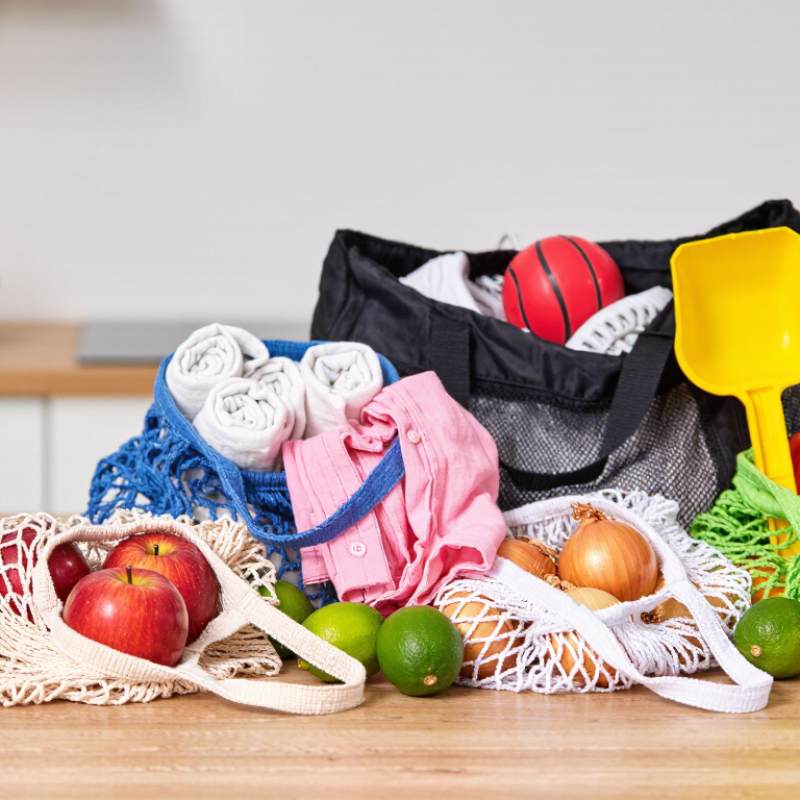
For everyday use, a mesh produce bag can keep apples, onions, or citrus together while leaving them visible. A washable laundry bag can separate socks or delicate garments; a drawstring version can gather beach toys after a windy afternoon. Small details matter. Check seams, closures, fabric strength, and care instructions before relying on a bag for heavier loads. Mesh is not a cure-all: it may offer little protection from moisture, dirt, or crushing, and some items need solid-sided storage. The useful question is not whether Mesh Bags work for everything, but which design suits a specific task—and where another container is the better choice.
What Mesh Bags Are and How They Are Made
Mesh bags are containers made from a net-like material with open spaces between strands. These openings let air and water pass through, while the bag still holds items in place. They are commonly made from synthetic fibers such as polyester or nylon, or from natural fibers such as cotton. The choice affects strength, stretch, drying time, and feel. Air passes through. That matters when damp produce or sports gear needs ventilation, though mesh does not protect contents from dust or fine debris.
Manufacturing begins with fiber formation: strands are knitted or woven into a mesh pattern. Knitting can create a flexible fabric, while weaving may produce a more structured one; the result depends on the yarn and design. The fabric is cut to size, then the edges are joined with stitching or heat sealing, depending on the material. Handles, zippers, or drawstrings may be added. A small snag can spread, so seams and stress points deserve careful inspection. Still, a neat-looking seam alone does not prove a bag will last. Mesh size, fiber quality, and how the bag is loaded all matter. There is no single construction that suits every use.
How Mesh Design Supports Airflow and Visibility
Mesh bags are useful when contents need airflow or quick visual identification. Their open weave lets air move through the sides, unlike a solid fabric pouch. A damp swimsuit or freshly washed produce can dry more readily when moisture is not sealed inside. Drying still depends on airflow around the bag and how tightly it is packed.
You can see what is inside. That helps when sorting laundry, finding small toys, or checking items in a pantry without unpacking everything. Larger openings improve visibility but may let small objects slip through, so match the mesh size to the contents. A drawstring also keeps items together, though it can snag if left loose.
Mesh has limits. It does not protect delicate contents from dust, odors, or pressure as well as a closed bag. And a crowded bag blocks airflow. Not a cure-all. For reusable food bags, wash them according to their care instructions and let them dry fully between uses. I sometimes expect mesh to solve a damp-storage problem by itself; it cannot. The bag’s cleanliness, material, and storage spot matter too.
What Are Mesh Bags Used For? How Mesh Design Supports Airflow and Visibility
| Common Use | How the Mesh Helps | Airflow Benefit | Visibility Benefit | Practical Consideration |
| Produce shopping and storage | Open-knit fabric holds items while leaving much of the surface uncovered. | Air can circulate around produce, helping reduce trapped moisture compared with a sealed bag. | Contents can be identified without opening the bag. | Mesh does not preserve food by itself; follow appropriate storage guidance for each type of produce. |
| Laundry and delicate garments | A mesh pouch separates smaller or delicate items from the rest of a load. | Wash water and detergent can pass through the openings during a wash cycle. | The contents are easier to check before and after washing. | Choose a bag with openings small enough to contain the items, and follow garment care labels. |
| Beach and outdoor gear | Mesh carries towels, toys, or other gear while allowing loose debris to fall away. | Wet items can receive more air circulation than they would in a closed bag. | Items are easy to spot when the bag is open or hanging. | How much sand or debris passes through depends on the size and shape of the mesh openings. |
| Sports equipment | A ventilated bag holds items such as balls, pads, or training accessories together. | Air can move around stored equipment, which may help damp items dry more readily. | Equipment can be checked at a glance without unpacking everything. | Allow wet gear to dry fully when possible; a mesh bag does not prevent odors or mildew on its own. |
| Toys and household storage | Mesh keeps grouped items contained while making the contents visible. | Open fabric allows air to circulate around stored objects. | Visible contents make it easier to find items and check what is inside. | Use an opening size suited to the items being stored; small objects may slip through larger openings. |
| Reusable shopping and carrying | A flexible mesh body expands around groceries or everyday items. | Open construction allows airflow around the load rather than sealing it in. | The contents remain visible through the bag. | Mesh may not contain liquids or very small items, so use a separate container when needed. |
Specialized Uses in Retail, Industry, and Healthcare
In retail, mesh bags help keep products visible while allowing air to circulate. Stores use them for produce, small accessories, and grouped items such as toys or hardware. A shopper can see the contents without opening the bag. Retail teams can also sort stock by size or type, though very small items may slip through coarse openings.
In industrial settings, mesh bags can hold washable components during rinsing, drying, or parts handling. Their open weave lets water and air pass through, which can reduce trapped moisture. In healthcare facilities, suitable mesh bags may contain reusable linens during collection and sorting, when facility procedures allow. Mesh does not make an item sterile. Material choice, closure strength, and cleaning instructions all matter. It is easy to overlook the seams.
Tips: Match the mesh opening to the smallest item inside, and check for snags or worn seams before reuse. For healthcare or industrial tasks, follow the facility’s handling and cleaning procedures. Mesh is useful, but it is not right for every load.
How to Choose and Care for a Mesh Bag
Choose a mesh bag for its job, not just its appearance. For produce, look for open, sturdy mesh, reinforced seams, and a closure that stays shut when the bag is full. For laundry, finer mesh helps separate delicate items and reduce snagging, though it may not catch every loose fiber. Fit matters. A bag packed tightly is harder to rinse and puts extra strain on seams.
Material can guide care. Textile Exchange’s Materials Market Report 2024 estimates global fiber production reached 124 million tonnes in 2023, with polyester accounting for 57 percent. That figure reflects the wider textile market, not mesh bags alone, but it shows why checking a bag’s fiber label is useful. Wash reusable bags according to their care instructions; use mild detergent, rinse away residue, and air-dry when suitable. Inspect the seams and drawstring before each use. Small tears spread. I’ve found that bags often wear first at the corners, a detail that is easy to miss. Replace one when damage makes it unreliable, rather than assuming every mesh bag can handle the same load or cleaning method.