
top of page

Top Water Purification Unit Suppliers for Global Buyers

Choosing a Water Purification Unit supplier is a practical decision with public-health consequences. The WHO/UNICEF Joint Monitoring Programme reported that 2.2 billion people lacked safely managed drinking water in 2022. That figure comes from its Progress on Household Drinking Water, Sanitation and Hygiene 2000–2022 report, published in 2023. It signals a continuing need for dependable treatment systems, not a guarantee that one product fits every site. Source-water tests, daily demand, power supply, and maintenance access all shape the right specification.

For global buyers, supplier comparisons should go beyond capacity claims and polished product sheets. Ask for test results tied to the exact model, documented replacement intervals, spare-parts availability, and clear commissioning support. Verify that certifications apply to the intended product and market; a logo alone is not enough. The UNESCO World Water Development Report 2024 also frames water security as a growing shared challenge, reinforcing the value of resilient infrastructure and informed procurement. Yet reports cannot predict every field condition. A unit that performs well in a laboratory may need adjustment when feedwater changes or local servicing is limited. That detail is easy to underestimate. This guide introduces leading supplier options and practical checks for assessing performance, service capability, and long-term fit. The best choice is not always the largest system. It is the one whose evidence, support, and operating requirements match the buyer’s actual conditions.
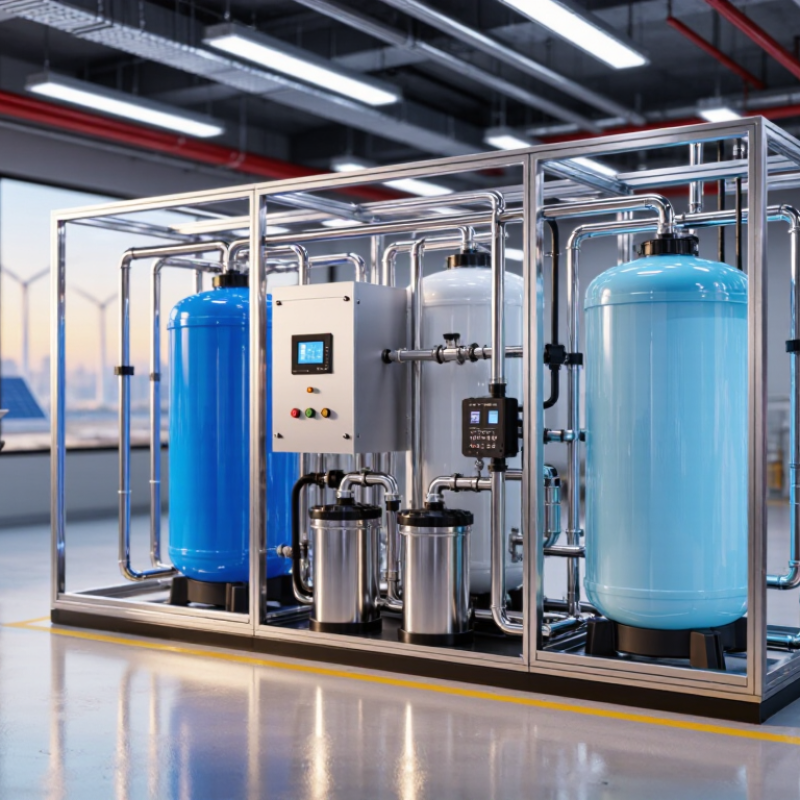
Top Water Purification Unit Suppliers for Global Buyers

Water Purification Units: Types, Uses, and Core Technologies

Water purification units range from compact countertop systems to high-flow industrial skids. Their design depends on the source water, daily demand, and contaminants that testing identifies. Sources differ. Sediment filters capture sand and rust, while activated carbon reduces chlorine, odors, and some organic compounds. Reverse-osmosis units use a membrane to remove many dissolved salts and other substances. Ultraviolet treatment can inactivate microbes, but it does not remove particles or dissolved chemicals.

These systems serve homes, clinics, food-processing facilities, and remote work sites. A household unit may supply drinking water at a sink; a larger installation may treat process water continuously. Some projects combine filtration, membrane treatment, and UV disinfection. The order matters. Cloudy feed water can foul a membrane, so pretreatment and scheduled maintenance are not optional details. Operators should check pressure, flow, and filter condition, then compare results with laboratory water tests.

For global buyers, suppliers should explain rated capacity, replacement parts, installation needs, and service support in the destination region. Ask how performance changes with temperature and variable feed-water quality. A specification sheet alone may not reveal daily operating costs. Even a well-designed unit can disappoint if local staff cannot maintain it. That is easy to overlook.

How Global Buyers Define Supplier Requirements

Top Water Purification Unit Suppliers for Global Buyers

How Global Buyers Define Supplier Requirements

Global buyers should assess a purification unit by its operating conditions, not just its headline flow rate.

The WHO/UNICEF Joint Monitoring Programme reported that 2.2 billion people lacked safely managed drinking water in 2022, in its 2023 report, Progress on Household Drinking Water, Sanitation and Hygiene 2000–2022. Reliable treatment and maintenance are practical procurement priorities.

Start with a source-water profile. Turbidity after rain, salinity, iron, and microbial indicators can affect process selection. Ask suppliers for performance data across your actual feed-water range, not only ideal laboratory conditions.

WHO’s Guidelines for Drinking-water Quality (2022) sets out health-based targets and water safety planning. Buyers can use this framework to request test methods, sampling frequency, and clear acceptance limits.

Specify daily demand, peak-hour flow, power stability, consumables, and operator skills. Small details matter. A cartridge available only through slow overseas shipping can turn a minor fault into weeks of downtime.

Compare lifecycle costs, then verify performance claims through independent testing where feasible. A neat specification can still miss local realities: heat, dust, and uneven operator training are difficult to model. Ask for a site trial. Request commissioning records, spare-parts lead times, and a written maintenance schedule.

Leading Suppliers by Market, Product Range, and Specialization

Top Water Purification Unit Suppliers for Global Buyers

Supplier choice depends on the water source, intended use, and local operating conditions. Municipal buyers may need high-throughput systems with robust pretreatment, while clinics often prioritize compact units and clear maintenance routines. In coastal facilities, corrosion-resistant fittings matter. Small details add up.

Market specialization can reveal useful differences. Suppliers serving industrial clients may offer systems for process water, with staged filtration and monitoring instruments. Providers focused on remote communities may prioritize simple controls, locally available replacement filters, and training for operators. Product range also matters: a supplier offering pretreatment, membranes, and disinfection options can help buyers plan a more integrated installation. But a broad catalog alone proves little.

Ask for performance data tied to the feed water you actually have, not only ideal test conditions. Check documented flow rates, contaminant reduction claims, service intervals, and spare-part availability. A site visit or reference installation can show how equipment handles daily use. It may still not predict every problem. Water quality shifts, and even a sound specification can miss practical constraints such as limited floor space or inconsistent power. Reliable suppliers explain those trade-offs plainly and provide support that matches the buyer’s location.

How to Compare Supplier Quality, Capacity, and Service

Comparing water purification suppliers starts with your actual feedwater, not a polished brochure. Request recent independent lab results for turbidity, dissolved solids, iron, and microbial indicators. Check whether the proposed process addresses seasonal changes, not just one sample. Ask for proof. A pilot run can reveal fouling, pressure loss, or awkward maintenance access before installation.

Capacity figures need context. Compare guaranteed daily output with peak demand, operating hours, recovery rate, and expected downtime. UNESCO’s 2024 World Water Development Report estimates agriculture accounts for about 70% of global freshwater withdrawals, underscoring how local water competition can affect supply conditions. The WHO/UNICEF Joint Monitoring Programme reported that 2.2 billion people lacked safely managed drinking-water services in 2022. These figures do not predict a site’s needs, but they make local source reliability worth checking. A spreadsheet can still mislead.

Service quality is measurable. Request response-time commitments, technician coverage, spare-parts lead times, operator training, and a clear maintenance schedule. Ask for references from installations with similar feedwater and daily output. WHO’s Guidelines for Drinking-water Quality support risk-based water safety planning; suppliers should explain how their operating checks fit that approach. Paper is patient. A service plan that names no responsible contact deserves another look, even when the equipment specifications appear strong.

Top Water Purification Unit Suppliers for Global Buyers

Compare supplier quality, capacity, and service using a practical 1–5 evaluation scorecard.

Example scores illustrate a buyer evaluation framework, not verified ratings for specific suppliers. Assess quality through test reports and certifications, capacity through documented flow-rate and operating-condition data, and service through warranty terms, spare-parts availability, and response commitments.

International Sourcing: Compliance, Shipping, and After-Sales Support

Choosing a water purification unit supplier means checking more than price and rated capacity. WHO and UNICEF reported that 2.2 billion people lacked safely managed drinking water in 2022. The need is substantial. For buyers, the practical question is whether a unit’s tested configuration matches the water source, intended use, and destination market. Ask for model-specific test reports, materials information for water-contact parts, and clear documentation of applicable local requirements. A certificate alone does not prove that every configuration is covered.

Shipping deserves equal scrutiny. UNCTAD’s Review of Maritime Transport 2024 notes that more than 80% of world trade by volume moves by sea. Long transit can expose equipment to impact, moisture, or temperature extremes. Request crate dimensions, handling instructions, and written confirmation about protecting membranes and electronic controls. Small details matter. A delayed shipment can also complicate installation schedules, so confirm who handles customs documents and damage claims before dispatch.

After-sales support should be defined in writing, not left to friendly emails. Confirm spare-parts availability, warranty coverage, response times, and whether remote troubleshooting or local technicians are available. Ask for an illustrated maintenance schedule and replacement-part list; a clogged pre-filter should not require guessing which cartridge fits. A polished service promise can still be thin. Buyers should test it by asking for a sample response process and checking whether manuals are usable by the people who will maintain the unit.

Top Water Purification Unit Suppliers for Global Buyers - International Sourcing: Compliance, Shipping, and After-Sales Support

A brand-neutral sourcing comparison for evaluating water purification unit suppliers. Confirm product claims, regulatory applicability, delivery terms, and service commitments for the destination market before placing an order.

Evaluation Dimension Relevant Standard or Data Point Evidence to Request Global Buyer Check
Contaminant-reduction claims NSF/ANSI 42 covers aesthetic effects such as chlorine taste and odor; NSF/ANSI 53 addresses specified health-related contaminant-reduction claims; NSF/ANSI 58 applies to reverse osmosis systems. Current certification listing or complete test report showing the exact model, tested claims, and applicable standard. Match each claimed contaminant to the tested model. A standard number alone does not prove that every contaminant is reduced.
Materials in contact with drinking water NSF/ANSI/CAN 61 evaluates health effects of drinking-water system components and materials. Documentation identifying the covered components, materials, model variants, and certification scope. Check local acceptance requirements; component coverage may differ from certification of a complete treatment unit.
Quality management ISO 9001 is a quality-management-system standard; it is not, by itself, a certification of water-treatment performance. Valid certificate, issuing body, scope, site address, and expiry or current-status details. Verify that the manufacturing site and relevant activities are within the certificate scope.
Destination-market compliance Requirements differ by market and product category. In the European Union, drinking-water rules include Directive (EU) 2020/2184; other product, electrical, and import rules may also apply. Market-specific compliance matrix, declarations where required, test reports, and instructions in required languages. Confirm obligations with the relevant authority or importer. Do not treat a general conformity mark as proof of drinking-water safety.
Rated capacity and operating conditions Compare rated flow or daily output, feed-water pressure, temperature, salinity, recovery rate, and stated test conditions. Technical data sheet and test results showing the conditions used to establish rated capacity. Compare like with like: output can vary with feed-water quality, pressure, temperature, and membrane condition.
Consumables and lifecycle cost Record filter or membrane part numbers, replacement intervals, service life assumptions, and consumable availability. Replacement schedule, spare-parts list, unit prices, and written availability or discontinuation policy. Calculate total ownership cost using the expected replacement frequency and local availability—not just the initial unit price.
Export documentation Common shipping documents include a commercial invoice, packing list, and bill of lading or air waybill. A certificate of origin may be needed for customs or tariff purposes. Sample document set, product description, HS classification proposal, package count, gross and net weights, and country-of-origin details. Have the importer or customs broker confirm tariff classification, import permits, and destination-specific documentation before dispatch.
Shipping terms and risk transfer Incoterms® 2020 rules allocate specified transport costs, responsibilities, and delivery risks; examples include FCA, FOB, CIF, and DAP. Written quotation naming the exact rule, named place or port, shipment mode, and Incoterms® edition. Check who arranges freight, export clearance, insurance, import clearance, and duties. FOB and CIF are intended for sea and inland-waterway transport.
Packaging and transit protection Confirm package dimensions, gross weight, palletization, moisture protection, and handling requirements for the chosen transport mode. Packing specification, carton or pallet dimensions, shipping marks, and photographs of export packaging. Check whether the shipment needs special handling and whether wooden packaging meets applicable import rules, including ISPM 15 where required.
Delivery planning Lead time should be split into production, inspection, export handling, transit, and destination clearance; actual transit time depends on route and service. Written production schedule, dispatch window, proposed route, freight mode, and delay-notification process. Use a shipment-specific schedule rather than an undifferentiated “delivery time” estimate, and allow for customs clearance and local delivery.
Warranty and after-sales support Compare warranty duration, covered parts and labor, exclusions, claim process, and response-time commitment. Written warranty terms, troubleshooting guide, service contact process, and parts-availability commitment. Confirm how claims are handled across borders, who pays return freight, and whether repair or replacement support is available locally.
Supplier verification and quality control Assess manufacturing capability, traceability, change control, and pre-shipment inspection arrangements. Factory audit information, sample inspection plan, serial or batch traceability method, and signed product specifications. Approve a production sample and acceptance criteria before mass production; require notice and approval for material design changes.

Note: Standards, certification scope, import rules, freight costs, and delivery schedules depend on the specific product, destination, and shipment. Verify current requirements and all supplier claims independently before contracting.

  • LinkedIn Social Icon

© 2024 by LIPOND INTERNATIONAL INC. All rights reserved. Blog

bottom of page