
Top 10 Veterinary Syringe Sets for Global Buyers
Choosing a Veterinary Syringe Set for international purchasing is not just a matter of comparing unit prices. The right configuration can support accurate dosing, comfortable handling, and orderly storage across clinics, farms, and mobile practices. Yet a polished product photo cannot show whether graduations remain easy to read under treatment-room lighting. Details matter.
This guide reviews ten options through practical buyer considerations: syringe capacity, scale clarity, plunger movement, materials, needle compatibility, and packaging. These features can affect daily workflow, especially when staff move between small-animal appointments and livestock procedures. Reusable and single-use designs serve different needs, so confirm intended use and cleaning guidance with the manufacturer. Do not assume. Request current specifications, sample images, and relevant quality documentation. Compare them with the needs of the people who will handle each set.
Global sourcing adds another layer. Consistent labeling, dependable supply, protective packaging, and responsive support can matter as much as price. Product availability and specifications may vary by market, so verify details directly rather than relying on broad catalog claims. The rankings that follow offer a starting point for comparison, not a substitute for clinical judgment or supplier checks. Some comparisons remain imperfect; product descriptions do not always reveal how a syringe feels after repeated handling. Where available, feedback from veterinary professionals and product samples can help buyers make a more informed choice.
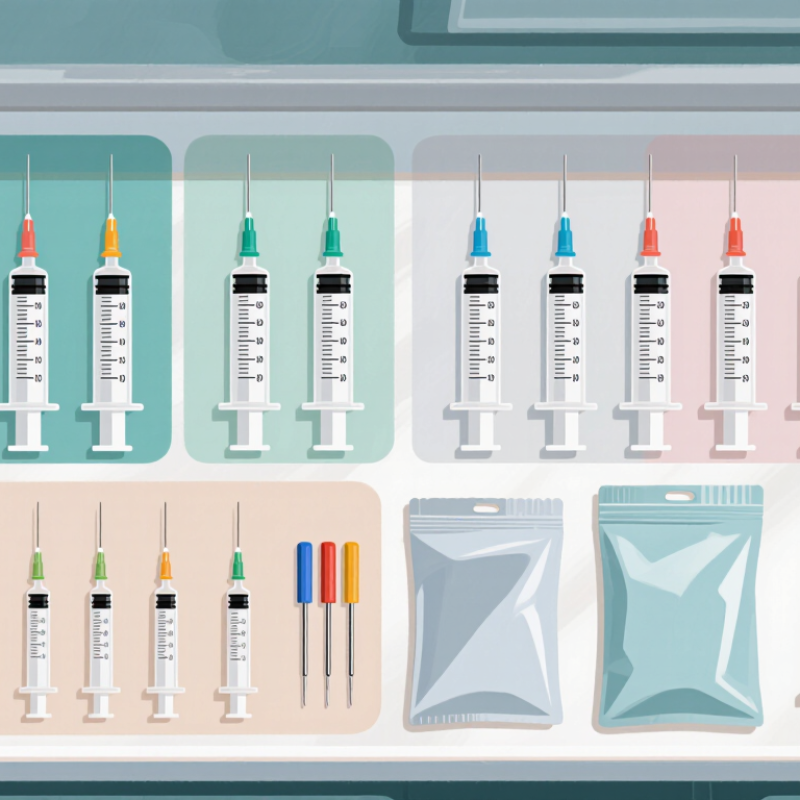
Veterinary Syringe Sets at a Glance: 10 Types by Task and Species
Small-volume insulin or tuberculin syringes support carefully measured doses in cats, small dogs, and young animals. Match the scale to the prescribed dose and medication concentration. A mismatch can create a serious dosing error. Luer-lock sets of 1–3 mL help secure needles for routine injections in companion animals. Sets of 5–10 mL suit larger measured doses, while 20–60 mL syringes are useful for some livestock procedures when directed by a veterinarian. Bigger is not automatically better.
Needle-free oral dosing syringes deliver measured liquids to puppies, kittens, or calves. Catheter-tip syringes can help with controlled flushing or fluid transfer when a clinician specifies the method. Wound-lavage sets deliver irrigation fluid over a selected area; use the fluid and technique recommended for the animal. Multi-dose vaccine syringes support repeated dosing in herd settings, while automatic repeat-dose sets can reduce handling time. Both need calibration checks and careful cleaning as their instructions require. Fit matters.
Poultry sets often use small-volume barrels and fine needles suited to the bird and injection route. Equine sets may need different barrel capacity and needle dimensions than small-animal sets. Species alone does not determine the right choice: route, tissue depth, animal size, and medication all matter. The categories overlap; real clinics rarely sort them neatly. Check graduations, connection type, sterility, and intended use before selecting a set, and ask a veterinary professional when the dose or route is unclear.
Capacity, Graduation, and Accuracy Under ISO 7886-1:2017
Top 10 Veterinary Syringe Sets for Global Buyers
Capacity, Graduation, and Accuracy Under ISO 7886-1:2017
A syringe set can look precise on a product sheet and still be awkward in a gloved hand. Buyers should compare nominal capacity, graduation spacing, and the smallest measurable dose. ISO 7886-1:2017 specifies requirements and test methods for sterile, single-use, manually operated hypodermic syringes. It offers a useful benchmark, but buyers should confirm that a veterinary product’s intended use and configuration fit the standard’s scope.
Check graduations against the doses the set must deliver. A 1 mL barrel with close, legible marks may serve small-volume tasks better than a larger barrel with coarse intervals. Inspect the plunger at the zero line, then check whether markings remain readable under clinic lighting. WHO’s 2010 injection-safety guidance cites an estimated 16 billion injections worldwide each year. That figure describes human healthcare, not veterinary demand, but it underscores why repeatable measurement and clear handling matter.
Ask suppliers for test records showing capacity and graduation accuracy, not only a conformity statement. Compare samples using the same liquid, lighting, and measurement method; viscous fluids can behave differently. Small detail. A scale that looks crisp in a catalogue may blur after handling. One weakness in this approach: a bench check cannot reproduce every animal-care setting, so field feedback still matters.
The Top 10 Formats: Disposable, Reusable, Drench, and Automatic Sets
Veterinary syringe sets vary by task, animal size, and handling conditions. Disposable sets offer a fresh barrel and needle for each use, which can simplify workflow and reduce cleaning steps. Reusable sets may suit repeated, compatible procedures, but require careful cleaning, inspection, and storage. Check graduations, connection fit, and material compatibility before use. Small details matter.
Drench sets are designed for measured oral fluids, often with a dosing barrel and an oral nozzle. Choose a size that allows controlled delivery for the animal being treated; follow a veterinarian’s directions to reduce handling risks. Automatic sets can deliver repeated doses with less manual refilling. Their settings need checking, and seals or moving parts can wear over time. Convenient, not foolproof.
Tips: Match capacity to the prescribed volume, and confirm graduations are easy to read under clinic lighting. Check for cracks, sticking plungers, loose fittings, or damaged seals before use. Follow the set’s cleaning and maintenance instructions, and keep a spare available when dosing is time-sensitive. There is no single best format; the right choice may change between animals, products, and working conditions.
Top 10 Veterinary Syringe Set Formats for Global Buyers
Illustrative examples of commonly available nominal barrel or reservoir capacities, in millilitres (mL)—not a market ranking.
Capacity varies by model and supplier. Select a format based on the required dose, dosing accuracy, material, cleaning needs, and intended animal use.
Materials and Quality Systems: ISO 10993 and ISO 13485:2016
For global buyers comparing veterinary syringe sets, material safety deserves more than a supplier’s “medical-grade” label. ISO 10993 provides a framework for biological evaluation, but it is not a single pass-or-fail certificate. Review the barrel, plunger, gasket, lubricant, and needle materials, then consider contact type and duration. A short-contact injection set may require a different evaluation from a reusable component. Ask for the biological evaluation rationale and test reports for the finished configuration, not only raw-material data. Details matter. A readable lot code on each pouch helps connect the product to its production records.
ISO 13485:2016 addresses the quality management system behind consistent manufacturing. Look for controlled drawings, validated assembly and sterilization processes where relevant, incoming-material checks, batch records, and documented corrective actions. These records help explain what happened if a seal leaks or graduations are hard to read. Confirm that the certificate scope covers the actual manufacturing site and relevant activities; a certificate alone does not prove every syringe set performs well. Ask how suppliers manage changes to polymers, molds, or subcontractors. Small changes can matter. Standards support evaluation, but they do not replace destination-market checks or clinical judgment for the intended animal and use. Compare evidence, and note when documentation leaves questions unanswered.
| # | Syringe-set configuration | Typical capacity / components | Common veterinary use | Typical materials | Buyer checks |
|---|---|---|---|---|---|
| 1 | Small-volume Luer-lock injection set | 1–3 mL syringe; detachable needle options | Measured injections where a secure needle connection is required | Typically polypropylene barrel and plunger; stainless-steel needle; elastomer seal where applicable | Graduation readability, connection fit, leakage, needle compatibility, and single-use labeling |
| 2 | Small-volume Luer-slip injection set | 1–5 mL syringe; slip-fit tip and compatible needle | Routine injections when the specified slip connection is suitable | Typically polypropylene syringe components and stainless-steel needle | Tip-to-needle fit, intended-use instructions, and leakage performance |
| 3 | Fine-graduation 1 mL syringe set | 1 mL; fine scale; fixed or detachable needle options | Small-volume dosing that requires clear, precise graduations | Typically polypropylene barrel and plunger; needle, if included, is commonly stainless steel | Scale interval, scale legibility, dose accuracy, and compatibility with the intended medication |
| 4 | General-purpose 3–5 mL injection set | 3 mL or 5 mL syringe; needle options by procedure | Common small-animal and general clinical injections | Typically polypropylene syringe body; stainless-steel needle; elastomer seal may be used | Capacity, graduation accuracy, needle specification, sterile barrier, and lot traceability |
| 5 | Medium-volume 10–20 mL injection set | 10 mL or 20 mL syringe; detachable needle or connector as specified | Higher-volume administration and clinical procedures requiring a larger barrel | Typically polypropylene barrel and plunger, with stainless-steel needle when supplied | Plunger movement, barrel markings, connection security, and pressure/leak testing |
| 6 | Large-volume 30–60 mL syringe set | 30 mL, 50 mL, or 60 mL; Luer or catheter-tip versions | Large-volume administration, aspiration, or fluid handling according to tip design | Typically polypropylene; seal material varies by design | Confirm tip type and intended use; assess barrel strength, seal integrity, and graduated capacity |
| 7 | Catheter-tip oral dosing set | Commonly 5–60 mL; wide tip, with optional oral dosing adapter | Oral administration of measured liquids; not intended for injection unless specifically labeled | Typically polypropylene syringe and tip; adapter materials vary | Clear oral-use identification, adapter fit, dose markings, and cleaning or disposal instructions |
| 8 | Irrigation syringe set | Typically 20–60 mL; irrigation or catheter tip | Wound or cavity irrigation where the device and solution are appropriate for the procedure | Typically polypropylene; tip configuration varies | Tip design, flow characteristics, intended-use labeling, and compatibility with the irrigation solution |
| 9 | Reusable glass syringe set | Capacity and connector depend on the system; may include reusable fittings | Repeated-use applications only when the syringe is designed and validated for reprocessing | Glass barrel with metal or polymer fittings and seals, depending on design | Reprocessing instructions, thermal and chemical compatibility, breakage inspection, and cycle-life limits |
| 10 | Reusable multi-dose injection set | Adjustable dose mechanism; capacity and needle arrangement vary by model | Repeated dosing workflows when the device is intended for that use and handled according to its instructions | May include metal, polymer, and elastomer components; exact composition is design-specific | Dose repeatability, adjustment lock, cleaning and maintenance instructions, and validated reusable life |
Global Buyer Checklist: Connections, Sterility, Traceability, and Compliance
For global buyers, a veterinary syringe set is only as dependable as its connections, sterile barrier, and paperwork. Check that the syringe hub fits the intended needle or extension line without looseness or leakage. Ask for clear labeling of capacity, graduations, material, and intended use.
WHO’s 2017 Medication Without Harm report estimates medication errors cost about US$42 billion worldwide each year. This estimate concerns human healthcare, not veterinary devices, but it highlights why dose accuracy and handling matter.
Sterility claims need evidence. Request the sterilization method, validation documentation, shelf life, and lot-specific release records. Inspect sample packaging for punctures, weak seals, or labels that become unreadable when handled with gloves. Traceability should connect each set to a batch record and supplier quality documents. Confirm that certificates cover the product and manufacturing site, not merely the supplier’s general operations. Requirements vary by destination market, so verify applicable device rules before ordering. Paperwork can look complete and still miss the product.
Tips: Test samples with the actual mating components used in your clinic. Record fit, leakage, and plunger movement. Keep lot numbers linked to purchase and use records. One practical lesson: teams sometimes overlook small connector differences until a busy treatment day. Build that check into receiving inspection.
