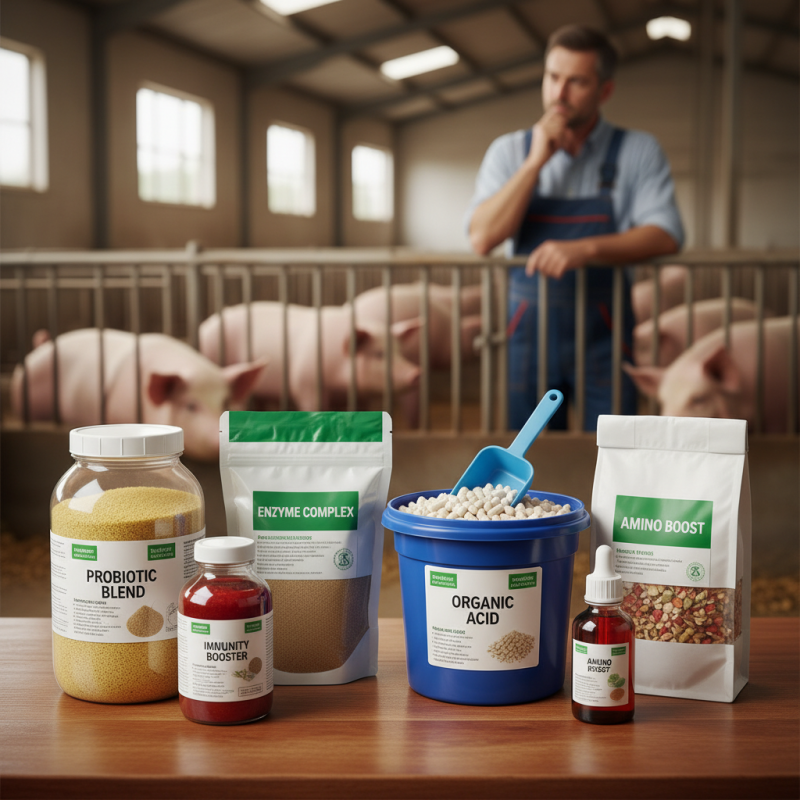
Top 5 Swine Feed Additives You Need to Know?
In modern pig farming, optimizing productivity and health is crucial. Swine Feed Additives play a pivotal role in achieving these goals. These additives are essential for enhancing growth, digestion, and overall well-being. They are not just optional; they are vital for success.
Selecting the right swine feed additives requires careful consideration. Each additive has specific benefits, such as improving feed efficiency or boosting immunity. Some farmers may struggle to understand which products truly deliver results. It’s important to avoid blindly following trends.
Realizing the potential pitfalls is vital. Over-reliance on additives can lead to unintended consequences. Thus, balance and knowledge are key aspects. Understanding the right combination can make all the difference in your swine operation.
Top 5 Swine Feed Additives You Need to Know
Swine feed additives play a crucial role in modern pig farming. In recent years, the global swine feed additives market has been valued at approximately $30 billion, reflecting its significance. Nutritional components are essential for improving growth and health. Additives like probiotics support gut health and enhance nutrient absorption. Studies indicate that probiotics can improve feed efficiency by up to 6%.
Enzymes are another critical category. They break down complex feed components, making nutrients more accessible. Research shows that using enzymes can increase weight gain by around 5%. However, not all enzyme products deliver equal results. There’s a critical need to evaluate their effectiveness on a case-by-case basis.
Also, vitamins and minerals are fundamental for optimal growth. Deficiencies can lead to serious health issues. Interestingly, some farms still underutilize mineral supplementation, despite clear evidence of their benefits. Regular monitoring and tailored regulation are necessary for effective applications. This is where many producers face challenges, reflecting the need for better education and resources in the industry.
Understanding the Role of Feed Additives in Swine Nutrition
Feed additives play a crucial role in swine nutrition. They enhance the health and productivity of pigs. According to a 2022 report by the Animal Nutrition Society, effective use of feed additives can improve feed conversion rates by 5-10%. This means pigs grow faster and utilize less feed. Nutrient absorption is also optimized, which is vital for overall health.
Many additives support gut health, which is essential for swine. Probiotics and prebiotics can reduce gut diseases. Research shows that swine fed with these additives experienced a 30% reduction in gastrointestinal disorders. It's important to select the right additives based on specific needs.
However, not all additives work well for every farm. The effectiveness can vary due to factors like feed composition and management practices. Some farmers report no significant changes in performance. Continuous research is needed to match the right additives with specific diets. Balancing costs with benefits is essential for maximizing returns in swine production.
Essential Vitamins and Minerals for Optimal Swine Growth
Vitamins and minerals play a crucial role in swine growth. Research indicates that deficiencies in these nutrients can lead to stunted growth and poor health in pigs. For example, vitamin D is essential for bone development. Pigs lacking this vitamin often experience rickets, a painful condition impacting mobility.
Minerals like zinc and manganese are also vital. These minerals support immune function and metabolic processes. A report from the National Swine Research Forum found that pigs receive a 12% growth boost when adequate zinc levels are maintained. Unfortunately, many commercial feeds do not provide sufficient quantities.
Producers often overlook the importance of proper mineral balance. This can lead to poor feed conversion ratios, costing farmers more in the long term. A study highlighted that a focused approach on micronutrient supplementation improved overall herd health. It's clear that to optimize growth, attention to vitamins and minerals is essential. Well-balanced nutritional strategies can enhance swine production effectively.
The Impact of Probiotics on Gut Health and Feed Efficiency
Probiotics play a vital role in swine nutrition. They help enhance gut health, which can lead to better growth and feed efficiency. Swine with healthy guts absorb nutrients effectively. This means that they can convert feed into energy more efficiently. Healthy pigs are also less prone to diseases, which benefits overall farm productivity.
Incorporating probiotics into swine feed can sometimes be challenging. Not all probiotics are created equal. Some may not survive the digestive process or may not provide the desired benefits. Farmers need to choose wisely. Monitoring the effects of probiotics on the herd is crucial. Each pig reacts differently. Results can vary, and there's no one-size-fits-all approach. This adds an element of unpredictability in feed management.
Despite these challenges, the potential advantages are hard to ignore. Improved gut health can significantly impact weight gain. Pigs may thrive with better feed conversion rates. Understanding the role of probiotics is essential. It requires ongoing observation and adjustment in feeding strategies. This quest for optimal performance may lead to a more sustainable approach in swine production.
Evaluating the Effectiveness of Antibiotics in Swine Feed
Antibiotics have long been a common choice in swine feed. They aim to improve health and growth rates. Many producers believe these additives lead to better feed efficiency. However, the effectiveness of antibiotics is under scrutiny. Some studies show diminishing returns over time. What worked a few years ago may not hold true today.
Resistance is a growing concern. Overuse of antibiotics in swine can contribute to resistant bacteria. This impacts both animals and humans. The ramifications of this issue are serious, requiring attention. Alternatives may be necessary. Probiotics and prebiotics show promise but require more research. Observing the effects of these alternatives can be enlightening.
Producers need to critically assess antibiotic use in swine feed. It is not a one-size-fits-all solution. Balancing efficacy and safety is key. Monitoring health outcomes is vital. Evaluating different feed additives can lead to better practices. The challenge remains to optimize the health of swine while minimizing risks.
Conclusion
Swine Feed Additives play a crucial role in optimizing swine nutrition, promoting growth, and enhancing overall health. This article outlines the top five essential additives, highlighting their benefits in swine diets. Understanding the essential vitamins and minerals required for optimal growth is fundamental, as these nutrients support development and immune function. Additionally, the impact of probiotics on gut health is discussed, demonstrating how they can improve feed efficiency and overall well-being in pigs.
Further, the effectiveness of antibiotics in swine feed is evaluated, considering both their benefits in promoting growth and the rising concerns around antibiotic resistance. Lastly, the article explores innovations in feed additive technology, providing insights into future trends that may revolutionize swine nutrition. These advancements promise to enhance feed efficacy and animal health, securing a sustainable future for swine production.