
top of page

China Top Self Heating Eye Mask Manufacturers

China has become a significant manufacturing base for Self-Heating Eye Mask products, serving wellness brands, retailers, and hospitality companies worldwide. Its supplier network includes large-scale factories, specialized OEM facilities, and smaller developers with flexible production lines.

However, “top manufacturer” should not mean the largest factory alone. A dependable partner must demonstrate stable heating performance, skin-friendly materials, hygienic packaging, and consistent batch control. Important details include activation time, average warmth, usable duration, fragrance formulation, and packaging integrity. Factory audits, sample testing, and documented quality procedures also matter.

Dr. Rebecca Robbins, a sleep scientist and associate professor at Harvard Medical School, has stated, “Sleep is not a luxury; it is a biological necessity.” Her principle helps explain why comfort and responsible product design deserve close attention. A Self-Heating Eye Mask should support relaxation without creating excessive heat, pressure, or irritation around the eyes.

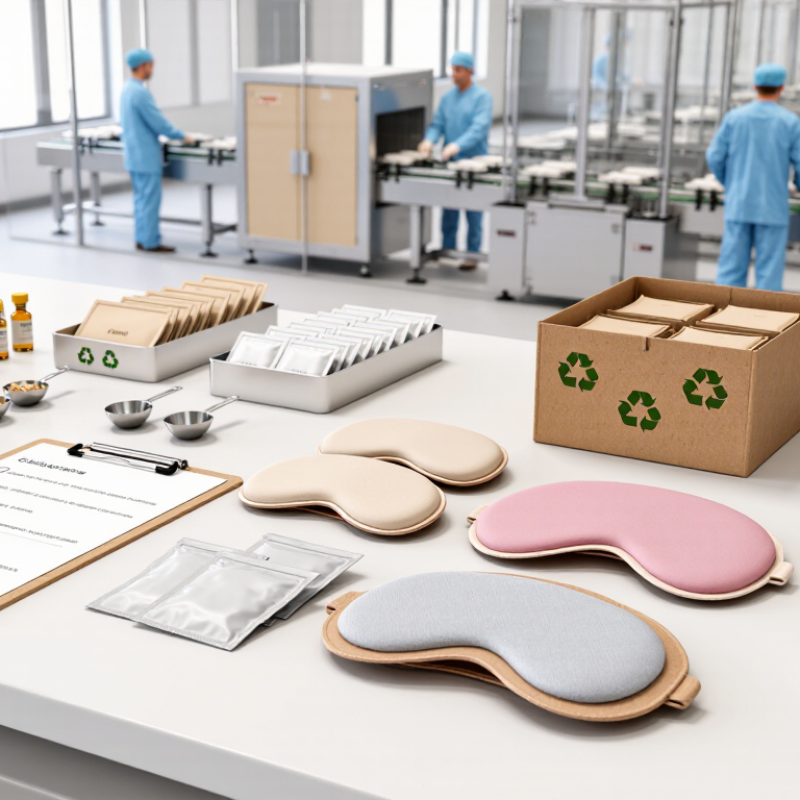
The strongest Chinese manufacturers usually combine automated sealing, controlled material sourcing, and experienced export teams. Some also provide private labeling, custom scents, shaped packaging, and recyclable options. Still, product brochures can look better than factory reality. That is worth remembering.

A careful evaluation should compare certifications, production capacity, inspection records, and customer feedback. It should also examine how suppliers respond when samples fail. Reliable manufacturers welcome technical questions and provide clear corrective actions. This guide introduces China’s leading Self-Heating Eye Mask manufacturers through practical criteria, not promotional language. Performance claims may vary, and independent verification remains necessary.
China Top Self Heating Eye Mask Manufacturers

What Are Self-Heating Eye Masks?

China Top Self Heating Eye Mask Manufacturers

What Are Self-Heating Eye Masks?

Self-heating eye masks are soft coverings designed to warm the eye area gently. Most disposable versions use iron powder, moisture, salt, and activated carbon. When exposed to oxygen, the powder oxidizes and releases heat. They usually reach about 38–42°C and remain warm for 15–30 minutes.

They warm gradually. This can feel soothing after long screen use or before sleep. However, the sensation is comfort, not medical treatment. The World Health Organization’s World Report on Vision states that at least 2.2 billion people have near or distance vision impairment. That figure does not prove eye masks improve vision. It shows why responsible product claims matter.

Market demand also connects with wider wellness habits. The Global Wellness Institute reported that the global wellness economy reached $5.6 trillion in 2022. Yet eye-mask market estimates differ widely between research firms, so manufacturers should avoid presenting uncertain forecasts as facts.

Temperature consistency, skin-contact testing, odor control, and clear usage instructions are more meaningful quality signals. Reusable models also require validated heating materials and safe cleaning guidance.

A practical limitation remains: some users may find the heat too strong, especially around sensitive skin. Manufacturers should test several comfort levels, not assume one setting fits everyone.

How Self-Heating Eye Masks Work

China Top Self Heating Eye Mask Manufacturers

How Self-Heating Eye Masks Work

A self-heating eye mask creates warmth through a controlled oxidation reaction. Inside the mask, finely processed iron powder meets oxygen after the package is opened. Moisture and salt help the reaction begin, while carbon materials support steady heat distribution. The iron gradually oxidizes, releasing thermal energy over time.

The mask usually contains several thin layers. One layer controls airflow, another spreads heat, and the soft outer fabric rests against the face. It should feel gently warm, not hot. In practical quality checks, temperature consistency matters as much as heating speed. A mask that heats unevenly may feel uncomfortable around the eyelids.

The process sounds simple, but performance can vary. Room temperature, storage conditions, and packaging quality all affect heating time. A responsible manufacturer should test temperature, duration, material safety, and seal strength before production. Users should inspect the pouch and avoid damaged products. People with sensitive skin or reduced heat sensation need extra caution. Do not use one over irritated skin. Never place it on an open eye.

Some descriptions claim the warmth improves relaxation or supports temporary comfort. Those effects can differ between users. More evidence and clearer testing would make such claims stronger.

How Self-Heating Eye Masks Work

Self-heating eye masks commonly use an iron-powder warming layer. When the sealed mask is exposed to oxygen, iron oxidation releases heat. The temperature typically rises gradually, remains warm for a comfort period, and then decreases as the reaction slows.

Key Features of China’s Leading Manufacturers

China’s leading self-heating eye mask manufacturers focus on controlled warmth, safe materials, and stable production. The World Health Organization reports that at least 2.2 billion people have near or distance vision impairment worldwide. This does not prove eye masks treat vision problems. It does show why responsible manufacturers avoid medical promises.

Reliable factories usually provide temperature testing, adhesive safety records, and batch traceability. Many use iron powder, activated carbon, salt, and moisture within sealed layers. Heat should rise gradually, not feel sharply hot. A 2024 Grand View Research report valued the global eye care market at more than USD 80 billion, with wellness products supporting consumer demand. That figure covers a broad category, not self-heating masks alone. This distinction matters. Some supplier claims remain too vague.

Strong manufacturers also offer OEM flexibility, low-defect inspection, and export documentation. Look for ISO 9001 quality systems, skin-contact material reports, and independent thermal tests. The best factories explain shelf life clearly. They also test packaging after transport. A weak package can activate the mask early. I would still question any “all-day relaxation” promise. Comfort varies between users.

Tips: Request a sample batch, not one perfect sample. Check the heat curve over 20 minutes. Confirm fragrance ingredients separately. Ask for test dates and laboratory names. Compare actual heating time with advertised heating time. Do not rely on appearance alone.

Materials, Safety, and Quality Standards

China’s self-heating eye mask manufacturers should treat materials as safety-critical components. Most formulas use iron powder, activated carbon, salt, water, and mineral fillers. Oxygen activates the mixture. Heat follows.

The 2023 ISO Survey recorded more than 1.4 million ISO 9001 certificates worldwide. However, certification alone cannot prove product quality. Factory audits should examine supplier traceability, weighing accuracy, moisture control, and seal strength.

Each production lot should provide heating-time records, surface-temperature results, and packaging integrity data. Small variations can change the user experience.

Skin contact requires stronger evidence. Manufacturers should assess irritation using ISO 10993-23, supported by documented biocompatibility risk evaluation. Testing should simulate actual wear, including sweat, pressure, movement, and the longest recommended use period. There is no universal safe temperature for every user. Sensitive skin, allergies, and extended exposure can alter the risk.

In practical inspections, I would also request safety data sheets, accelerated-aging records, and complaint trends. A warm mask should never smell sharply chemical, shed powder, or heat unevenly. Heat is not harmless. A 2024 global consumer health report from the International Trade Centre highlights rising expectations for traceable, compliant wellness products, but market growth does not replace testing. Certificates can look complete while lot control remains weak. That uncomfortable gap deserves attention.

How to Select a Reliable Chinese Manufacturer

China Top Self Heating Eye Mask Manufacturers

How to Select a Reliable Chinese Manufacturer

Choosing a reliable Chinese self heating eye mask manufacturer requires more than comparing quotations. I look for documented experience with personal care products, stable production capacity, and clear quality procedures. The factory should explain its heating technology, fabric composition, fragrance options, and storage requirements in plain language. Avoid vague answers.

Request product samples from different batches. Check heating time, surface temperature, odor, comfort, and package sealing. A practical test should include opening the pouch and measuring warmth at regular intervals. The temperature must remain comfortable around the eyes, not merely feel warm for a few minutes. Ask for material safety reports, production inspection records, and relevant compliance documents. Independent laboratory testing adds credibility.

Factory verification matters. Review equipment maintenance, worker training, warehouse conditions, and batch traceability. A dependable supplier should provide a written specification, defect standard, sampling plan, and corrective action process. Confirm minimum order quantities, sample fees, lead times, and export packaging before signing anything. I once focused too heavily on a low quotation and underestimated inspection costs. That was a useful mistake. Price is only one part of reliability. Communication speed also reveals operational discipline. If technical questions receive rushed replies, future quality discussions may become difficult. A video audit helps, but an on-site visit remains more convincing. Not perfect, but informative.

  • LinkedIn Social Icon

© 2024 by LIPOND INTERNATIONAL INC. All rights reserved. Blog

bottom of page