
top of page

Top Leaf Extraction Machines for Global Buyers

Leaf Extraction equipment sits at the meeting point of crop handling, process control, and product quality. Global buyers need more than a high-capacity machine. They need reliable throughput, cleanable contact surfaces, controlled temperature, and parts that can be serviced locally. Small design details matter. A clogged screen or uneven feed can slow an entire production line.

Market reports provide useful context, but not a purchasing shortcut. Grand View Research’s Botanical Extracts Market Size, Share & Trends Analysis Report tracks demand for plant-derived ingredients across several sectors. FAO’s World Food and Agriculture—Statistical Yearbook 2023 documents the scale and diversity of global crop production. Together, they point to a practical reality: buyers handle varied plant materials and changing market requirements. Neither report ranks extraction machines, so equipment claims still need independent testing.

Food-processing author Peter Fellows offers a useful principle, paraphrased rather than quoted verbatim: select equipment around the raw material and the required product quality. For Leaf Extraction, that means asking suppliers for throughput data tied to a named leaf type, moisture range, and operating condition. Request sanitation instructions, energy figures, warranty terms, and references from comparable facilities. Then inspect the machine under realistic conditions. A polished brochure is not a trial run. Some trade-offs remain, and buyers should document them before signing. A careful comparison can reveal whether a machine suits the crop, the operators, and the plant’s actual production goals.
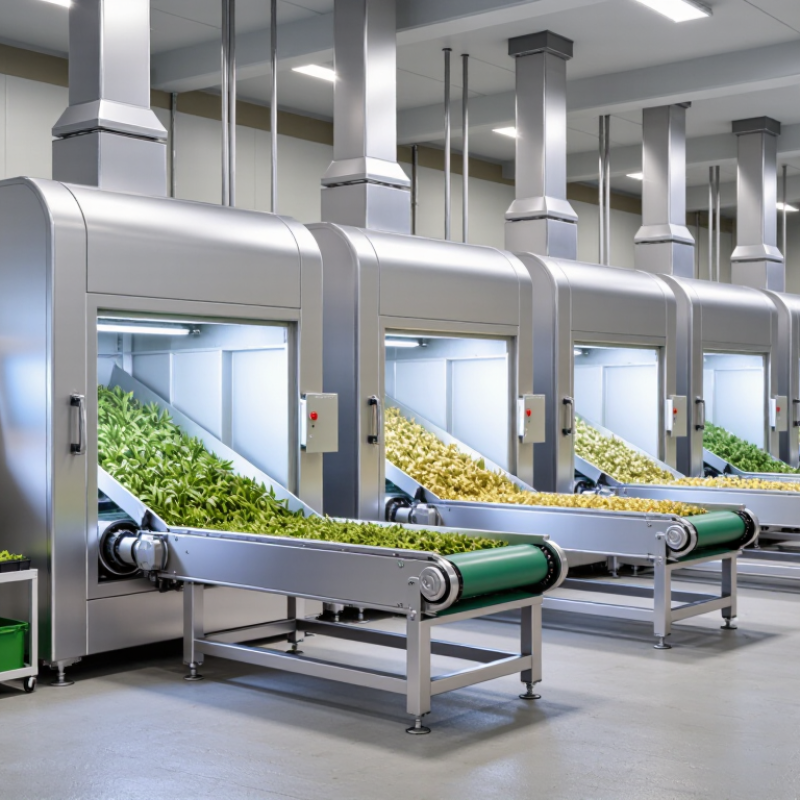
Top Leaf Extraction Machines for Global Buyers

What Leaf Extraction Machines Are and How They Work

Leaf extraction machines are processing systems designed to separate useful compounds or juices from leafy plant material. Their exact layout depends on the intended product, the leaf type, and whether extraction relies on pressing or a liquid medium. A typical line may include a cutter, extraction vessel, agitator, pump, and filter. Each part has a clear job.

In a liquid-based system, prepared leaves meet water or another suitable, food-grade extraction medium in a closed vessel. Gentle mixing helps the liquid contact more leaf surfaces. The mixture then passes through a screen or filter to remove fibrous solids. Some systems include a later concentration stage. Moisture changes everything. Wet leaves can dilute the mixture, while overly fine cutting may make filtration slow and difficult. Temperature, contact time, and agitation also affect the result, so operators usually test settings with the actual leaf material rather than assume one recipe fits all.

For buyers, useful details include vessel capacity, contact surfaces, filtration design, and how easily the machine can be cleaned between batches. Ask how the system handles leaf residue, since it can collect around screens and valves. Not always neatly. A machine’s stated capacity alone may not predict real output; leaf density and preparation matter, too.

Major Machine Types and Their Typical Applications

Leaf extraction equipment falls into several practical groups. Jacketed stirred tanks use hot water or approved food-grade solvents to draw soluble compounds from chopped leaves. They suit tea, herbal infusions, and pilot batches where operators need to control temperature and steeping time. Percolation systems pass liquid through a packed bed of leaves, making them useful for continuous or repeatable production. Ultrasonic units use sound waves to improve liquid contact with leaf particles. They can shorten processing, though results depend on leaf size and mixture depth. Small differences matter.

Pressurized extraction units fit facilities seeking faster cycles and tighter process control, while screw presses are better suited to squeezing juice from fresh, high-moisture leaves. These machines do different jobs; a press is not a substitute for a solvent extractor. FAOSTAT records roughly 6.5 million tonnes of tea produced worldwide in 2022. That scale makes equipment choice relevant to large processors, but the figure is not a measure of extract demand. Buyers should compare usable batch volume, cleanability, temperature control, and filtration needs. A common oversight is sizing only for peak output. Wash-down time and wet-leaf handling can quietly limit daily throughput. The right choice still depends on the target extract and the available process data.

Top Leaf Extraction Machines for Global Buyers - Major Machine Types and Their Typical Applications
Machine Type Extraction Principle Suitable Leaf Materials Typical Applications Typical Output Key Selection Considerations
Agitated solvent extraction tank Dried or fresh leaves are mixed with a suitable solvent in a heated or unheated vessel; the liquid extract is then separated from the plant solids. Many dried botanical leaves, including tea and herb materials, depending on the target compounds and solvent. Production of liquid botanical extracts for food, beverage, cosmetic, and herbal-product processing. Liquid extract or concentrated extract after downstream filtration and solvent recovery. Check solvent compatibility, agitation, temperature control, filtration needs, cleaning access, and appropriate safety provisions for the selected solvent.
Percolation extractor Solvent passes through a packed bed of prepared leaves, dissolving soluble compounds as it flows through the material. Dried, comminuted leaves that can be loaded into a permeable bed without excessive compaction. Herbal tinctures and other liquid extracts where controlled solvent flow through the plant material is useful. A liquid extract, often collected in stages for further processing. Particle size, bed packing, flow rate, solvent distribution, and the risk of channeling affect extraction consistency.
Steam distillation unit Steam carries volatile compounds from the leaves; the vapor is condensed and the oil is separated from the aqueous phase. Aromatic leaves containing steam-distillable volatile compounds, such as mint, rosemary, and eucalyptus leaves. Recovery of essential oils and aromatic water for fragrance, flavor, and personal-care applications. Essential oil and hydrosol; yield and composition vary with the plant material and operating conditions. Consider steam supply, condenser capacity, plant-bed loading, heat sensitivity, and the need for oil-water separation.
Supercritical COâ‚‚ extractor Carbon dioxide above its critical temperature and pressure acts as a tunable extraction medium; pressure reduction allows the COâ‚‚ to separate from the extract. Dried, prepared leaves with target compounds that are soluble under the chosen COâ‚‚ conditions; a co-solvent may be used for some targets. Selective recovery of oils, aromas, and other suitable plant compounds for food, fragrance, and specialty botanical processing. Concentrated extract with little or no residual COâ‚‚ after separation. Requires high-pressure equipment, trained operators, and pressure-safety systems; assess capital cost, vessel capacity, and target-compound solubility.
Ultrasound-assisted extractor Ultrasonic waves create cavitation in a liquid medium, helping the solvent contact plant tissues and release soluble compounds. Cut or milled leaves processed with a compatible liquid solvent. Batch or pilot-scale extraction of soluble botanical compounds when shorter processing time or improved mass transfer is being evaluated. Liquid extract for filtration, concentration, or further purification. Assess batch volume, ultrasonic power distribution, temperature rise, noise control, and whether the target compounds tolerate the process conditions.
Microwave-assisted extractor Microwave energy heats the material and extraction medium, supporting the release of compounds into the solvent or assisting the recovery of volatile components. Prepared leaves and a process medium suited to the chosen microwave extraction method. Laboratory, pilot, or specialized processing of botanical extracts and, in suitable configurations, aromatic compounds. Liquid extract or separated volatile fraction, depending on the system design. Check vessel design, pressure and temperature controls, uniform heating, batch size, and the thermal stability of the desired compounds.
Laboratory Soxhlet extractor Boiling solvent repeatedly condenses and passes through a sample before returning to the boiling flask, enabling continuous extraction in a laboratory setup. Small, dried, ground leaf samples used in analytical or method-development work. Laboratory determination or comparison of solvent-extractable material; generally not a production-scale machine. A small-volume solvent extract for laboratory analysis or testing. Consider solvent choice, extraction duration, sample preparation, ventilation, and laboratory safety requirements.

Note: The appropriate machine depends on the leaf material, target compounds, solvent or extraction medium, production scale, and applicable safety and regulatory requirements.

Key Performance Specifications for Global Buyers

For global buyers, compare leaf extraction machines by verified throughput, extraction yield, and product temperature—not motor power alone. Request capacity in kilograms per hour using your own leaf type and moisture range. A machine tested on dry leaves may perform differently with fresh, fibrous material. Check rotor speed, screen size, feed width, and power consumption together. These figures help explain whether the machine can handle uneven leaf sizes without excessive breakage. Ask suppliers to document cleaning time and the tools required. Small details matter during daily production.

FAO’s 2023 food-loss reporting estimated that 13.2% of food was lost between harvest and retail in 2021. That figure covers many crops and stages; it does not measure losses caused specifically by extraction equipment. Still, it highlights why buyers should track usable output, rejected material, and downtime during trials. Compare results across repeated runs, not just a single demonstration. A polished sample can hide inconsistent performance.

Tips: Test a representative batch before purchase. Record feed rate, output weight, temperature rise, and cleaning time. Leave room for uncertainty: seasonal moisture changes can shift real-world capacity.

How to Assess Suppliers, Certifications, and Import Requirements

Top Leaf Extraction Machines for Global Buyers

When assessing leaf extraction machine suppliers, look beyond polished brochures. Request a recent factory acceptance test, a parts list, and clear performance data for your leaf type, moisture level, and target throughput. Ask whether quoted capacity means fresh or dried leaves; the difference can distort production planning. Check the quality-management certificate’s scope and validity, then confirm that electrical and machine-safety documents match the destination market. A certificate alone does not prove the delivered machine meets local requirements.

Import planning deserves equal scrutiny. The World Bank’s 2023 Logistics Performance Index compares 139 economies across six areas, including customs and shipment timeliness. UNCTAD’s Review of Maritime Transport 2024 notes that ships carry over 80% of world merchandise trade by volume, so port delays can affect delivery schedules. Before ordering, ask a licensed customs broker to verify the tariff classification, duties, required declarations, and any conformity assessments for the destination country. One awkward detail: suppliers may not know every local rule, so verify independently.

Tips: Put voltage, materials, output assumptions, spare parts, warranty, and delivery terms in the purchase contract. Request dated document samples before paying a deposit. A video inspection helps, but it is not a substitute for testing.

Installation, Operation, and Routine Maintenance Needs

Installation quality shapes extraction consistency. Before commissioning, verify floor level, anchor points, electrical supply, drainage, and exhaust clearances against the machine drawings. Keep enough room to open guards and remove screens without lifting them over nearby equipment. Check that leaf-contact surfaces are cleanable and that emergency stops remain reachable from the operator’s normal position. Small oversights matter. A drain set too high can leave wash water beneath the frame. Record motor direction, baseline vibration, and normal operating temperatures during the first run; these notes make later changes easier to spot.

Train operators to feed leaves evenly and avoid forcing material through a blocked inlet. Uneven loading can change extraction time and strain moving parts. The U.S. Department of Energy’s Operations & Maintenance Best Practices guide reports that effective operations and maintenance programs can save 5–20% of energy use. This is a broad industrial estimate, not a guaranteed saving for any leaf extractor. Still, clean screens, correctly tensioned belts, and lubricated bearings can reduce avoidable load. Inspect seals, fasteners, and guards on a fixed schedule, and log leaks, unusual noise, and cleaning time. Check the log monthly. It may reveal a recurring problem that a quick visual inspection misses. Routine checks are easy to postpone, especially during peak harvest; that is precisely when missed wear can interrupt production.

  • LinkedIn Social Icon

© 2024 by LIPOND INTERNATIONAL INC. All rights reserved. Blog

bottom of page