
top of page

China Top Circuit Board Material Suppliers

China’s circuit board material sector is becoming more important as electronics manufacturing moves toward higher speeds and tighter reliability requirements. Prismark reported global PCB production revenue of about US$69.5 billion in 2023, following a sharp market decline from 2022. Recovery is expected, but demand is changing. Automotive radar, artificial intelligence servers, 5G equipment, and advanced packaging need materials with lower dielectric loss and stronger thermal stability.

The phrase Circuit Board Material covers several product groups. These include copper-clad laminate, prepreg, high-frequency laminates, and halogen-free systems. Leading Chinese suppliers now serve both domestic and international manufacturers. Their capabilities should be assessed through resin chemistry, copper foil treatment, thermal performance, certification, and batch traceability. IPC-4101 compliance, UL recognition, and RoHS or REACH documentation also matter. A low quotation is not enough.

Dr. Hayao Nakahara, a respected PCB industry analyst, once described the sector as “a reflection of the world economy.” His observation remains useful here. Supplier rankings can change quickly. They depend on capacity, export conditions, raw-material costs, and customer qualification cycles. Research reports from Prismark and Technavio show strong long-term growth, although their market definitions differ. That difference deserves attention. No single report tells the complete story. This guide examines China Top Circuit Board Material Suppliers through technical depth, production consistency, application experience, and evidence that buyers can verify. The results may not be perfectly simple. That is the point. Reliable sourcing often begins with uncomfortable questions, not attractive brochures.
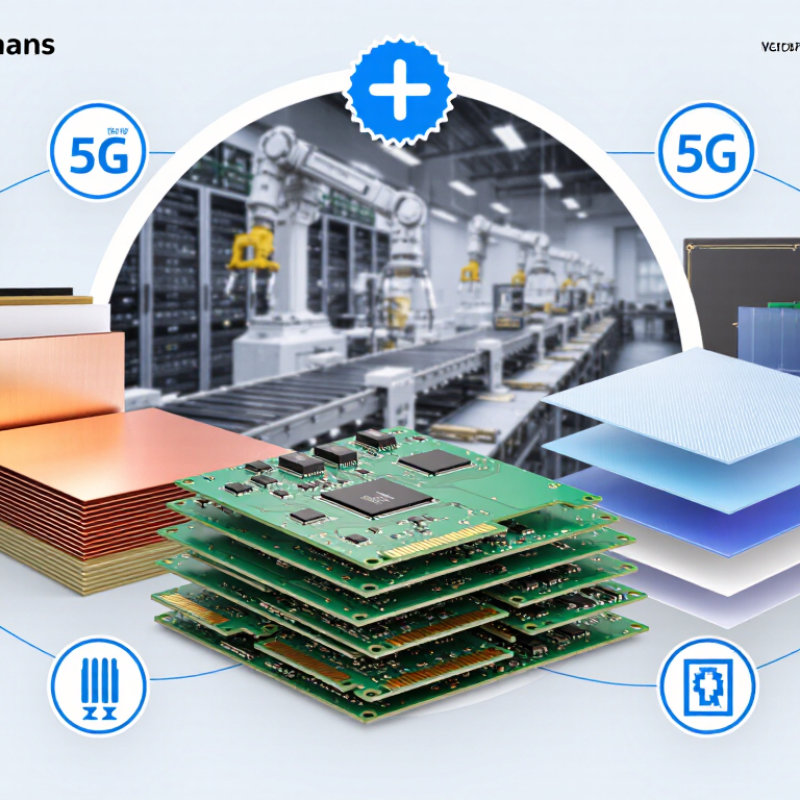
China Top Circuit Board Material Suppliers

Circuit Board Materials: Types, Properties, and Applications

China Top Circuit Board Material Suppliers

Circuit Board Materials: Types, Properties, and Applications

Choosing circuit board material begins with heat, frequency, moisture, and mechanical stress. Common options include FR-4 epoxy laminate, high-frequency laminates, polyimide, ceramic, and flexible copper-clad films. FR-4 offers balanced strength, insulation, and cost for many control boards. Polyimide bends repeatedly, making it useful for compact wearable devices and moving assemblies. Ceramic materials handle heat efficiently, but they can be brittle and require careful handling.

High-frequency circuits need stable dielectric properties and low signal loss. Material thickness, copper roughness, and resin content can change performance. Small differences matter at high speeds. Thermal expansion also affects reliability near soldered components. In practice, suppliers should provide traceable test data, production samples, and clear tolerance information. Experienced buyers often inspect resin distribution, copper adhesion, surface flatness, and drilling quality before approval.

Applications should guide the selection. Automotive control units may require strong thermal cycling resistance. Industrial boards often need dependable insulation in humid environments. Flexible circuits need repeated-bend testing, not only a datasheet review. A specification can look precise, yet manufacturing conditions may alter the result. This is where supplier audits and independent testing become valuable. No material wins every design. A cheaper laminate may reduce initial cost but increase rework later. Engineers should question laboratory figures, verify real assembly conditions, and document every change. Mistakes happen. Careful review reduces them.

China Top Circuit Board Material Suppliers – Circuit Board Materials: Types, Properties, and Applications

Comparison of representative dielectric constant values for commonly used printed circuit board materials at approximately 1 GHz. Lower Dk materials are generally preferred for high-speed and high-frequency signal transmission.

FR-4 and CEM-1 are widely used for general-purpose electronics. Polyimide is selected for flexible and high-temperature circuits, while PTFE-based materials are commonly used in microwave and radio-frequency applications. Ceramic-filled laminates provide higher dielectric constants for compact RF designs. Values are representative industry figures and may vary with resin content, glass style, frequency, temperature, and material formulation.

China’s Circuit Board Material Supply Chain

China Top Circuit Board Material Suppliers

China’s circuit board material supply chain is broad, but not perfectly balanced. Prismark’s 2024 PCB Industry Report placed mainland China near half of global PCB production value in 2023. That scale supports dense sourcing for copper foil, glass fiber, resin systems, laminates, solder masks, and processing chemicals. Major production clusters in the Yangtze River Delta and Pearl River Delta connect material plants with board factories, ports, and testing laboratories. Shorter transport routes can reduce lead times. They do not remove risk.

IPC’s 2024 electronics manufacturing survey continued to identify supply disruption, pricing pressure, and changing demand as practical industry concerns. In China, suppliers increasingly hold local safety stock for copper foil and laminate inputs. However, upstream dependence remains visible in specialty resin, high-frequency materials, and certain electronic chemicals. A low quoted price may hide longer qualification cycles or unstable batch performance. This is where buyers need more than a catalogue.

Tips: Check lot-to-lot dielectric data, copper roughness, moisture resistance, and thermal performance. Request recent test reports and sample records. Confirm whether raw materials come from one region. I have seen schedules fail because a supplier was approved only by paperwork. Technical audits should include storage conditions, traceability, and process-change notices. Some assumptions will be wrong; review them quarterly.

Leading Chinese Suppliers and Their Product Categories

China Top Circuit Board Material Suppliers

China’s circuit board material suppliers serve different production needs and performance targets. Their main product categories include copper-clad laminates, prepreg, solder mask, dry film, coverlay, and flexible circuit materials. Some suppliers focus on rigid boards, while others support high-frequency, high-temperature, or flexible applications. During factory evaluations, buyers should review technical data sheets, production capacity, and sample consistency. A low price means little if resin flow or copper thickness changes between batches.

Experienced suppliers usually provide materials for consumer electronics, automotive systems, industrial controls, and communication equipment. Copper-clad laminates may use standard, halogen-free, or high-Tg formulations. Prepreg selection affects layer bonding and controlled thickness. Solder mask materials influence insulation, surface protection, and printing quality. Reliable suppliers should explain storage conditions, shelf life, testing methods, and traceability records. Certifications help, but they should not replace practical sample testing.

Tips: Request samples from several product categories before placing a large order. Compare drill quality, lamination results, adhesion, and thermal performance. Ask for recent inspection reports, not only standard brochures. A small pilot run can reveal problems hidden during price discussions. I have found that communication speed matters, but it is not enough. Some technical questions still need clearer answers. Recheck specifications with your fabricator before final approval.

Quality Standards for Chinese Circuit Board Materials

China Top Circuit Board Material Suppliers

Quality Standards for Chinese Circuit Board Materials

Selecting circuit board materials in China requires more than comparing price and delivery time. Experienced buyers examine datasheets, test reports, and production records together. Key properties include glass transition temperature, dielectric constant, moisture absorption, peel strength, and thermal expansion. These values should match the board’s operating environment.

Materials should meet relevant IPC and IEC requirements for their intended application. Compliance with RoHS and REACH restrictions also supports safer international distribution. Quality teams often request samples, then inspect copper adhesion, resin consistency, and surface appearance. Small gaps matter. A clean sample does not always represent stable mass production.

Reliable suppliers provide batch identification, raw material records, and controlled storage conditions. Moisture-sensitive laminates need sealed packaging and clear baking instructions. Third-party testing can verify thermal stress, flammability, and dimensional stability. Numbers matter. However, test methods must be reviewed, because different laboratories may produce different results. In practical sourcing, an on-site audit can reveal humidity control problems or incomplete calibration records. One overlooked weakness is change management; a substitute resin may alter electrical performance without obvious visual differences. No supplier is perfect, and buyers should document corrective actions instead of accepting vague promises. A stronger evaluation combines technical evidence, production experience, and regular follow-up inspections.

China Top Circuit Board Material Suppliers - Quality Standards for Chinese Circuit Board Materials
Material Category Common Construction Typical Performance Range Primary Quality Standards Key Verification Tests Typical Applications
Standard FR-4 Laminate Woven glass fabric reinforced epoxy resin with copper foil Tg: approximately 130–150°C
UL 94: commonly V-0 when certified
Standard lead-free assembly capability
IPC-4101
UL 94
RoHS and REACH, where required
Thickness and dimensional tolerance, peel strength, solder resistance, dielectric breakdown, flammability, and thermal stress General multilayer PCBs, consumer electronics, industrial controls, and communication equipment
High-Tg FR-4 Laminate High-temperature epoxy resin system reinforced with glass fabric Tg: typically above 170°C
Lower z-axis expansion than standard FR-4
Improved resistance to repeated lead-free reflow
IPC-4101
UL 94
RoHS and REACH, where required
Glass transition temperature, decomposition temperature, coefficient of thermal expansion, thermal cycling, and interlayer reliability Automotive electronics, servers, industrial equipment, and high-layer-count boards
Halogen-Free Laminate Halogen-free resin system with glass-fiber reinforcement Halogen content controlled according to applicable customer or regulatory limits
Tg commonly in the standard or high-Tg FR-4 range
IPC-4101 relevant material specification
IEC 61249-2-21 for halogen-free criteria
RoHS and REACH
Halogen content, flammability, solder resistance, thermal stress, dielectric properties, and moisture resistance Low-emission products, telecommunications, consumer electronics, and environmentally regulated markets
High-Frequency Laminate PTFE, hydrocarbon-ceramic, or other low-loss dielectric systems Low dissipation factor, often below 0.005 for selected systems
Dielectric constant depends on resin and glass style
Controlled impedance capability
IPC-4103 for selected high-frequency materials
IPC-6018 for microwave or radio-frequency printed boards
RoHS and REACH, where required
Dielectric constant, dissipation factor, moisture absorption, dimensional stability, copper adhesion, and impedance control RF modules, antennas, radar, satellite communications, and wireless infrastructure
High-Speed Digital Laminate Low-loss resin system reinforced with selected glass styles Low dielectric loss and controlled dielectric constant
Improved signal integrity for high data-rate transmission
Low resin-flow variation between lots
IPC-4101 applicable specification
IPC-6012 for rigid printed boards
RoHS and REACH, where required
Frequency-dependent Dk and Df, resin content, glass-style registration, z-axis expansion, and controlled-impedance testing Data centers, networking equipment, servers, storage systems, and high-speed backplanes
Flexible Circuit Material Polyimide or polyester film with rolled or electrodeposited copper foil Thin dielectric construction with repeated-bend capability
Polyimide systems generally provide higher thermal performance than polyester systems
IPC-4204 for flexible and rigid-flexible materials
IPC-6013 for flexible printed boards
UL 94 where applicable
Flexural endurance, bend radius, dimensional stability, peel strength, solder resistance, and dielectric breakdown Wearables, cameras, displays, medical devices, automotive modules, and compact electronics
Metal-Core Laminate Insulated dielectric layer bonded to an aluminum or copper metal base High thermal conductivity compared with conventional FR-4
Thermal performance depends on dielectric thickness and conductivity
IPC-4101 applicable requirements
IPC-6012 for rigid boards
UL 94 and applicable safety requirements
Thermal conductivity, dielectric breakdown, thermal resistance, peel strength, flatness, and thermal cycling LED lighting, power converters, automotive power electronics, and motor-control systems
Copper Foil Electrodeposited or rolled copper used as the conductive layer Common nominal thicknesses include 18, 35, and 70 micrometres
Surface profile and tensile properties vary by grade
IPC-4562 for electrodeposited copper foil
IPC-4565 for rolled copper foil
Applicable IPC performance classifications
Thickness, tensile strength, elongation, surface roughness, peel strength, treatment uniformity, and oxidation resistance Rigid, flexible, high-frequency, high-current, and fine-line circuit boards
Prepreg Partially cured resin-impregnated glass fabric used for multilayer bonding Resin content and flow selected for controlled dielectric thickness
Pressing behavior depends on glass style, resin system, temperature, and pressure
IPC-4101 applicable prepreg requirements
IPC-6012 for finished rigid boards
Resin content, gel time, flow, cure characteristics, thickness after pressing, void inspection, and interlaminar bonding Multilayer rigid PCBs, high-density interconnect boards, and impedance-controlled constructions
Material Compliance and Traceability Documented control of raw materials, production batches, and change management Lot-level identification, certificate of conformity, and retention of test records
Requirements vary by customer and end market
ISO 9001 quality-management framework
RoHS Directive 2011/65/EU and amendments
REACH Regulation (EC) No. 1907/2006
Supplier audits, incoming inspection, chemical declarations, restricted-substance testing, batch traceability, and corrective-action records All PCB material categories, especially regulated automotive, medical, aerospace, and telecommunications products
Note: Performance values are representative industry ranges rather than supplier-specific guarantees. The applicable material specification, test method, construction, and compliance requirements should be confirmed through the relevant datasheet and certificate of conformity.

How to Select a Reliable Chinese Material Supplier

China Top Circuit Board Material Suppliers

Selecting a reliable Chinese circuit board material supplier requires more than comparing prices. Check the supplier’s technical capability, production history, and quality controls. Ask for datasheets showing glass transition temperature, dielectric constant, dissipation factor, copper thickness, and moisture resistance. These details affect impedance, thermal performance, and long-term reliability. Request recent test reports and certificates from recognized laboratories. A professional supplier should explain test methods clearly, not hide behind vague claims.

Order samples before approving mass production. Inspect the laminate surface under strong light, and check thickness at several points. Review batch numbers, packing labels, storage conditions, and traceability records. A supplier should provide a controlled certificate of conformity for each shipment. Confirm lead times in writing, including holidays and inspection delays. I once focused too heavily on unit cost and overlooked packaging quality. Moisture entered several sheets, creating avoidable processing problems. That mistake still influences my supplier audits.

Tips: Visit the factory when practical. Speak with the quality manager, not only the salesperson. Compare sample results with the supplier’s datasheet. Ask how rejected materials are isolated and reported. Check whether technical support responds within one working day. A small trial order can reveal more than a polished presentation. Also, confirm export documents and applicable safety requirements for your destination market. Reliability is built through evidence, repeated communication, and honest handling of defects.

Article Source:

  • LinkedIn Social Icon

© 2024 by LIPOND INTERNATIONAL INC. All rights reserved. Blog

bottom of page