
Top 10 Organic Ginger Extract Suppliers Worldwide?
Choosing a reliable Organic Ginger Extract supplier requires more than comparing prices or reading polished product pages. Buyers must examine ginger origin, extraction methods, active compounds, testing practices, and supply continuity. A bright yellow powder may look impressive, yet appearance alone proves little.
Dr. Tieraona Low Dog describes ginger as “one of the safest and most effective herbs for nausea.” Her observation highlights why quality matters. Gingerol and shogaol levels can vary with cultivar, drying temperature, extraction solvent, and storage conditions. Those differences affect flavor, potency, stability, and product performance.
This guide reviews ten Organic Ginger Extract suppliers serving international markets. It considers organic certification, batch-level laboratory reports, heavy-metal screening, pesticide testing, microbial controls, traceability, packaging, and minimum order quantities. Suppliers with transparent documentation receive closer attention. So do manufacturers that explain their limitations.
No ranking is perfect.
A supplier may offer excellent certificates but weak communication. Another may provide strong technical support but limited production capacity. Some companies publish impressive specifications without showing recent test results. That gap deserves caution.
The evaluation also considers practical details. Can the supplier maintain a consistent gingerol profile? Are samples available before a commercial order? Does the company identify the growing region and extraction ratio? Can it support capsules, beverages, functional foods, or standardized botanical formulas?
These questions help separate dependable partners from attractive listings. Still, readers should verify current certifications and independent test results before purchasing. Organic Ginger Extract is a technical ingredient, not merely a commodity. Quality can change between harvests, batches, and markets. That uncomfortable reality deserves honest attention.
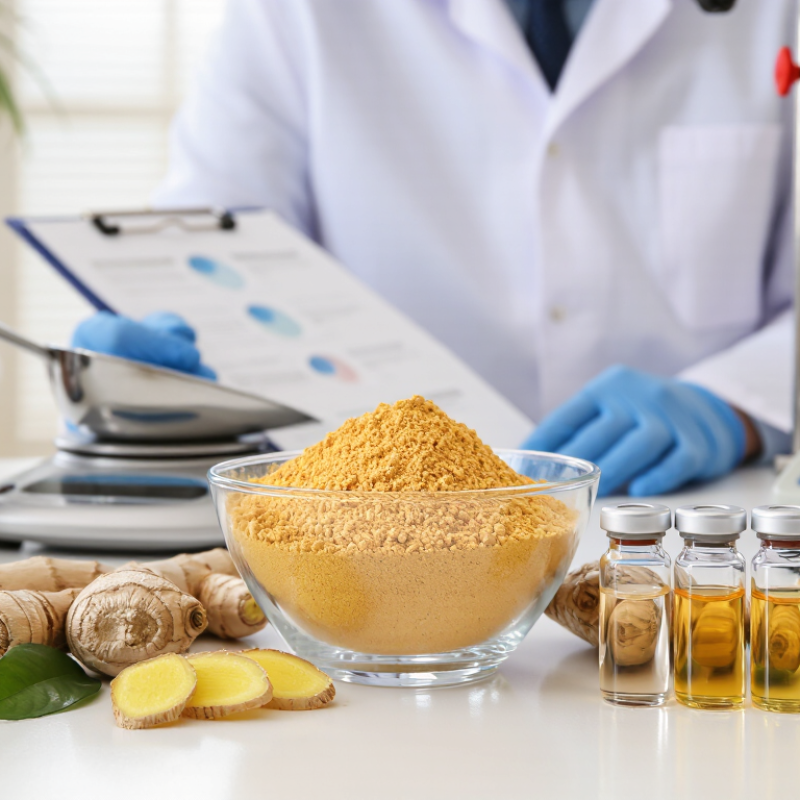
Understanding Organic Ginger Extract and Its Common Uses
Organic ginger extract is a concentrated preparation from ginger rhizomes grown under certified organic standards. The label alone is not enough. Buyers should check certification scope, extraction solvent, plant part, and batch testing. Extracts may be water-based, alcohol-based, or dried into powder. Each form behaves differently. Powders can disperse unevenly. Small detail, big effect. Gingerols and shogaols create ginger’s warmth, but their levels change with variety, drying, and storage. Reliable suppliers should provide identity, contaminant, microbiological, and stability documents.
In foods, ginger extract adds spicy depth to teas, beverages, confectionery, sauces, and functional mixes. It can deliver flavor when fresh root adds moisture and inconsistent intensity. Supplement makers commonly use it in capsules, tablets, and liquid preparations. Formulators should avoid presenting it as a guaranteed treatment. Evidence and permitted claims differ by market. In cosmetics, ginger extract appears in scalp and skin products for its warming sensory profile and botanical appeal. Patch testing remains sensible for sensitive skin.
During product development, I have found that a clean aroma does not always indicate strong standardization. That assumption can mislead purchasing decisions. Color can vary naturally, too. A pale powder is not automatically weaker, and a dark extract is not automatically better. When comparing worldwide suppliers, I would review specifications, samples, packaging, and traceability. Temperature and light matter during shipment. My preference is requesting a small trial batch first, because real mixing can expose problems that certificates cannot. There is no perfect extract for every application.
Top 10 Organic Ginger Extract Suppliers Worldwide? - Understanding Organic Ginger Extract and Its Common Uses
The table below presents representative supplier profiles and procurement characteristics rather than company names or market-share rankings. Product specifications may vary by harvest, extraction method, certification scope, and supplier documentation.
| Rank | Supplier Profile | Common Sourcing Region | Typical Extract Form | Key Specification Options | Organic Documentation Usually Requested | Common Uses | Best Fit for Buyers |
|---|---|---|---|---|---|---|---|
| 1 | Large-scale botanical extract supplier | South Asia | Spray-dried powder and liquid extract | Gingerols, volatile oils, extraction ratio, mesh size | Organic certificate, certificate of analysis, pesticide and heavy-metal testing | Dietary supplements, functional beverages, herbal blends | High-volume manufacturers requiring consistent batches |
| 2 | Certified organic ingredient specialist | Southeast Asia | Water-soluble powder and powdered root extract | Organic status, solubility, carrier content, microbiological limits | Organic transaction records, allergen statement, non-GMO statement | Tea products, instant drink mixes, wellness powders | Brands seeking clean-label and plant-based positioning |
| 3 | Standardized gingerol extract producer | China | Concentrated dry extract | 6-gingerol or total gingerols, moisture, bulk density | Organic scope certificate, identity testing, solvent-residue report | Capsules, tablets, powdered supplement formulas | Formulators needing measurable active-marker levels |
| 4 | Traditional herbal extract supplier | South Asia | Hot-water extract and granulated extract | Extraction ratio, flavor profile, color, particle size | Organic certificate, botanical identity report, microbial analysis | Traditional herbal preparations, teas, nutrition products | Buyers prioritizing traditional processing and broad applications |
| 5 | Premium solvent-free extract supplier | Europe | CO2 or aqueous extract | Low residual solvent risk, aroma retention, gingerol profile | EU organic documentation, traceability records, contaminant testing | Premium supplements, natural flavor systems, specialty foods | Manufacturers with strict quality and traceability requirements |
| 6 | Organic spice-processing cooperative | East Africa | Milled ginger powder and basic dry extract | Raw-material origin, drying method, moisture, microbial quality | Organic certificate, ethical sourcing records, farm traceability | Food seasoning, tea blends, bakery and confectionery | Buyers seeking origin transparency and community sourcing |
| 7 | Food-grade natural flavor supplier | North America | Liquid extract, emulsion, and flavor concentrate | Flavor strength, dispersibility, heat stability, carrier system | Organic handling records, food-safety plan, allergen statement | Beverages, sauces, confectionery, bakery products | Food and beverage developers needing formulation support |
| 8 | Private-label supplement ingredient supplier | North America and Europe | Capsule-ready powder and blended premix | Dose uniformity, flowability, excipient profile, shelf life | Organic certificate, GMP documentation, stability data | Capsules, sachets, powdered drink supplements | Smaller brands and contract manufacturers |
| 9 | Organic essential-oil and oleoresin supplier | South Asia and Southeast Asia | Ginger oleoresin and essential oil | Aroma compounds, oil content, refractive index, flavor intensity | Organic certificate, purity profile, adulteration testing | Natural flavors, aromatherapy products, personal care | Applications focused on aroma rather than gingerol standardization |
| 10 | Small-batch specialty botanical supplier | Oceania and Europe | Fresh-root extract, low-temperature powder, and liquid concentrate | Freshness, color, flavor, batch size, processing temperature | Organic certificate, batch traceability, contaminant and stability reports | Premium wellness products, functional shots, specialty foods | Pilot projects and products requiring customized specifications |
Related Posts
-
Global Certification Requirements for Importing Organic Reishi Mushroom Powder into Your Market
-
Best Organic Turmeric Root Powder for Global Buyers?
-
Ultimate Guide to Sourcing Natural Plant Extracts for Your Business Success
-

Top 10 Benefits of Natural Griffonia Seed Extract for Health and Wellness
-
Unlocking the Secrets of American Ginseng Extract for Enhanced Vitality and Wellbeing
-

Maximize Your Profit with Natural Aloe Vera Leaf Two Service Benefits and Five Cost Saving Tips