Top 10 NPK Compound Fertilizer Suppliers in China?
Choosing a Npk Compound Fertilizer supplier is not just a price comparison. Product consistency, nutrient specifications, production capacity, and clear technical documentation all matter. A bag marked 15-15-15 may look straightforward, but buyers should still confirm what the figures represent and whether each batch matches its stated specification. Details matter.
This guide introduces ten Chinese suppliers for closer evaluation. It considers practical factors such as product range, export experience, quality-control information, customization options, and responsiveness to buyer questions. These points can help importers, distributors, and agricultural businesses build a useful shortlist. They are not a guarantee of performance. Supplier capabilities can change, and published claims should be checked directly before an order is placed.
Dr. Terry Roberts, a plant-nutrition scientist and former president of the International Plant Nutrition Institute, has emphasized nutrient stewardship and matching fertilizer decisions to crop needs and local conditions. Put simply: “Choose nutrients for the field, not just the label.” This wording is a concise paraphrase, not a verbatim quotation. That distinction matters when expert opinions are presented. A suitable supplier should be able to discuss nutrient ratios, application needs, packaging, and documentation without relying on vague promises. Still, a directory cannot replace field trials or independent verification. Treat this list as a starting point, ask specific questions, and compare evidence before committing.
NPK Compound Fertilizer: Definition, Composition, and Uses
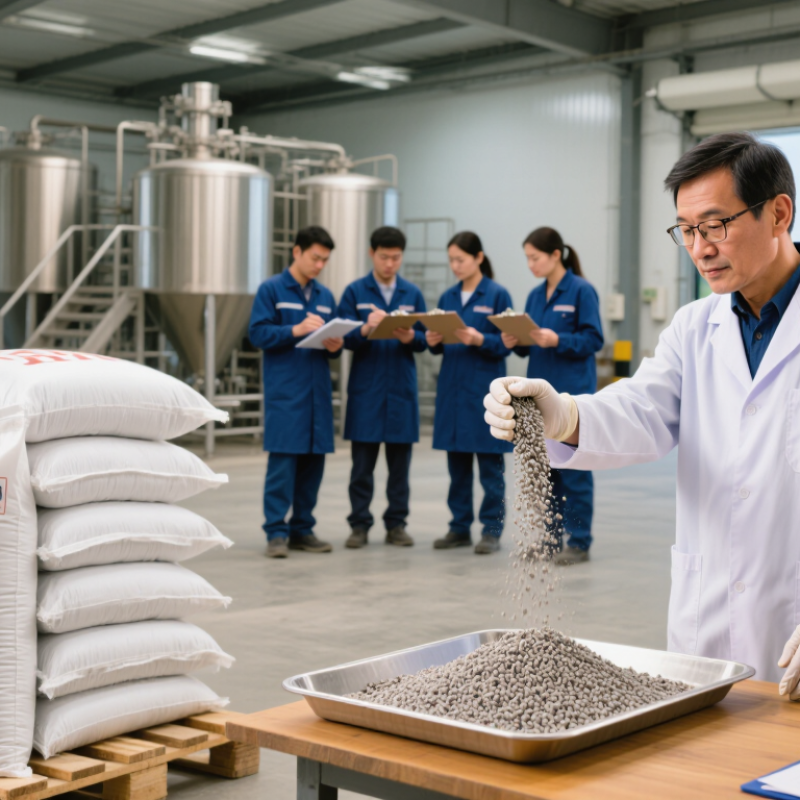
NPK compound fertilizer combines nitrogen, phosphorus, and potassium in one product. These nutrients support leafy growth, root development, and water regulation, respectively. The three numbers on a fertilizer grade usually show the percentages of nitrogen, phosphate, and potash by weight. For example, a 15-15-15 grade contains equal stated proportions of these nutrients. The label uses conventional nutrient forms, not necessarily the exact chemical compounds in each granule. That distinction matters.
Formulations vary by crop, soil, and production method. Some products also contain sulfur or micronutrients, but check the label rather than assuming they do. Granules are often designed to spread evenly through a field or garden bed. Still, appearance alone says little about nutrient balance or suitability. A soil test offers better guidance than guesswork. No single ratio fits every field.
Farmers use NPK fertilizers to address nutrient needs during planting or active growth. Nitrogen can support green, leafy growth; phosphorus helps roots establish; and potassium supports plant functions such as water regulation. Timing and application rate matter. Too much fertilizer can waste nutrients and stress plants, so follow the product label and local agronomic advice. When comparing suppliers, check nutrient guarantees, granule consistency, and batch documentation. One limitation remains: a clear label cannot replace field-specific advice.
Criteria for Selecting Leading NPK Compound Fertilizer Suppliers
A reliable NPK supplier should demonstrate consistent nutrient content, not just offer an attractive price. The International Fertilizer Association’s Medium-Term Fertilizer Outlook 2024–2028 estimates global fertilizer use at about 198 million tonnes of nutrients in 2023/24. That scale makes dependable production and clear specifications important. Ask for recent batch certificates showing nitrogen, available phosphate, soluble potash, moisture, and granule size. Check that independent laboratory results match the product label. Small differences matter.
Production capacity is useful only when it supports reliable delivery. Review factory audits, quality-control procedures, raw-material sourcing, packaging, and shipment records. For crop-specific blends, ask whether agronomic staff can explain the nutrient ratio and recommend application timing. A glossy brochure is not proof. Request traceable samples and compare their granule uniformity and dust levels. Supplier paperwork can look stronger than field performance; that is a weakness in any checklist. Include trial results from relevant soils and crops, while recognizing that one season cannot guarantee future outcomes. Verify export experience and after-sales response times before committing to large volumes.
Top 10 NPK Compound Fertilizer Suppliers in China? — Criteria for Selecting Leading Suppliers
Compare product nutrient guarantees when evaluating suppliers. The chart shows example N–P₂O₅–K₂O fertilizer grades; the values are the percentages indicated by each grade, not supplier rankings or sales data.
Selection tip: Check that the guaranteed nutrient analysis matches the product label, and review registration and quality documentation, batch-testing practices, production consistency, and delivery capability. NPK grade values express N, P₂O₅, and K₂O percentages by mass.
Profiles of 10 NPK Compound Fertilizer Suppliers in China
China’s NPK compound fertilizer suppliers differ in feedstock access, production scale, and service. These ten profiles highlight practical strengths buyers can compare. One integrated producer links phosphate processing with blending, helping coordinate supply. A coastal exporter focuses on container-ready granules and shipping documents. A custom-formulation supplier adjusts nitrogen, phosphorus, and potassium ratios for local soil needs. Details matter.
A granule specialist emphasizes consistent particle size, which can support even spreading. A water-soluble fertilizer maker serves fertigation users and monitors dissolution. A regional supplier builds formulas around rice, fruit, or field crops. Another producer offers contract manufacturing for distributors, though specifications should be checked batch by batch. No shortcut here. A technology-focused supplier uses digital records to track production lots. A smaller factory may accept modest orders, but seasonal capacity can be tight. The final profile is an agronomy-led supplier that pairs product advice with soil-test interpretation.
When evaluating any supplier, request a current product specification, nutrient analysis, and representative batch test results. Ask how moisture and particle size are controlled, and confirm packaging options before ordering. Some profiles sound stronger on paper than in practice; independent verification is worth the effort.
Comparing Products, Quality Standards, and Export Capabilities
China’s NPK suppliers are best compared by formula consistency, quality controls, and export performance—not headline capacity. A 15-15-15 granule is useful only when each batch meets its declared nutrient levels and remains free-flowing after sea transit. Request recent, lot-specific analysis certificates, moisture and particle-size results, and independent pre-shipment sampling. Small checks matter.
Map product claims to China’s GB/T 15063-2020 compound-fertilizer standard and the destination market’s import requirements. Confirm test methods and tolerances for the exact grade. The International Fertilizer Association’s 2024 Medium-Term Fertilizer Outlook estimated global fertilizer consumption at 192.5 million tonnes of nutrients in 2023/24. This covers all fertilizer nutrients, not NPK alone, so it indicates market scale rather than NPK demand specifically.
For export capability, review shipment records, port access, packaging options, and document accuracy. Ask how the supplier handles retained samples and off-spec results. A polished brochure is not proof. Humidity and caking risks can be underweighted; I would check packaging and storage details carefully, though these are sometimes harder to verify before shipment.