
China Top 10 Crispy Bread Crumbs Manufacturers?
Finding a dependable Chinese supplier takes more than comparing prices. Buyers need to know whether a manufacturer can deliver consistent color, particle size, crunch, and coating performance. This guide introduces ten manufacturers associated with Crispy Bread Crumbs and outlines practical points for evaluating them. Details matter. Product catalogs, factory capabilities, food-safety documentation, and export experience can help distinguish established suppliers from companies with limited public information. These details should be checked directly, since product ranges and certifications may change.
The comparison is intended as a starting point, not a substitute for supplier due diligence. A crumb that performs well on fried chicken may behave differently on seafood, vegetables, or frozen products. Ask for samples, application guidance, ingredient specifications, and packaging options before placing an order. Test the crumbs under your own frying conditions, including oil temperature and holding time. Not always. A polished brochure cannot show how a coating holds after delivery or reheating. Where information is unclear, buyers should request current documents and confirm production details with the manufacturer. The sections ahead focus on useful differences, from crumb texture and customization to communication and quality controls. The aim is a more informed shortlist, not an unsupported ranking. Manufacturers should be assessed against the needs of each recipe, market, and production line.
What Defines Crispy Bread Crumbs and Their Main Applications?
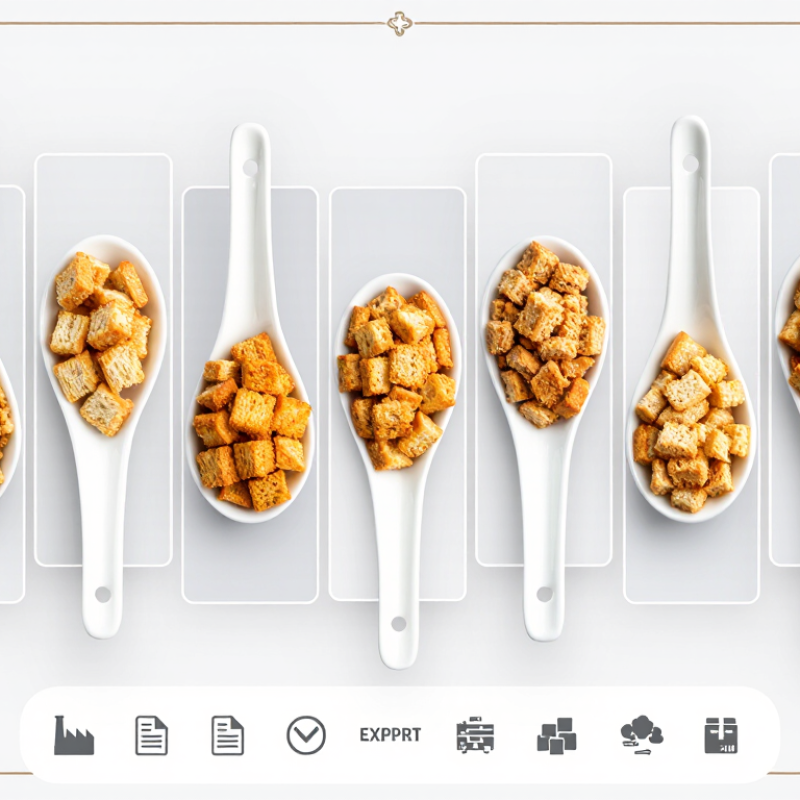
Crispy bread crumbs are dried, finely broken bread pieces that form a brittle coating when heated. Their crunch depends on particle size, moisture, and the cooking method. Fine crumbs create a close, even crust; coarse crumbs leave visible flakes and a rougher bite. Too much moisture can soften either coating. Simple, but easy to get wrong.
USDA FoodData Central lists plain dry bread crumbs at roughly 395 calories per 100 grams; recipes vary, so this is a reference, not a product specification. The FAO’s 2023 Cereal Supply and Demand Brief estimated global wheat production at about 787 million tonnes, reflecting the scale of a key bread ingredient—not the quality of any particular crumb. In kitchens and food processing, crumbs coat chicken, fish, vegetables, and baked dishes, while also binding meat mixtures and adding texture to casseroles. For frying, a dry, evenly applied layer helps produce a crisp surface; oven baking usually gives a drier, less uniform result. Appearance alone is not a reliable test: crumbs can brown before the center is hot. Check cooking conditions, and assess crispness after a short rest, when trapped steam may soften the coating.
What Defines Crispy Bread Crumbs and Where Are They Used?
Crispy bread crumbs are dried or toasted bread particles used to add a crunchy exterior or textured topping. The chart shows common applications; scores are qualitative illustrations of the coating’s role, not measured performance or market-share data. Actual results depend on crumb size, recipe, and cooking method.
How China’s Crispy Bread Crumb Manufacturing Industry Is Structured
China’s crispy bread crumb industry is structured less like a single mass-production chain and more like a network of ingredient processors. Upstream suppliers provide wheat flour, seasonings, and packaging materials. Dedicated processors then mix, shape, dry, mill, and sieve crumbs to meet different particle-size and moisture requirements. National Bureau of Statistics of China data put 2023 wheat production at 136.59 million tonnes, a broad measure of raw-material capacity, not breadcrumb output. That distinction matters.
Manufacturers generally serve three channels: food factories, food-service kitchens, and retail or private-label buyers. Fine crumbs suit even coatings; coarse, irregular flakes create a more visible crunch. Buyers may check color consistency, breakage, moisture, and batch traceability, since small variations can change frying performance. USDA’s Grain and Feed Annual reports also track China’s wheat supply and use, offering useful upstream context, but neither source isolates bread-crumb production. There is a data gap. It makes rankings difficult to verify from public statistics alone. For supplier comparisons, plant audits and sample-frying tests can reveal more than capacity claims, though these checks take time.
China Top 10 Crispy Bread Crumbs Manufacturers? - How China’s Crispy Bread Crumb Manufacturing Industry Is Structured
A non-ranked overview of ten common manufacturing and supply-chain functions. It does not identify or rank individual companies; product specifications and regulatory requirements can vary.
| No. | Industry Function | Typical Manufacturing or Supply Activity | Relevant Product or Buyer Considerations | Quality and Compliance Considerations |
|---|---|---|---|---|
| 1 | Base-bread production | Produces or sources bread that is baked and subsequently dried for crumb manufacture. | Bread formulation affects flavor, color, texture, and allergen declarations; wheat is a common base ingredient. | Ingredient specifications and allergen controls should be documented and traceable. |
| 2 | Baking and drying | Bakes bread and removes moisture to create a crisp, grindable intermediate. | Moisture level influences brittleness, milling behavior, and finished-product shelf stability. | Time and temperature controls, sanitation, and moisture checks are important process controls. |
| 3 | Milling and particle-size control | Breaks dried bread into crumbs and separates material using screens or sieves. | Particle-size requirements are buyer- and application-specific; there is no single universal size for all breadcrumbs. | Screen integrity, foreign-material prevention, and size-distribution checks help maintain consistency. |
| 4 | Plain-crumb production | Makes unseasoned crumbs for food processors, food-service kitchens, and retail use. | Buyers commonly specify crumb size, color, moisture, ingredient declaration, and packaging format. | Specifications should be agreed with the buyer and verified against each production lot. |
| 5 | Colored-crumb production | Produces crumbs with a specified appearance, which may involve permitted coloring ingredients where applicable. | Color expectations depend on the target food and customer specification; ingredient and labeling needs vary by formulation. | Only additives permitted for the relevant food category and use conditions may be used under applicable rules. |
| 6 | Seasoned-crumb production | Blends crumbs with seasonings or other ingredients to create application-specific coatings. | Flavor profile, ingredient compatibility, and allergen declarations are key sourcing considerations. | Formulation review should cover ingredient permissions, additive use, and accurate labeling. |
| 7 | Food-service and industrial supply | Supplies bulk or larger-format packs for food manufacturers, caterers, and restaurant kitchens. | Application trials can assess coating coverage, adhesion, texture, and performance after cooking. | Batch identification and lot-level documentation support traceability through the supply chain. |
| 8 | Retail and private-label packing | Packs crumbs into consumer-sized formats or customer-specified packaging. | Pack size, packaging material, storage instructions, and label language depend on the intended market. | Labels must meet the requirements applicable to the product and destination market. |
| 9 | Food-safety and quality management | Manages hygiene, process controls, inspection, testing, corrective actions, and records. | Buyers may request product specifications, certificates, audit information, or test results. | China's GB 14881-2013 sets general hygienic requirements for food production; applicable product rules also need review. |
| 10 | Warehousing and distribution | Stores finished goods and coordinates domestic or export shipments. | Protection from moisture and package damage helps preserve crumb texture during storage and transport. | Storage conditions, shelf life, and export documentation should follow product specifications and destination-market requirements. |
Regulatory reference: GB 2760-2024 is China's national food-safety standard for the use of food additives. Always verify the current applicable standards, product category, and market-specific requirements before production or purchase.
Which Criteria Matter When Evaluating Chinese Manufacturers?
When evaluating Chinese crispy bread crumb manufacturers, start with process control, not catalogue claims. Ask for particle-size ranges, moisture limits, and test results from recent production batches. A crumb that looks even in a sample may behave differently after frying. Check color consistency, crispness, and oil uptake using your own application test. Small details matter.
Food safety records deserve equal attention. The WHO’s 2015 global burden report estimated 600 million foodborne illnesses and 420,000 deaths worldwide each year. This broad figure is not specific to bread crumbs, but it shows why documented controls matter. Review the manufacturer’s food safety system, allergen controls, cleaning records, and batch traceability. Verify that any certification is current and covers the actual production site. Paperwork can still mislead.
Supplier reliability is more than a low quotation. Ask how the factory handles raw-material changes, rejected batches, and shipment delays. Request specifications, test methods, and a sample from routine production—not only a specially prepared sample. If the answers stay vague, pause. I would also check whether the supplier can keep particle size and moisture stable across repeat orders. That is easy to overlook. A short factory audit, where practical, can reveal storage conditions and how staff prevent cross-contamination.
Profiles of 10 Leading Crispy Bread Crumb Manufacturers in China
China’s ten leading crispy bread crumb manufacturers are best compared by capability, not by an unsupported popularity ranking. This profile examines plant scale, crumb-size options, drying control, food-safety systems, traceability, and export experience. These factors affect whether crumbs stay crisp after frying or coating. Buyers can request sieve specifications, moisture limits, allergen controls, and recent batch records. Small checks matter. A handful of crumbs should look even, feel dry, and resist crushing into fine dust.
Raw-material supply provides useful context. The National Bureau of Statistics recorded 136.59 million tonnes of Chinese wheat in 2023. Its 2023 Statistical Communiqué on National Economic and Social Development reports this figure. It signals a substantial domestic grain base, but does not prove that any supplier uses local wheat or maintains consistent crumb quality. This comparison therefore treats sourcing claims cautiously. Profiles should distinguish fine, medium, and coarse crumbs, and note whether a plant offers colored or seasoned variants. Supplier disclosures vary, and production figures are not always comparable. That weakens neat rankings. A site audit and a frying test remain more informative than polished catalog language.
How the Manufacturers Compare in Products, Capacity, and Certifications
A useful comparison of China’s top ten crispy bread crumb manufacturers starts with the product, not the catalogue. Check whether each supplier offers fine, medium, and coarse grades, plus panko-style crumbs for different coatings. Particle size, color, moisture, and frying performance affect the finished bite. Ask for samples and test them in your own fryer. A crumb that looks crisp in a sample bag may soften quickly on a busy production line.
Capacity matters, but headline figures need context. Confirm whether stated output is monthly or annual, and whether it covers the specific grade you need. Ask about minimum order quantities, lead times, packaging sizes, and seasonal production changes. Small details count. Certifications can help assess food-safety systems, but verify current documents, issuing bodies, and product scope. ISO 22000, HACCP, or BRCGS credentials may be relevant; requirements differ by buyer and market. A certificate alone does not prove consistent quality. Request batch specifications, traceability details, and recent test results, then compare them against a production trial. A tidy spreadsheet still misses things—crumb dust, uneven coating, or a delayed shipment can change the real cost.
