How to Source Beverage Matcha Powder in 2026?
Sourcing Beverage Matcha Powder in 2026 takes more than comparing prices or choosing the brightest green sample. A dependable buying decision starts with a clear use case: café lattes, bottled drinks, or dry beverage mixes may need different flavor, solubility, and color profiles. Matcha intended for drinks is not defined by one universal grade standard, so ask suppliers how they describe and verify their product. Taste matters.
Request a current specification sheet, sample, and documentation for the specific production lot. Check origin, harvest period, milling method, ingredient composition, and recommended storage conditions. In a tasting, note bitterness, aroma, mouthfeel, and how the powder performs in both hot and cold liquids. A vivid color can catch the eye, but it cannot confirm freshness or quality on its own. Ask twice.
For risk control, review available test reports for relevant contaminants and microbiological criteria, and confirm that testing matches your destination market’s requirements. Verify lot traceability, packaging protection from light and moisture, minimum order quantities, lead times, and how the supplier handles inconsistent batches. Where possible, compare samples from more than one lot; a single excellent cup may not represent reliable supply. Some details may remain uncertain, especially when a supplier’s claims are difficult to verify independently. Treat that uncertainty as a reason to ask for clearer evidence, not as proof of poor quality. This guide outlines practical questions and checks to help buyers assess suppliers with care, document decisions, and source Beverage Matcha Powder that fits their product and customers.
Define Beverage Specs Using ISO 11287:2011 Green-Tea Requirements
How to Source Beverage Matcha Powder in 2026?
Define Beverage Specs Using ISO 11287:2011 Green-Tea Requirements
ISO 11287:2011 provides a useful reference for defining green tea, but it is not a complete beverage-matcha specification. Treat it as a starting point, not proof that a powder will perform well in your recipe. Ask suppliers for documented product descriptions, batch details, and test results. Then define your own limits for color, aroma, taste, moisture, and particle size. Keep each requirement measurable. “Bright green” alone is too subjective.
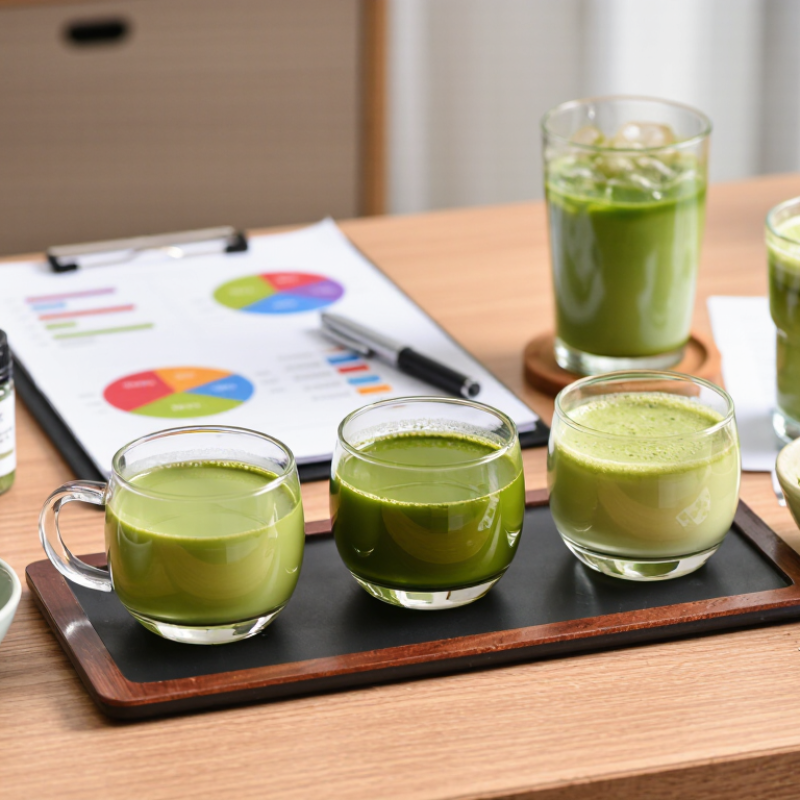
Matcha remains suspended rather than dissolving like instant tea. Test samples in the actual drink: use your intended water or milk, serving temperature, mixing method, and holding time. Look for clumps, sediment, bitterness, and color changes after several minutes. Record the recipe and results, so different lots can be compared fairly. ISO-based green-tea requirements can support consistent sourcing, but they cannot replace application testing. That distinction is easy to overlook.
Tips: Request a representative sample and a current certificate of analysis. Confirm which methods and limits the supplier uses; do not assume every test follows ISO 11287. Check the latest official standard before putting it into a purchasing specification. A small trial can reveal more than a polished product sheet. Some judgment remains necessary.
Compare Origins Against Japan’s 10,084-Tonne Green-Tea Exports in 2024
How to Source Beverage Matcha Powder in 2026?
Compare Origins Against Japan’s 10,084-Tonne Green-Tea Exports in 2024
Japan’s green-tea exports reached 10,084 tonnes in 2024, according to Japan’s Ministry of Finance trade statistics. This figure signals international demand, but it is not a matcha production total. Green-tea exports include products beyond powdered matcha. Don’t mistake export volume for the supply of a particular grade.
Compare origins using consistent specifications, not country labels alone. Request harvest season, growing region, cultivar, shading details, milling method, and batch-level test results. Then prepare samples with the same water temperature and dosage. Note color, aroma, bitterness, astringency, and how the flavor holds in milk. Showroom lighting can make almost any powder look greener. Taste it plain, too.
Use Japan’s Ministry of Finance trade tables alongside the Ministry of Agriculture, Forestry and Fisheries’ tea-production statistics; they measure different things. Ask suppliers to connect each lot to its origin and provide recent capacity records. Independent testing can help verify moisture, contaminants, and other quality specifications. One limitation remains: origin alone cannot predict cup quality, and export data cannot confirm a supplier’s available stock.
How to Source Beverage Matcha Powder in 2026?
Compare potential origins against Japan’s 2024 green-tea export benchmark.
Japan exported 10,084 tonnes of green tea in 2024. This figure covers green tea overall, not matcha alone, so treat it as market context rather than a measure of matcha supply.
Audit Farms and Mills for Traceability, HACCP, and ISO 22000 Controls
In 2026, sourcing beverage matcha powder starts with a clear trail from tea field to sealed package. Ask suppliers to link each lot to its farm, harvest date, milling site, and packaging run. Check that records match across invoices, batch sheets, and labels. Paper can look perfect. Compare it with a recent production lot, not just a sample file.
Audit farms and mills against practical food-safety controls. Review the HACCP hazard analysis, monitoring logs, corrective actions, sanitation schedules, pest checks, and staff training records. At the mill, observe how leaves are received, stored, and ground; note whether equipment is clean and product lots stay separated. Verify any ISO 22000 certificate’s current status, issuing body, and site scope. Certification is useful evidence, not a substitute for checking day-to-day controls. Traceability drills matter, too: ask the facility to identify the farms and customers connected to one lot within a defined period. If records are incomplete, pause and investigate.
Tips: Request a recent audit summary, a lot-specific certificate of analysis, and a mock-recall result. Match dates and lot codes across documents. Visit during production when possible; a quiet, prepared tour can miss ordinary problems.
Test Samples for Particle Size, Color, Moisture, Microbes, and Pesticide Residues
A fine-looking sample can still brew poorly. Test particle size with laser diffraction, following ISO 13320:2020, and record the full distribution rather than relying on one average. Fine particles may suspend smoothly, but overly dusty powder can clump in a whisked cup. Compare samples using the same sieve-free preparation and water temperature. Small differences matter. For color, measure L*a*b* values under consistent lighting; a vivid green photograph is not a specification. It can hide uneven tone.
Measure moisture using a documented tea method, such as ISO 1573, which determines loss in mass at 103°C. Also ask the laboratory to report water activity: ISO 21527-2 covers yeast and mold enumeration in foods with water activity at or below 0.95. That is a method scope, not a safe-limit claim. Request aerobic counts and pathogen screening against your written buyer requirements. For pesticide residues, use an accredited laboratory and request a multi-residue panel, with results checked against the destination market’s current maximum residue limits. Keep sealed samples from each lot, plus the test method and date. One caveat: color and particle results shift with storage and handling. Retesting a retained sample can expose that gap.
How to Source Beverage Matcha Powder in 2026? - Test Samples for Particle Size, Color, Moisture, Microbes, and Pesticide Residues
Example screening criteria: D90 ≤ 25 μm; moisture ≤ 5.0%; aerobic plate count ≤ 10,000 CFU/g; yeast and mold ≤ 500 CFU/g; coliforms ≤ 100 CFU/g; E. coli not detected in 1 g; Salmonella not detected in 25 g. These are illustrative procurement targets, not universal legal limits.
Test interpretation: CIE L*a*b* values are instrumental color readings; compare samples using the same instrument setup and preparation method. “Not detected” means below the laboratory’s stated limit of quantification or detection, as applicable. Confirm test methods, sample preparation, and laboratory reporting limits with the testing laboratory.
Pesticide residues: Review every detected residue against the current requirements for the destination market, product category, and intended use. An analytical result alone does not establish legal compliance. The sample results shown are illustrative and are not claims about actual commercial lots.
Qualify Suppliers Through Pilot Runs, Landed-Cost Models, and Seasonal Contracts
Qualify a matcha supplier with a production-scale pilot, not a polished sample alone. Japan’s Ministry of Agriculture, Forestry and Fisheries recorded 4,176 tonnes of tencha production in 2023, underscoring why crop availability and allocation deserve scrutiny. Request samples from more than one lot, then run them through your actual sifting, blending, and beverage process. Record color, aroma, bitterness, sediment, and yield per kilogram. Small test first. A sample that tastes clean in water may turn harsh in oat milk.
Build a landed-cost model per usable kilogram. Include powder price, freight, insurance, duties, testing, foreign exchange, and losses from screening or rejected lots. The International Trade Centre’s Trade Map uses broad green-tea trade categories; those figures do not isolate matcha, so treat them as context, not a matcha price benchmark. Get written quotes with Incoterms and quote validity dates. Then negotiate seasonal contracts with defined crop year, volume bands, delivery windows, quality tolerances, and a price-review trigger. USDA Foreign Agricultural Service tea reports can help frame market conditions, but supplier-specific harvest records matter more. One uncomfortable detail: buyers sometimes overvalue vivid green color and under-test performance in their final recipe. That is easy to miss.