What is the Role of Desizing Enzyme in Textile Production?
In the textile industry, the role of desizing enzymes is often underestimated. These enzymes play a crucial part in the production process. For instance, Dr. Emily Hansen, an expert in textile biochemistry, emphasizes, “Desizing enzymes improve fabric quality while reducing chemical pollution.” This highlights their significance.
desizing enzymes are essential for removing size materials from woven fabrics. This process enhances the fabric's overall quality and prepares it for dyeing. Effective removal of sizes allows dyes to penetrate fabrics uniformly, resulting in vibrant colors. However, despite their importance, many producers still rely on traditional methods that may be harmful to the environment.
The efficiency of desizing enzymes can vary. Factors like temperature, pH, and enzyme concentration can influence their effectiveness. Often, manufacturers need to experiment to find the ideal conditions. There’s a learning curve involved in optimizing enzyme use. Addressing these challenges can lead to better production practices. Overall, desizing enzymes represent a crucial advancement in eco-friendly textile processing. Their role deserves more recognition in industry practices.
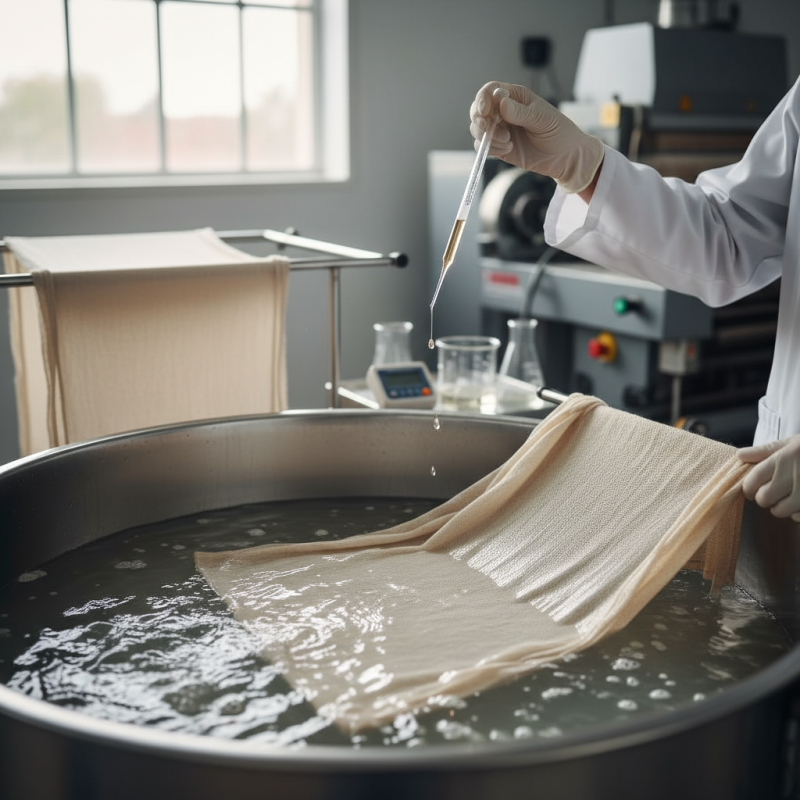
Overview of Desizing Enzymes in Textile Production
Desizing enzymes play a crucial role in textile production. They help to remove starch and other sizing agents from fabrics. These agents are applied during the weaving process to improve the fabric's strength and durability. Reports indicate that around 15% of the weight of woven fabric can come from these additives.
Using enzymes such as amylases can significantly reduce water consumption. In some cases, enzyme applications have led to a 30% decrease in water use during processing. However, not all textile manufacturers are maximizing these benefits. Some still rely on traditional desizing methods, which can consume more resources and time. Enzyme efficiency varies based on temperature and pH, impacting the overall effectiveness of the process.
While the use of desizing enzymes is advantageous, the training gap remains an issue. Many workers may not fully understand enzyme applications, leading to underutilization. Reports show that up to 40% of fabric could still contain residues post-desizing. This raises questions about the optimization of enzyme usage in textile manufacturing and the need for better education in the industry.
Impact of Desizing Enzymes in Textile Production
Types of Desizing Enzymes Used in the Textile Industry
Desizing enzymes play a critical role in textile production, particularly in the preparation of fabrics. Various types of desizing enzymes are used to remove sizing agents from woven fabrics. These agents are essential during weaving but must be removed for subsequent processes. The choice of enzyme can influence efficiency, effectiveness, and overall fabric quality.
Amylases are the most common desizing enzymes. They target starch-based sizing agents. These enzymes break down starch into simpler sugars, allowing for easier removal. Proteases are also utilized, especially for fabrics treated with protein-based sizing agents. These enzymes help dissolve protein residues, enhancing fabric softness. Cellulases assist in improving fabric appearance. They contribute to a smoother texture by removing fuzzy surfaces.
The textile industry faces challenges with enzyme performance. Environmental conditions, like temperature and pH levels, can affect activity. Not all enzymes work well across different fabric types. This variability indicates a need for ongoing research and development. The industry's quest for sustainability also requires attention. Enzymes should reduce environmental impact while maintaining effectiveness. Balancing efficiency and environmental responsibility is essential in modern textile production.
Mechanism of Action: How Desizing Enzymes Work
Desizing enzymes play a crucial role in textile production. They simplify the removal of starch size added during weaving. These enzymes break down starch into simpler sugars. This process ensures that fabrics can absorb dyes and finishes effectively. Without desizing, the fabric may remain stiff and resistant.
The mechanism involves specific enzymes like amylases. They target starch granules, hydrolyzing them efficiently. According to industry reports, using desizing enzymes can improve fabric quality by over 20%. Proper application helps achieve uniform dye uptake and better overall fabric softness. Errors in this process can lead to uneven dyeing and compromised fabric integrity.
Tips: Use precise amounts of enzyme for effective desizing. Too much can weaken the fabric. Monitor temperature and pH closely during processing. They significantly influence enzyme activity. Keep in mind that the right balance is vital for optimal results.
Benefits of Using Desizing Enzymes in Fabric Processing
Desizing enzymes play a crucial role in textile production. They primarily help remove starch and other sizing agents from fabrics. This process is essential before dyeing and finishing. According to recent industry data, using enzymes can reduce desizing times by 30% compared to traditional methods. This efficiency leads to lower water and energy consumption, enhancing sustainability in textile processing.
The benefits extend beyond just time savings. Enzymes can improve the quality of the final fabric. They facilitate better dye uptake and uniformity. A study revealed that fabrics processed with desizing enzymes showed 20% more color retention. However, there are challenges. Some manufacturers still rely on harsher chemical methods. These not only harm the environment but may also impact fabric integrity over time.
The transition to enzymatic desizing is not always seamless. It requires investment in training and equipment. However, the long-term benefits often outweigh these initial hurdles. Integrating enzymes in production is a step towards more eco-friendly practices. As the industry pushes for sustainability, enzymes could reshape textile processing for good.
Environmental Impact and Sustainability of Desizing Enzymes
Desizing enzymes play a crucial role in textile production. They help remove starch and other substances from fabrics before dyeing and finishing. This process is essential for achieving vibrant colors and good fabric quality. However, the environmental impact of desizing processes needs attention. Many traditional desizing methods use harmful chemicals that pollute water and soil.
Switching to enzymatic desizing can significantly reduce these risks. Enzymes are biodegradable and usually require less water. This leads to lower energy consumption and a smaller carbon footprint. Yet, the production and disposal of these enzymes still pose challenges. Not all enzymatic processes are equally sustainable, which requires careful consideration.
Tips: Always research the sourcing of enzymes. Look for suppliers who are committed to sustainable practices. Furthermore, consider the lifecycle of the textiles. Choosing products designed for easy recycling can enhance overall sustainability.
Keeping an eye on innovations in enzyme technology is essential too. However, not every new solution is perfect. Some enzymes may have limited effectiveness under specific conditions. It’s a balancing act between efficiency and environmental welfare. Making informed choices is vital to encourage a sustainable textile industry.
What is the Role of Desizing Enzyme in Textile Production? - Environmental Impact and Sustainability of Desizing Enzymes | Aspect | Details |
| Function of Desizing Enzymes | Remove size materials from woven fabrics to prepare for dyeing and finishing. |
| Types of Enzymes Used | Alpha-amylase, cellulase, xylanase, and protease. |
| Environmental Benefits | Biodegradable nature and lower pollution compared to traditional desizing methods. |
| Water Usage Reduction | Enzyme-based desizing requires less water than chemical processes. |
| Sustainability Aspect | Supports circular economy practices and reduces textile waste. |
| Economic Impact | Cost-effective in the long run due to efficiency and lower resource use. |
| Future Trends | Increase in adoption of biotechnology in textile processing and eco-friendly practices. |