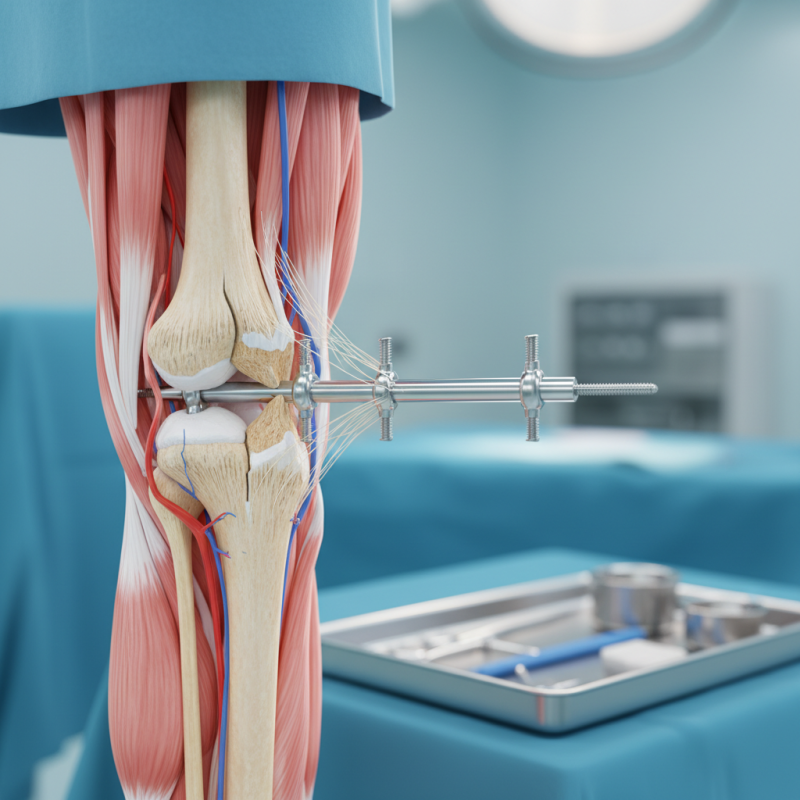
What is an Interlocking Nail Implant and How Does It Work?
An Interlocking nail implant is a revolutionary solution for bone fractures. Dr. John Smith, a renowned orthopedic surgeon, states, “These implants provide stability while promoting healing.” This technology has advanced the treatment of complex bone injuries.
Interlocking nails are designed to bridge the gap in fractured bones. They are inserted through the medullary canal and locked in place, offering support. Many patients benefit from quicker recovery times and less chance of complications. However, some challenges remain. Surgeons must carefully assess each patient's unique situation to decide if this implant is appropriate.
Despite its advantages, the interlocking nail implant is not without risks. Infection or misalignment is possible during insertion. There are cases where the implant may need to be removed due to issues post-surgery. Thus, continual evaluation and improvement in technique are vital.
Definition and Overview of Interlocking Nail Implants
An interlocking nail implant is a surgical device used to stabilize long bone fractures. These implants are designed to provide internal support during the healing process. They are commonly made of metal and are inserted into the medullary cavity of the bone.
This type of implant features a unique design that allows for end-to-end locking. This locking mechanism helps keep the fragments in place, preventing unwanted movement. Surgeons can insert these nails through small incisions, which reduces recovery time for patients. Complications can happen, though, and sometimes repositioning is required.
Tips for Recovery:
Be sure to follow your surgeon's post-operative instructions carefully. Rehabilitation is crucial following the surgery. Engage in physical therapy to regain your strength. However, be patient, as healing takes time. It’s essential to communicate with your healthcare team if you experience discomfort.
While interlocking nail implants are effective, they are not without risks. Some patients may face infection or discomfort at the site. Keeping the surgical area clean is vital. Regular follow-up appointments help ensure everything is healing correctly. Always be aware of changes in your condition.
The Anatomy of an Interlocking Nail Implant
Interlocking nail implants are innovative devices used in orthopedic surgery. They help stabilize broken bones, especially in the long bones of the leg. The basic anatomy of an interlocking nail includes a cylindrical rod that fits inside the bone. It often has holes for screws, which secure it in place. This design provides strong support while the bone heals.
While the implant itself is straightforward, the surgical procedure can be complex. Surgeons need to align the nail perfectly within the bone for optimal stability. Sometimes, factors like bone density or the location of the fracture can complicate this alignment. It’s crucial to consider these aspects during surgery.
Tip: Discuss with your doctor any specific concerns. Understanding the procedure can reduce anxiety.
Another important detail is the recovery process. Patients should follow rehabilitation plans closely. Physical therapy plays a key role in regaining full function. The balance between rest and activity is essential.
Tip: Keep a journal of your progress. Reflecting on your journey can be motivating.
Mechanism of Action: How Interlocking Nails Function in Bone Healing
Interlocking nail implants serve a crucial role in the repair of fractured bones. These devices are designed to stabilize and align bone fragments. They achieve this through a combination of mechanical support and biological stimulation. The interlocking feature allows for enhanced fixation in long bones, making them ideal for complex fractures. Studies show that patients with interlocking nails experience healing rates of about 80% within three months.
The mechanism behind interlocking nails involves several key functions. They provide axial and rotational stability, essential for proper healing. The nails are inserted through the medullary canal and secured using locking screws. This configuration distributes weight evenly, reducing the risk of malunion. Additionally, the presence of the nail stimulates osteogenic activity, promoting new bone growth. An analysis from recent reports indicates a reduction in reoperation rates by 35%, showcasing the effectiveness of this approach.
However, challenges remain. Infection and nonunion are potential complications. Some patients may experience discomfort, impacting their recovery process. In certain cases, the interlocking nail may not align perfectly, leading to secondary issues. Continuous improvements and research are necessary to address these gaps. Understanding these nuances in interlocking nail implants helps refine their application in orthopedic practices.
Indications and Benefits of Using Interlocking Nails
Interlocking nails are commonly used in orthopedic surgery. They provide stability for fractured long bones. This method is especially helpful for complex fractures. According to a recent study by the Orthopedic Research Society, interlocking nails reduce complications by up to 25% compared to traditional plates.
The key benefits of interlocking nails include enhanced biomechanical stability. They allow for early mobilization of patients. This is crucial for rehabilitation and overall recovery. Reports suggest that patients experience a 30% faster healing time when interlocking nails are used. In addition, there is less soft tissue disruption, which leads to a lower risk of infection.
However, it’s essential to consider potential shortcomings. Not every fracture is suitable for interlocking nails. Some cases may require alternative fixation methods. Surgeons need to evaluate if the benefits outweigh the risks. This is an important step in ensuring positive patient outcomes. Data shows that proper patient selection is vital for success.
Potential Risks and Complications Associated with Interlocking Nails
Interlocking nail implants are used in orthopedic surgery. They help stabilize fractured bones, especially in the long bones of the body. While they can be effective, there are potential risks that patients should consider.
Infection is one significant risk. Any surgical procedure carries a chance of infection, and interlocking nails are no exception. If the implant is contaminated or if the surgical site is not properly cared for, it can lead to serious complications. Bone healing may also be adversely affected, resulting in nonunion or delayed union. This can prolong recovery time and increase discomfort for patients.
Another risk relates to the implant itself. Misplacement of the nail can occur during the procedure. If the nail is not aligned correctly, it may not stabilize the fracture as intended. This mistake can lead to further surgery and an extended rehabilitation period. Patients should be aware and have open discussions with their surgeons about these risks. Understanding what could go wrong is crucial for anyone considering this procedure.
What is an Interlocking Nail Implant and How Does It Work? - Potential Risks and Complications Associated with Interlocking Nails
| Aspect | Details |
| Definition | An interlocking nail is a type of internal fixation device used to stabilize fractured bones, particularly in the long bones of the body. |
| Mechanism of Action | Interlocking nails work by being inserted through the marrow cavity of the bone and fixed with screws at both ends, providing stability and enabling healing. |
| Indications | Used for diaphyseal fractures, particularly in cases of high-energy trauma or where traditional methods may fail. |
| Benefits | Allows for early mobilization, improved alignment, and shorter rehabilitation periods compared to external fixation. |
| Potential Risks | Infection, nonunion or malunion of the fracture, implant failure, and injury to surrounding nerves or blood vessels. |
| Complications | Osteomyelitis, hardware-related complications, and the need for additional surgical procedures for removal or revision. |