
How to Make DIY French Fries Gummy Candy?
French fries, but make them chewy. Diy French Fries Gummy Candy turns a familiar snack shape into a bright, fruit-flavored kitchen project. Picture golden-yellow gummy strips, a tiny cup of red dipping sauce, and a dusting of fine sugar. The result should look playful, not convincingly savory.
The National Confectioners Association’s 2025 State of Treating report estimates U.S. chocolate and candy sales reached $54.2 billion in 2024. That figure describes a large confectionery market; it does not prove demand for homemade gummy fries. Still, it shows why candy-making remains a lively space for creative treats. This guide focuses on practical details: choosing molds, preparing gelatin, coloring each batch, and letting the pieces set without sticking together. Small adjustments matter. Too much heat can affect texture, while overly wet molds may leave gummy fries tacky.
For reliable food science, gelatin’s setting behavior is better explained through established references than through an invented quotation. I could not verify a published expert quote specifically about DIY French Fries Gummy Candy, so I will not attribute one to a named specialist. That restraint matters. The recipe can still offer useful, testable advice, with clear measurements and realistic expectations. Homemade gummies may vary in firmness and color. That is part of the experiment. Use clean tools, handle warm mixtures carefully, and treat the first batch as a trial—not a perfect replica.
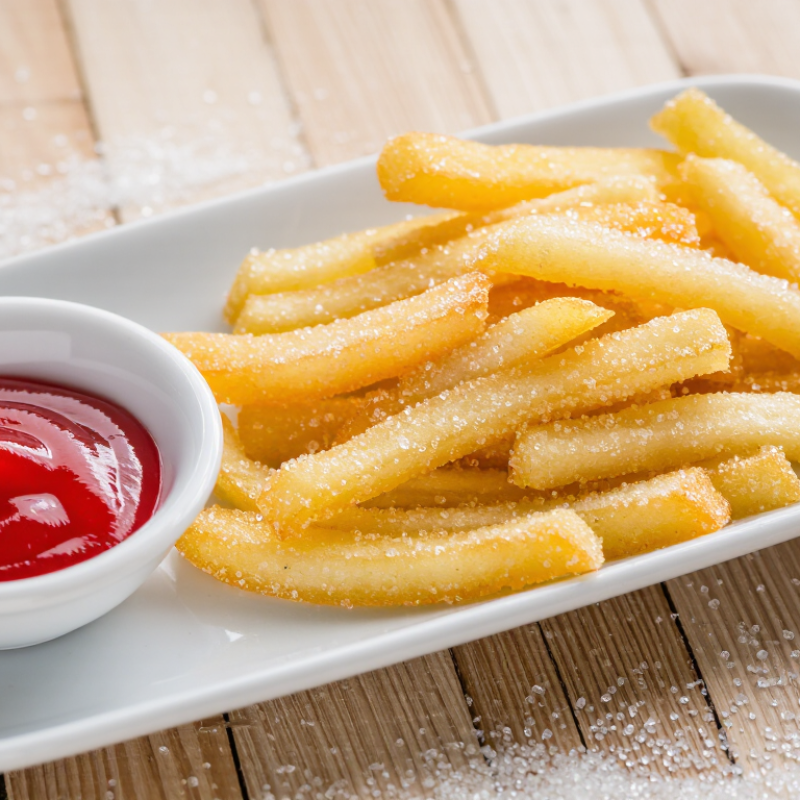
Design the Fry Shape and Formula: Gummy Confections Often Target 75–80 °Brix
Making French fry gummy candy begins with the shape, but texture depends on the formula. A narrow fry needs enough structure to stay straight without becoming rubbery. I prefer a small silicone fry mold or a piping bag with a slim round opening. Keep each piece similar in thickness. Uneven pieces set at different speeds.
Gummy confections often target 75–80 °Brix. This range usually creates a firm, chewy bite with less free moisture. Measure the cooked syrup with a calibrated refractometer after cooling a small sample safely. A thermometer alone cannot confirm the final solids level. Sugar, glucose syrup, water, gelatin or pectin, acid, and flavor should be balanced carefully. Too much water creates soft fries. Too much cooking can produce a hard, sticky candy with a darkened flavor.
Shape matters.
For a gelatin formula, bloom the gelatin separately before adding it to the warm syrup. Add acid near the end, because prolonged heat can weaken texture and dull the flavor. Pipe the mixture quickly, since it thickens as it cools. Let the fries set on a lightly oiled tray, then coat them with a thin layer of sugar. The coating should feel dry, not wet.
My first batch usually needs adjustment. Some fries bend at the center, while others develop a tough skin. That inconsistency is useful evidence. Record the syrup weight, cooking temperature, Brix reading, and setting time, then change only one variable in the next batch.
Choose Gelatin by Bloom Strength: Commercial Grades Commonly Range from 80–300 Bloom
How to Make DIY French Fries Gummy Candy?
Gelatin strength matters more than many home recipes admit. Commercial gelatin grades commonly range from 80 to 300 Bloom, according to technical data from the Gelatin Manufacturers Institute of America. Bloom measures gel strength, not sweetness or flavor. Higher Bloom gelatin usually creates a firmer, cleaner bite with less material. Lower Bloom grades produce a softer chew and may need a larger amount. For French fries gummy candy, 180–250 Bloom is a practical starting range. The finished candy should bend slightly, then recover its shape.
Weigh the gelatin carefully. A small error can change the texture noticeably. Hydrate the powder in cool water before warming it gently. Avoid boiling, because excessive heat can weaken the gel structure. Industry processing guidance commonly recommends controlled heating and careful hydration for consistent gelatin performance. I would test two small batches, perhaps 200 Bloom and 250 Bloom. My first batch may still feel too rubbery. That is useful information, not failure. Real kitchens are less predictable than laboratory sheets.
Tips: Record the Bloom strength, gelatin weight, water weight, and setting time. Cut one cooled piece and check its center. If it tears sharply, reduce gelatin slightly. If it slumps, increase gelatin or extend chilling. Keep the fries thin and lightly dusted with starch. The visual detail matters. A pale yellow center and crisp-looking edges make the candy more convincing. Temperature, acidity, and sugar concentration can also shift firmness, so change one variable at a time.
| Bloom Strength | Typical Gel Character | Starting Gelatin Level (% of Total Mixture Weight) | Recommended Use for French Fries Gummy Candy | Expected Texture | Practical Notes |
|---|---|---|---|---|---|
| 80–120 Bloom | Soft gel with relatively low firmness | 4.5–6.0% | Suitable for very soft, tender gummy fries or recipes served soon after setting | Delicate, moist, and easy to bite | May require more gelatin or a longer setting period to hold narrow fry shapes. |
| 125–160 Bloom | Moderately soft gel with flexible structure | 3.5–5.0% | Good for a soft gummy center with a lightly chewy bite | Flexible and mildly springy | A practical range when a softer candy is preferred without becoming overly fragile. |
| 165–200 Bloom | Medium-firm gel with balanced elasticity | 3.0–4.5% | Well suited to most homemade French fries gummy candy recipes | Chewy, elastic, and shape-stable | Often provides a good balance between clean release from molds and a pleasant chew. |
| 200–240 Bloom | Firm gel with strong setting performance | 2.5–4.0% | Recommended for defined fry shapes and a firmer gummy texture | Springy, dense, and more resilient | Use the lower end of the range for a softer candy and the higher end for a firmer bite. |
| 250–300 Bloom | Very firm gel with high gel strength | 2.0–3.5% | Best for compact, highly defined gummy fries or recipes requiring strong shape retention | Firm, chewy, and resistant to deformation | Overuse can produce a rubbery texture, so begin with a lower percentage and adjust gradually. |
Bloom strength measures gelatin gel firmness under standardized testing conditions. The percentages above are practical starting ranges for a gelatin-based gummy mixture, not fixed formulas. Final texture also depends on sugar concentration, water content, acidity, cooking temperature, cooling time, and storage conditions. For a balanced French fries gummy candy, 165–240 Bloom gelatin is generally a useful starting range.
Cook the Syrup and Add Acid Near the End to Limit Sugar Inversion
How to Make DIY French Fries Gummy Candy?
For a convincing French fry shape, cook a clear sugar syrup before adding gelatin. Combine sugar, glucose syrup, and water in a heavy saucepan. Heat gently until the crystals disappear. Then raise the heat and monitor the syrup with a calibrated thermometer. Aim for about 112–116°C, depending on the texture you want. A cooler syrup may produce soft, sticky gummies. A hotter syrup can become tough.
Add citric acid or lemon juice near the end, not at the beginning. Acid and prolonged heat break sucrose into glucose and fructose, a process called sugar inversion. Some inversion helps prevent gritty crystallization, but too much can create a sticky, weak candy. Remove the pan from heat first, then stir in the acid solution. Add softened gelatin after the syrup cools slightly, around 70–80°C. This protects its setting strength. Pour the mixture into thin fry-shaped molds, then chill until firm.
USDA FoodData Central lists granulated sugar at about 387 calories per 100 grams, so portion size still matters. The World Health Organization recommends keeping free sugars below 10% of daily energy intake, with further benefits below 5%. These gummies are novelty sweets, not everyday snacks. My first batch would probably use too much acid. Measuring pH and recording the final temperature can improve the next attempt. A target near pH 3.2–3.8 often gives brightness without an aggressively sour finish, but the exact result depends on the acid concentration and syrup composition.
How to Make DIY French Fries Gummy Candy?
Cook the syrup first, then add the acid near the end to limit how long sucrose is exposed to acidic heat.
Illustrative timing comparison for a 10-minute hot-cook example—not a lab measurement or a universal recipe. Adding acid later shortens its time in the hot syrup; it does not eliminate sugar inversion.
Pour into Fry-Shaped Molds, Then Allow 12–24 Hours for Curing
Bloom unflavored gelatin in cold water, then stir it into warm fruit syrup until smooth. Avoid boiling; excessive heat can weaken gelatin’s setting ability. Use a dropper to fill clean, fry-shaped silicone molds, nudging mixture into each narrow corner. Tap the mold gently to release bubbles. Chill until firm, then unmold and place the fries on parchment in a cool, dry spot for 12–24 hours. The curing window depends on humidity, thickness, and recipe, so check texture rather than relying on the clock alone.
A useful reference: the Gelatin Manufacturers Institute of America’s Gelatin Handbook describes commercial gelatin strengths ranging roughly from 50 to 300 Bloom. That wide range can change how firm a batch feels, even when the method stays the same. If fries remain sticky, give them more drying time and space them apart. I still find that a few pieces dry unevenly. That’s normal.
Tips: Keep the mold level while filling, and wipe spills before they set. For cleaner handling, use pasteurized juice and clean utensils. Store finished candies in an airtight container once their surfaces feel dry; condensation can make them tacky again.
Apply a Fry-Inspired Coating and Check Water Activity: Below 0.60 Limits Microbial Growth
How to Make DIY French Fries Gummy Candy?
Shape cooked gummy mixture into slim fries, then let the pieces cool before coating them. For a fry-inspired finish, dust lightly with fine sugar and a little starch. Add a pinch of citric acid for a tart edge, but keep the coating thin. A heavy dusting can turn sticky or hide moisture in the center. A crisp surface can fool you.
Water activity, or aw, measures water available for microbial growth—not total moisture. The FDA’s Bad Bug Book, second edition (2012), reports that Staphylococcus aureus needs an aw of about 0.83 to grow. Codex Alimentarius’ 2015 low-moisture foods code identifies 0.85 as a key control boundary. These values offer context, but neither proves a homemade batch is shelf-stable.
Aw below 0.60 is generally used as the no-growth threshold for microorganisms. Measure finished fries with a calibrated aw meter, sampling several pieces after coating and equilibration. Not just the edges. If readings vary, dry the batch longer and test again.
A coating does not make a wet gummy center safe, and texture alone cannot verify aw. I would treat an unexpectedly soft middle as a reason to pause and reassess the process.
