China Top 10 Ceremonial Matcha Suppliers for Global Buyers?
Choosing a reliable Chinese supplier for Ceremonial Matcha takes more than comparing prices. Global buyers need to assess leaf quality, processing, documentation, and the supplier’s ability to meet repeat orders. Product descriptions can sound similar, even when sourcing and production standards differ. Details matter.
This guide compares ten suppliers serving international buyers, while recognizing that no list can fit every business. A café may prioritize vivid color, a smooth finish, and dependable monthly shipments. A distributor may care more about private-label options, minimum order quantities, and export experience. Buyers should ask where the tea is grown, how it is milled, and whether batch-specific test documents are available. Request samples before placing a large order. Check the powder’s appearance, aroma, texture, and taste in both water and milk-based drinks.
Look beyond the product page. Confirm lead times, packaging sizes, storage guidance, payment terms, and how quality concerns are handled. A clear response is useful evidence, but it is not a guarantee. Some supplier claims may be difficult to compare directly. No checklist catches everything. Keep written records, compare samples under similar conditions, and verify important claims with current documents. The suppliers in this overview offer a starting point for that work—not a substitute for buyer due diligence.
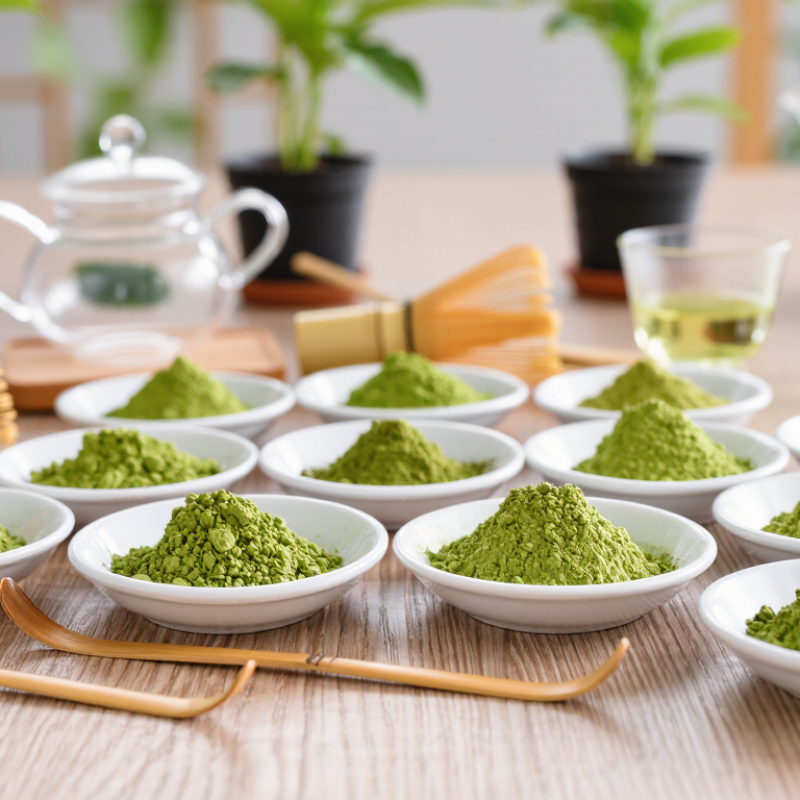
What Defines Ceremonial-Grade Matcha for Global Buyers
For global buyers, “ceremonial grade” is best treated as a quality description, not a universal legal standard. A reliable supplier should explain the leaf origin, harvest period, shading practices, and processing behind each lot. Carefully sorted tencha, stone-milled into a fine powder, can produce a smooth texture and fresh, vegetal aroma. Milling alone proves little.
Look for a bright green color, though lighting and storage can affect what you see. Taste matters. Whisk a small sample with warm water and notice its aroma, bitterness, sweetness, and finish. Good matcha often feels rounded rather than harsh, but preferences differ. A slight astringency is not automatically a flaw; the overall balance matters more.
Ask for lot-specific information, harvest dates, storage guidance, and recent test results for relevant contaminants and pesticide residues. Check that documents identify the same product being offered. Request samples before agreeing to a large order, then compare them under consistent water temperature and preparation. Labels can sound reassuring. They are not evidence by themselves. Freshness, traceability, and repeatable cup quality deserve equal attention, and even careful tasting has limits.
How China’s Matcha Industry Serves International Markets
China’s matcha industry serves international markets through a mix of tea cultivation, processing, and export services. In producing regions, suppliers source leaves grown for matcha and process them into fine powder. Shade, harvest timing, and leaf handling can affect color, aroma, and bitterness. Small differences matter in a bright green bowl.
Export buyers often request samples before discussing larger orders. They may assess particle size, flavor, color, and how the powder behaves in water or milk. Reliable suppliers can share batch records and relevant test results, including checks for pesticide residues and microbiological quality. Requirements vary by destination, so documentation should be reviewed for each shipment. It takes careful coordination.
Packaging and logistics also shape product quality. Matcha can lose freshness when exposed to light, moisture, heat, or air. Opaque, sealed packaging helps protect it during storage and transport, though no package fixes poor handling. Suppliers may work with importers on labeling, shipment schedules, and product specifications. Communication can still be uneven, and buyers should clarify details in writing. China offers broad production capacity, but quality is not uniform across suppliers or batches. That is worth checking, not assuming.
Key Criteria for Evaluating Chinese Matcha Suppliers
Evaluating Chinese matcha suppliers requires more than comparing price per kilogram. Start with origin and traceability: ask which growing area supplied the leaves, how lots are identified, and whether the supplier can provide records from harvest through milling. Processing details matter. Ask about shading practices, steaming, drying, and milling temperature. Request a sample and assess its color, aroma, bitterness, and texture in both water and milk. A vivid green color alone proves little; lighting and storage can mislead.
Check documentation for each production lot, not just a general company certificate. Request recent pesticide-residue, heavy-metal, and microbiological test results, and confirm the testing laboratory’s accreditation. Also review particle-size specifications, moisture limits, packaging barriers, and shelf-life data. Small details matter. A reliable supplier should explain any result that falls outside your agreed specification, rather than simply sending another brochure.
Market growth makes careful screening more important. Grand View Research estimated the global matcha market at USD 3.09 billion in 2023 and projected a 7.9% compound annual growth rate from 2024 to 2030. These are market estimates, not evidence of any supplier’s quality. Compare samples across batches, confirm production capacity and lead times, and clarify how changes in crop or processing will be communicated. No checklist is perfect; a supplier’s answers under specific, repeatable questions can reveal gaps that polished marketing hides.
China’s Top 10 Ceremonial Matcha Suppliers
China’s top 10 ceremonial matcha suppliers are best compared by what they can verify, not by polished sales photos. A serious supplier should explain where its tea is grown, how leaves are shaded and processed, and which harvest the powder comes from. Ask for a current specification sheet and a sample from the same production lot. Small details matter: a fresh sample should look vivid green, smell gently grassy, and whisk without stubborn clumps. Color alone proves little.
For global buyers, request independent test reports covering microbiological quality, pesticide residues, heavy metals, and moisture. Check whether the reports match the product and batch being offered. Ask about milling equipment, packaging barriers, minimum order quantities, and lead times. A supplier’s answers should be specific and consistent. Conveniently vague answers are not reassuring. Nor is a low price, if the grade, origin, or testing basis remains unclear.
A practical top-ten shortlist should include only suppliers that disclose these points and provide traceable documentation. Compare samples blind, using the same water temperature and whisking time; otherwise, tasting results can mislead. Some suppliers may describe a powder as ceremonial without a shared grading standard, so buyers should define their own sensory and quality requirements. I would also revisit those requirements after the first shipment. A beautiful sample can still differ from the bulk order.
China’s Top 10 Ceremonial Matcha Suppliers: A Buyer’s Due-Diligence Guide
Compare suppliers using these 10 verification checks—not an unverified company ranking. “Ceremonial grade” has no universally binding global definition.
The bars count the checks in this buyer checklist: origin traceability (2), cultivar and harvest details (2), milling and freshness (2), laboratory testing and compliance (3), and export logistics (1). They do not represent supplier performance or market statistics.
How to Verify and Select the Right Matcha Supplier
China Top 10 Ceremonial Matcha Suppliers for Global Buyers?
How to Verify and Select the Right Matcha Supplier
The label “ceremonial” does not follow one universally applied grading rule, so buyers should verify the product itself. Grand View Research estimated the global matcha tea market at USD 3.8 billion in 2023 and projected 7.9% annual growth through 2030. That growth makes careful sourcing more important, not less. Ask suppliers for the tea’s growing region, harvest period, processing details, and lot-specific test results. Check that the certificate of analysis matches the batch you will purchase. A polished document alone is not proof.
Tips: Request a small, sealed sample. Whisk it with water and note its color, aroma, texture, and bitterness. Ask an independent laboratory to test relevant batches for pesticide residues, heavy metals, and microbiological quality. Confirm the lab report identifies the same lot number as the sample. Keep records.
Taste can reveal problems, but it cannot confirm safety or origin. Compare several suppliers using the same water temperature and preparation method. Ask how quickly the powder is packed after milling and how it is protected from light, heat, and moisture. Responses that avoid specific evidence deserve follow-up. Even experienced buyers can miss inconsistencies when samples and production lots differ. Require clear, written specifications before placing a large order.