
China Top 10 Cake Modeling Gummy Candy Manufacturers
Cake Modeling Gummy Candy turns a familiar sweet into a small, edible design piece. Buyers may look for flowers, animals, characters, or custom shapes, but appearance is only part of the decision. A gummy must also hold its form, offer a consistent texture, and arrive in suitable packaging. Small details matter. A clear product brief can help manufacturers judge whether a design is practical for their equipment and production volume.
This guide to China’s top 10 Cake Modeling Gummy Candy manufacturers introduces factors buyers can compare, including customization options, ingredient information, quality-control processes, capacity, packaging, and communication. These points are useful for screening suppliers, not proof that any company is the right fit. Ask for current specifications, relevant test documents, and samples made to match your intended product. Check how the gummy behaves after storage, too; a neat sample on day one may not tell the whole story. Even a polished catalog leaves questions unanswered. Manufacturing claims should be verified directly and assessed against your own requirements. This overview aims to make that comparison more practical, while recognizing that supplier details and product capabilities can change.
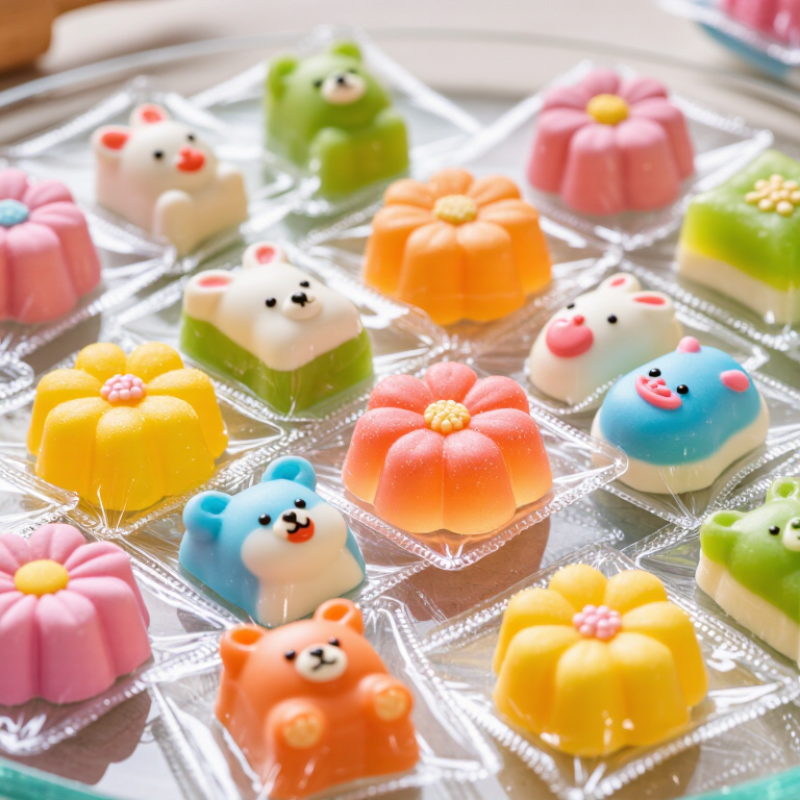
What Cake Modeling Gummy Candy Is and How It Is Made
Cake modeling gummy candy is a chewy confection shaped into edible decorations for cakes, cupcakes, and dessert displays. Unlike hard sugar ornaments, it usually bends slightly and has a springy bite. Makers shape it into petals, leaves, bows, letters, or miniature figures. The final texture depends on the gelling agent, moisture level, and cooking conditions. Small differences matter.
Production typically begins by mixing sugar, glucose syrup, water, flavoring, and a gelling agent such as gelatin or pectin. The mixture is heated until it reaches a controlled consistency, then colored and deposited into molds. After setting, pieces are released and may be cut or finished by hand. It is not quite like clay. Warm fingers can soften gummy decorations, while heat and humidity may make them sticky.
Consistent results depend on accurate weighing, clean equipment, and careful control of time and temperature. Manufacturers may check each batch for shape, color, texture, and surface tackiness. A well-made decoration should hold its form but remain pleasantly chewy. For cake use, it is sensible to add delicate pieces close to serving time, especially in warm rooms. That small detail is easy to overlook. A gummy flower can look perfect at the workbench and droop later.
How China’s Cake Modeling Gummy Candy Industry Is Organized
China Top 10 Cake Modeling Gummy Candy Manufacturers
China’s cake-modeling gummy industry is organized by production capability, not by a distinct official product category. The National Bureau of Statistics groups candy production within food manufacturing, while UN Comtrade’s Harmonized System places many non-cocoa sugar candies under HS 1704. These broad categories make gummy-specific output difficult to isolate. That boundary is not always neat.
In practice, the supply chain links ingredient suppliers, candy makers, mold and tooling specialists, packaging firms, and distributors. Manufacturers may differ in their ability to control texture, hold fine molded details, and produce consistent colors across batches. A gummy shaped like a tiny rose needs a different balance of flexibility and detail than a plain bear. Buyers should compare production samples, not just catalog photos. Photos can flatter.
Tips: Ask for a small trial batch, then check shape retention, surface stickiness, and color consistency after storage. Record the tested specifications before scaling up.
How to Evaluate Chinese Gummy Candy Manufacturers
China Top 10 Cake Modeling Gummy Candy Manufacturers
How to Evaluate Chinese Gummy Candy Manufacturers
A supplier’s catalog shows possibilities, not production consistency. Grand View Research estimated the global gummy market at USD 23.5 billion in 2023 and projected 12.6% annual growth through 2030. This market estimate signals demand, but it does not measure factory quality. For cake modeling gummies, ask for samples in the exact shapes, colors, and sizes you plan to order. Check whether fine edges stay defined and pieces resist sticking after a few days in sealed packaging. Samples matter.
Review the factory’s food-safety certificates and confirm their scope and expiry dates. Request recent third-party test reports for the specific product, not a generic sample. Ask how the manufacturer controls ingredient batches, cooking temperature, molding, and humidity during packing. For colored or detailed shapes, compare samples from separate production runs; small differences can affect appearance. Also clarify minimum order quantities, lead times, packaging options, and how complaints are investigated. A polished audit file helps, but it cannot replace a production trial. I would still verify the actual line.
Profiles of 10 Leading Cake Modeling Gummy Candy Manufacturers in China
China’s cake-modeling gummy manufacturers differ less by price than by how precisely they control shape, elasticity, and surface finish. These ten supplier profiles represent practical capability types: custom-mold specialists, precision depositors, soft-texture developers, firm-structure makers, color-matching teams, small-batch producers, high-volume factories, export-oriented packers, quality-control-led plants, and product-development studios. They are not a verified sales ranking; buyers should confirm each factory’s actual equipment and production records.
Grand View Research estimated the global gummy market at approximately US$22.5 billion in 2023, reflecting strong demand for varied gummy formats. For cake modeling, however, market growth alone says little about performance. Request samples shaped like small leaves or flowers, then check whether edges remain crisp after handling. Ask for batch consistency records, ingredient specifications, moisture-control details, and evidence of food-safety audits. A glossy sample can still crack in a warm room. That matters.
Tips: Test the same mold across several production batches. Compare color, release from the mold, and firmness after 24 hours. Ask suppliers to explain any variation plainly; a polished brochure is not a substitute for reproducible results.
China Cake Modeling Gummy Candy Manufacturers: Profile Count
The headline states that the article profiles 10 manufacturers. This chart shows that stated count and does not imply company-level production or market-share data.
How to Compare Suppliers by Product Range, Quality, and Service
When comparing China-based cake modeling gummy candy manufacturers, look beyond catalog size. Check whether suppliers offer varied shapes, colors, firmness levels, and custom molds. A wide range helps, but it can also mean uneven specialization. Request samples in the intended size and color, then assess flexibility, surface tackiness, and detail after storage. A glossy sample alone proves little.
The 2024 IFIC Food & Health Survey covered 3,000 U.S. adults. It reported that taste influenced food choices for 85%, price for 76%, and healthfulness for 62%. These findings are not specific to gummy decorations, but they show why taste and value deserve attention alongside appearance. For quality checks, request ingredient specifications, batch test records, shelf-life details, and documented color and weight tolerances. Compare how clearly each supplier explains its checks. Service matters, too. Ask about sample turnaround, minimum order quantities, production lead times, and how issues are handled. A quick reply is useful; a clear corrective-action plan is better. Not always easy. Record response times and compare them with actual sample consistency before placing a larger order.
China Top 10 Cake Modeling Gummy Candy Manufacturers - How to Compare Suppliers by Product Range, Quality, and Service
| Comparison Dimension | What to Compare | Evidence to Request | Comparison Note |
|---|---|---|---|
| Product range | Available gummy formats, shapes, sizes, colors, flavors, and textures; confirm whether cake-modeling pieces are made as a standard item or customized. | Current product catalog, specification sheets, and samples representing the requested formats. | Compare the products that can be supplied consistently, not only sample options. |
| Recipe and ingredients | Ingredient declaration, sweeteners, gelling agents, allergens, colors, and flavoring options. Gelatin- and pectin-based gummies can differ in texture and suitability for dietary requirements. | Ingredient list, allergen statement, product specification, and written confirmation of any requested exclusions. | Check the finished-product specification and the requirements of the destination market. |
| Customization capability | Custom shapes, colors, flavors, piece weights, surface finishes, and packaging; clarify whether a new mold or tooling is required. | Written development brief, sample approval process, tooling details, and confirmation of who owns any custom mold. | Confirm costs, approval steps, and production implications before placing an order. |
| Quality consistency | Consistency of piece weight, dimensions, color, texture, flavor, and appearance between production batches. | Product specifications, batch inspection records, sample evaluation criteria, and the supplier’s process for handling nonconforming goods. | Agree on measurable acceptance criteria before production. |
| Food safety controls | Food-safety management, hygiene controls, traceability, allergen management, and controls for applicable ingredients and additives. | Relevant food-production license information, audit or certification documents where applicable, traceability records, and product test reports. | Verify document validity, product scope, and the requirements of the importing market. |
| Standards and compliance | Applicable food-safety, additive-use, hygiene, and labeling requirements. Relevant Chinese standards include GB 17399 for candy, GB 2760 for food-additive use, and GB 14881 for food-production hygiene; destination-market rules may also apply. | Compliance statements, ingredient and additive details, test reports, and a label draft for the target market. | Confirm applicability with the importer or regulatory specialist; requirements depend on product and market. |
| Packaging and shelf life | Available pack formats, protection from moisture and contamination, case configuration, storage instructions, and the stated shelf life. | Packaging specifications, storage conditions, shelf-life substantiation, and samples of the proposed retail or bulk pack. | Assess packaging against the product, shipping conditions, and intended use. |
| Order and production terms | Minimum order quantity, sample-order terms, production lead time, order-change rules, and capacity for repeat orders. | A written quotation, production schedule, sample policy, and confirmation of the terms for repeat orders. | Compare the same product specification, order quantity, and delivery basis. |
| Export and logistics support | Experience preparing export documentation, carton and pallet information, shipping coordination, and market-specific documents when applicable. | A sample document set with confidential details removed, packing specifications, and the supplier’s stated shipping responsibilities. | Confirm responsibilities and required documents for the actual destination and shipping terms. |
| Communication and after-sales service | Response clarity, sample follow-up, issue escalation, complaint handling, and support with specification or packaging changes. | Named contact roles, written response process, complaint procedure, and agreed communication milestones. | Assess service through documented responses during sampling and quotation. |
Supplier-specific performance is not stated here; verify all product, quality, certification, pricing, and delivery information directly with each supplier.
