top of page

China Top 10 Black Pepper Extract Manufacturers?

China’s Black Pepper Extract sector is gaining attention as buyers seek standardized piperine, traceable sourcing, and reliable manufacturing. This overview examines ten Chinese manufacturers through practical criteria. These include extraction technology, piperine concentration, testing capacity, documentation, export experience, and production scale.

Professional reports show why the category matters. Grand View Research identifies rising demand for pepper-based functional ingredients in nutraceuticals, food, and personal-care products. Market Research Future also connects growth with consumer interest in botanical wellness ingredients. However, market estimates differ by report. Definitions, regional coverage, and extraction formats are not always consistent. That detail deserves attention.

Scientific literature adds useful context. A review by Dr. S. Srinivasan describes piperine as “the major pungent alkaloid present in black pepper.” The compound gives Black Pepper Extract its characteristic sharpness and supports its commercial value. Yet concentration alone does not prove superior quality. A strong supplier should provide batch-specific certificates, pesticide screening, heavy-metal results, microbiological data, and clear origin records. Look for clean labels. Check the numbers.

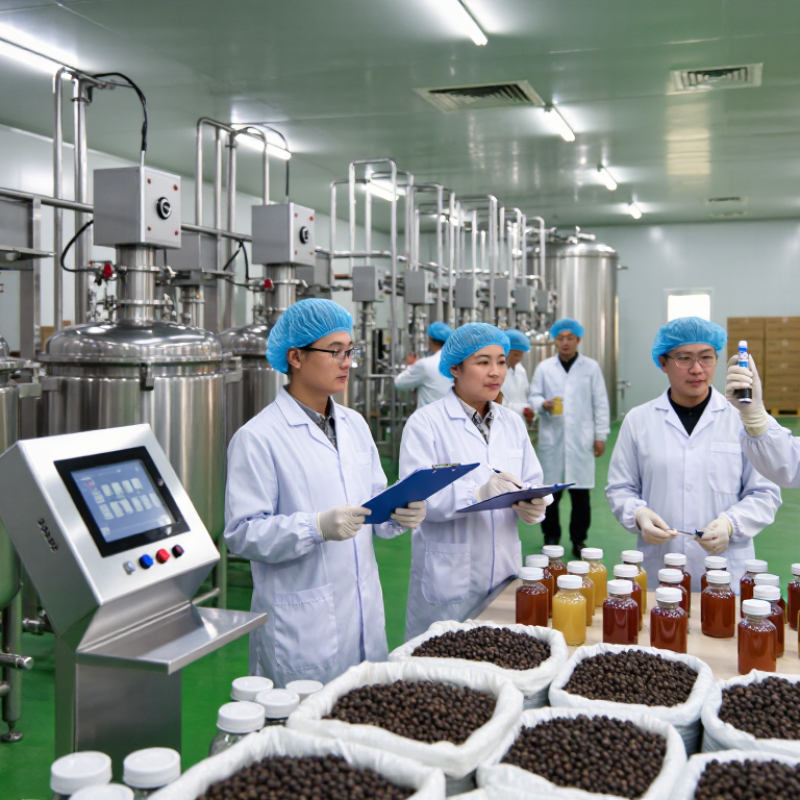
This China-focused comparison is therefore not a simple popularity list. It is an initial screening tool for importers, formulators, and private-label brands. Factory photographs may show polished stainless-steel lines, but photographs cannot confirm process control. Some manufacturers publish limited technical information. That gap should encourage further verification, not automatic rejection. The final choice depends on application, regulatory requirements, minimum order quantities, lead times, and transparent communication. Reliable evidence matters more than confident marketing.
China Top 10 Black Pepper Extract Manufacturers?

China’s Black Pepper Extract Industry: Scope and Selection Criteria

China’s black pepper extract industry covers raw pepper sourcing, solvent extraction, piperine standardization, drying, and formulation support. Suppliers may serve food, supplement, and research-related applications. Experienced buyers inspect the full chain, not only the final powder. Origin records, harvest dates, and storage conditions can affect aroma and active content.

Selection should begin with a clear specification. Confirm piperine content, moisture, particle size, residual solvents, heavy metals, pesticides, and microbiological limits. HPLC results should match an identifiable batch number. A credible manufacturer can provide a certificate of analysis and explain its testing method. Factory hygiene, equipment calibration, and documented quality procedures also deserve attention. Numbers matter. Traceability matters more.

Physical samples reveal practical issues. Black pepper extract may show strong pungency, uneven color, or caking after transport. Packaging should protect it from humidity and excessive heat. Buyers should review production capacity, lead times, export documentation, and change-control procedures. A low quotation can hide weak testing or unstable raw materials. This is where judgment becomes difficult. Even a polished audit may miss seasonal variation. Retesting independent samples is sensible, although it increases time and cost. A careful assessment should compare technical evidence with actual batch performance, while keeping all intended uses within applicable food, supplement, and chemical regulations.

China Top 10 Black Pepper Extract Manufacturers? — China’s Black Pepper Extract Industry: Scope and Selection Criteria

The chart presents a practical, non-company-specific framework for evaluating black pepper extract suppliers in China. The criteria reflect common requirements for botanical ingredient sourcing, including active-content consistency, regulatory compliance, traceability, supply stability, and processing capability. The percentages are screening weights, not market-share data.

Selection priority: verify piperine or other declared active content by batch, confirm food or nutraceutical regulatory documentation, review origin and traceability records, assess continuity of raw-material supply, and evaluate extraction, drying, testing, and quality-control capabilities.

Top 10 Black Pepper Extract Manufacturers in China

China’s top ten black pepper extract manufacturers are often compared through quality, consistency, and technical support. A reliable supplier should explain its raw pepper origin, extraction method, and piperine standardization clearly. Black pepper from different regions can vary in color, aroma, moisture, and active compound levels.

Strong manufacturers usually provide batch-specific certificates of analysis. These documents should cover piperine content, microbial limits, heavy metals, pesticide residues, and residual solvents. Independent laboratory testing adds confidence. It also helps buyers verify whether the delivered powder matches the approved sample.

Manufacturing experience matters. Facilities with controlled temperature, documented cleaning procedures, and traceable production records are easier to evaluate. Ask about particle size, carrier materials, packaging layers, shelf life, and storage conditions. A small sample can reveal flowability, odor, color, and dispersion in a finished formula.

Some suppliers offer impressive specifications but weak communication. That is a warning sign. Others respond quickly yet provide limited technical evidence. Neither factor should decide the ranking alone. A careful review should compare factory audits, production capacity, minimum order quantities, export experience, and after-sales support. No ranking stays perfect forever. Crop changes and process upgrades can alter performance.

Product Types, Specifications, and Manufacturing Capabilities

China’s top ten black pepper extract manufacturers are often compared by product range, specifications, and production depth. Common products include piperine-standardized extract, black pepper oleoresin, water-dispersible powder, and liquid concentrates. Some facilities also develop customized blends for food, beverage, and supplement applications.

Typical piperine specifications range from 10% to 95%, while premium batches may reach 98%. Buyers should check moisture, particle size, ash, microbial limits, heavy metals, and residual solvent data. A fine powder may improve dispersion, but it can also absorb moisture quickly. Airtight packaging matters. Dark fiber drums or sealed aluminum bags help protect color and aroma during storage.

Manufacturing capability depends on extraction control, drying technology, and laboratory testing. Experienced factories usually provide batch traceability, retained samples, in-process testing, and certificates of analysis. Some operate under GMP, HACCP, or ISO-based systems. Others offer pilot batches before full-scale production, which reduces formulation risk. Extraction yield alone is not enough. Aroma, piperine consistency, and clean processing also matter.

A practical supplier review should include an on-site audit, method verification, and stability data. Rankings can change. Catalog claims are not always equally precise. A supplier may show strong equipment but limited customization experience. That detail deserves closer questioning before approval.

Quality Standards, Certifications, and Regulatory Compliance

China Top 10 Black Pepper Extract Manufacturers?

When evaluating China’s top ten black pepper extract manufacturers, quality evidence matters more than production claims. Codex CXS 326-2017 provides identity and hygiene guidance for dried pepper products. Extract suppliers should also operate under ISO 22000:2018 food safety systems. HACCP records must cover raw pepper, extraction, concentration, and packing. Batch testing should include pesticide residues, heavy metals, microbial counts, and solvent residues. ISO/IEC 17025 accreditation strengthens laboratory reliability.

Regulatory limits require careful review. Under EU Regulation 2023/915, spices generally face maximum limits of 5 μg/kg for aflatoxin B1 and 10 μg/kg for total aflatoxins. Chinese buyers should check GB 2761 for mycotoxins, GB 2762 for contaminants, and GB 2763 for pesticide residues. The European Commission’s RASFF annual reports continue to identify microbial contamination and mycotoxins as recurring food-import risks. These findings make supplier traceability essential. A certificate alone is not proof of every batch. That assumption needs challenging.

Tips: Request three recent certificates of analysis. Match batch numbers with production records. Verify testing laboratories through ISO/IEC 17025 databases. Ask for extraction-solvent declarations and allergen statements. Review stability data at real storage temperatures, not only ideal conditions. A strong manufacturer should explain deviations honestly. Perfect paperwork can still hide weak sampling.

How to Compare and Choose a Reliable Manufacturer

China Top 10 Black Pepper Extract Manufacturers?
How to Compare and Choose a Reliable Manufacturer

China’s black pepper extract sector serves food, nutrition, and flavor applications. Mordor Intelligence estimates the global black pepper market at about USD 5.47 billion in 2024, with steady growth toward 2029. This demand attracts capable factories and weaker suppliers. Compare more than price. Request piperine content, moisture, microbial results, heavy-metal limits, and solvent-residue data for recent batches. Confirm whether testing uses validated methods. A polished certificate is not enough. Batch traceability matters.

Tips: Ask for three independent batch COAs, not one. Check the extraction solvent and concentration ratio. Request a small sample before signing a large order. Visit the facility, or arrange a documented third-party audit. Review production records, warehouse humidity, calibration logs, and recall procedures. ISO 22000 certification can support food-safety controls, but it does not prove every batch meets your specification.

Reliable manufacturers explain variation clearly. Piperine may change with raw pepper origin, grinding size, and extraction temperature. Ask for the specification’s acceptance range, not only its target number. The Codex Alimentarius standard for pepper products provides useful quality and safety reference points, while your destination market may require stricter limits. One common mistake is trusting a low quotation too quickly. It may exclude testing, packaging, stability studies, or delivery insurance. I would also question unusually perfect results; real agricultural materials vary. That hesitation can prevent an expensive repeat order.

China Top 10 Black Pepper Extract Manufacturers? - How to Compare and Choose a Reliable Manufacturer

No. Comparison Dimension What a Reliable Manufacturer Should Provide Documents or Evidence to Request Important Selection Notes
1 Raw Material Origin and Identity Clearly identified Piper nigrum fruit or peppercorn material, with documented origin, harvest information, and supplier traceability. Raw-material specification, botanical identification report, supplier qualification records, and lot traceability documents. Do not evaluate an extract only by color or aroma; botanical identity and traceability are essential for authenticity.
2 Piperine Standardization A defined piperine specification, with batch results reported using a validated quantitative method. Commercial extracts are often standardized to a declared piperine level, such as 95%, but the target must be agreed in the product specification. Product specification, batch-specific certificate of analysis, chromatogram, and test-method reference, commonly HPLC or an equivalent validated method. Compare the declared value, testing method, acceptance range, and whether the result applies to the finished batch rather than a sample blend.
3 Extraction Technology A controlled extraction process using an appropriate solvent system, such as food-grade ethanol, water, or supercritical carbon dioxide, depending on the intended application. Process flow chart, solvent statement, residual-solvent results, in-process controls, and production batch records. The best process depends on the required purity, sensory profile, regulatory market, and final dosage form; “natural” alone is not a sufficient technical claim.
4 Purity and Contaminant Control Routine controls for heavy metals, pesticides, microorganisms, aflatoxins where applicable, foreign matter, and residual solvents. Independent laboratory reports, contaminant specifications, sampling procedures, and applicable regulatory-limit references. Limits vary by destination country and product category. Confirm compliance with the regulations that apply to the finished product, not just the ingredient.
5 Quality Management System Documented GMP-based procedures covering personnel hygiene, equipment maintenance, calibration, sanitation, deviations, and corrective actions. Current certification, audit report or audit summary, quality manual excerpt, deviation procedure, and CAPA records when available. A certificate should be checked for scope, validity, issuing organization, and the actual manufacturing site covered by the certificate.
6 Testing and Laboratory Capability Access to qualified laboratory testing for identity, assay, moisture, microbiology, contaminants, and physical properties such as particle size. Laboratory scope, instrument list, method validation or verification documents, analyst qualification records, and third-party laboratory accreditation where applicable. In-house testing can improve speed, while independent testing can add impartiality. Strong suppliers normally define when each is used.
7 Product Form and Physical Specifications Consistent powder or liquid form with defined appearance, odor, moisture or loss-on-drying, bulk density, particle size, solubility, and packaging requirements. Technical data sheet, finished-product specification, sample inspection report, and packaging material specification. Physical performance can affect blending, encapsulation, dissolution, flowability, and stability, even when the piperine assay is acceptable.
8 Stability and Shelf Life A justified shelf life supported by stability data under specified storage conditions, with packaging that protects the extract from moisture, oxygen, light, and contamination. Stability protocol, available time-point results, storage recommendations, retest policy, and packaging qualification information. A printed expiry date is not enough; ask how piperine content, moisture, color, and microbiological quality are monitored over time.
9 Manufacturing and Supply Capacity Clearly defined minimum order quantity, production lead time, batch size, capacity planning, change-control process, and contingency arrangements for raw-material shortages. Production schedule, capacity statement, lead-time commitment, business continuity plan, and written change-notification procedure. Select a supplier that can maintain consistent quality at your expected volume rather than relying only on the lowest initial quotation.
10 Export, Regulatory, and Customer Support Ability to provide export documentation, country-specific specifications, allergen and GMO statements where relevant, declarations of conformity, and responsive technical communication. Commercial invoice, packing list, certificate of analysis, safety data sheet when required, origin documentation, and regulatory support file. Confirm whether the supplier supports your destination market and whether all claims can be substantiated for the intended food, supplement, cosmetic, or other application.

Recommended evaluation method: request the same sample, specification, batch certificate, compliance documents, quotation, and lead-time commitment from each shortlisted manufacturer, then compare quality, documentation, consistency, service, and total landed cost together.

  • LinkedIn Social Icon

© 2024 by LIPOND INTERNATIONAL INC. All rights reserved. Blog

bottom of page