Best Rubber Track Tractor Types in 2026 for Buyers?
In 2026, choosing a Rubber Track Tractor means matching the machine to real working conditions, not just comparing horsepower. Compact models can suit orchards, vineyards, and confined plots, where turning room matters. Mid-size tractors often balance field capacity with transport and operating costs. Larger, higher-powered types may handle demanding tillage or heavy implements, but they can be excessive for smaller farms. There is no universal winner.
The differences become clear in wet soil, tight headlands, and long workdays. Track width, ground pressure, engine output, cab comfort, and undercarriage access all deserve close attention. Ask how readily local dealers can supply parts and support routine maintenance. A test drive helps reveal ride quality and visibility. Small details matter. So does the operator’s experience. Published specifications are useful, but conditions in the field can change how a tractor feels and performs. I would not treat any category as automatically best; the right choice depends on acreage, soil, implements, and annual hours. This guide compares the main rubber-track tractor types buyers may encounter in 2026 and explains the trade-offs behind each. It also highlights practical checks to make before purchase, so readers can narrow their options with clearer expectations and fewer assumptions.
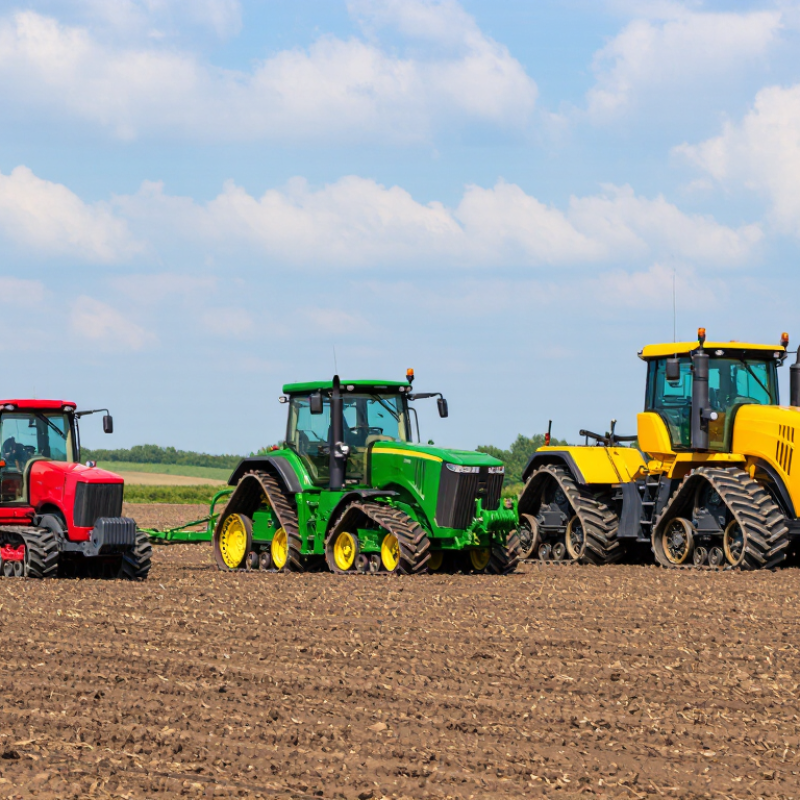
Classify Rubber-Track Tractors by Compact, Row-Crop, and High-Power Types
Rubber-track tractors in 2026 fit three broad jobs: compact work, row-crop farming, and high-power field operations. Compact models suit orchards, greenhouses, and tight farm lanes. Their shorter frames can turn around small headlands, while wide rubber tracks spread weight across soft soil. Check overall width before buying; a tractor that fits the field may still struggle at the shed door. Small machines have limits. They may lack the lift capacity or traction needed for heavier implements.
Row-crop types balance crop clearance with stable traction. Adjustable track width can help match planting rows, and a clear view of the front implement makes precise passes easier. Measure row spacing and headland width, then test turning with the equipment attached. High-power types are built for demanding tillage, large planters, and long working days. Their wider tracks can reduce soil pressure, but the undercarriage, cooling system, and service access deserve close inspection. More horsepower is not automatically better.
Tips: Match track width to your soil and row spacing. Ask for operating weight, rated implement capacity, and maintenance intervals in writing. If possible, test the tractor on damp ground; showroom floors reveal very little. One trade-off is easy to overlook: rubber tracks protect soil, yet replacement costs can be substantial.
Compare 2-Track and 4-Track Layouts Using OECD Code 2 Drawbar Tests
Best Rubber Track Tractor Types in 2026 for Buyers?
For a useful 2-track versus 4-track comparison, look beyond the machine’s rated engine power. Drawbar testing measures the pull available at the hitch, alongside factors such as speed, fuel use, and track slip. Check the report for ballast, track tension, surface, and test conditions. Small differences matter. A firm test surface may not predict performance in wet, loose soil.
A 2-track layout uses two long tracks, which can simplify the running gear and reduce the number of components. A 4-track layout uses four shorter tracks, often with more contact points and greater flexibility over uneven ground. Neither layout wins every task. Compare drawbar results at similar speeds and loads, then consider how the tractor will turn, carry an implement, and travel across headlands.
Treat “OECD Code 2 drawbar test” as a prompt to inspect the full test documentation, not as a ranking by itself. Confirm the code edition, measured values, and whether both tractors were tested under comparable conditions. The code label alone may not establish a direct, standardized comparison between track layouts. I would also question tidy claims that one arrangement always delivers better traction. A muddy field, worn tracks, or poor ballast can overturn a neat test result.
Match Track Gauge to Common 30-, 36-, and 38-Inch Crop Rows
Best Rubber Track Tractor Types in 2026 for Buyers?
Match Track Gauge to Common 30-, 36-, and 38-Inch Crop Rows
For row-crop work, match the tractor’s track gauge to the spacing between crop rows. Gauge usually refers to the distance between the track centerlines, not the outside edges. Check the machine’s specifications, then confirm the measurement on the actual setup. A few inches can affect clearance.
With 30-inch rows, a narrower configuration may help keep tracks between planted rows, but wheel or track placement varies by tractor. For 36- and 38-inch rows, verify that the tracks clear the crop while carrying the intended implement. Measure from row center to row center in the field, and check turning clearance at headlands. Do not rely on the listed gauge alone. Soil conditions, track width, and crop growth can change what fits safely. It is easy to over-focus on a brochure number; that is not enough.
Tips: Measure both track centerlines and track edges. Check clearance with the implement lowered, then make a slow test pass in a representative section. If plants brush the track, reconsider the setup. This check takes time, but skipping it can cost more.
Best Rubber Track Tractor Types in 2026 for Buyers: Match Track Gauge to Common Crop Rows | Crop Row Spacing | Illustrative Track Gauge | Suitable Tractor Type | Why It Can Fit | Buyer Checks |
30 inches
Common narrow-row spacing | 60 inches
Example: two row intervals | Adjustable-gauge row-crop track tractor | A narrow, adjustable configuration can suit operations that need to travel between crop rows while maintaining a gauge coordinated with the planting pattern. | Confirm the tractor can reach the required gauge and that track width, fenders, and implement clearance protect the crop. |
36 inches
Used in some row-crop systems | 72 inches
Example: two row intervals | Adjustable-gauge four-track tractor | Four-track layouts can provide traction and flotation; an adjustable chassis may help coordinate front and rear track positions with the field’s row pattern. | Check the adjustment range, front-to-rear alignment, turning clearance, and compatibility with the planter and other implements. |
38 inches
Used in some regional crop systems | 76 inches
Example: two row intervals | Adjustable-gauge row-crop or four-track tractor | A gauge based on two row intervals can be a useful starting point when matching track placement to this spacing, subject to the tractor’s available settings. | Verify the exact gauge settings and track-to-row clearance; do not assume every tractor can be adjusted to 76 inches. |
Gauge note: The figures above are illustrative center-to-center track-gauge targets, calculated as two times the stated row spacing (30 × 2 = 60, 36 × 2 = 72, and 38 × 2 = 76 inches). Actual fit depends on tractor design, track width, crop clearance, implement setup, and available gauge adjustments. Confirm specifications and field fit before buying.
Assess Engine and Drawbar Power with Nebraska Tractor Test Data
Rubber-track tractors are not interchangeable. Row-crop models need steady traction between narrow rows, while high-horsepower units often face heavy draft work. Buyers should compare measured drawbar output, not engine horsepower alone. Nebraska Tractor Test Laboratory reports publish engine and drawbar performance under controlled test conditions, including power, pull, speed, and fuel use. Start there.
The relationship is practical: drawbar horsepower equals pull in pounds multiplied by speed in miles per hour, divided by 375. For example, a tractor producing 20,000 pounds of pull at 5 mph delivers about 267 drawbar horsepower. That is an illustrative calculation, not a test result. In Nebraska test data, compare drawbar horsepower at similar speeds and note the test conditions. A strong peak figure can mislead. Look for useful power across the speeds your work requires.
Check fuel consumption alongside power. The laboratory’s reports include fuel-use measurements, which help buyers judge the cost of sustained pulling rather than a brief peak. Also compare track width, ballast, and operating weight with the tested configuration; differences can change field performance. Small details matter. Nebraska results offer a sound baseline, but soil moisture, implement setup, and operator choices still shape real-world output. A clean comparison is useful, not perfect.
Verify Track Options, Operating Weight, and Emissions in OEM Specifications
Rubber-track tractors in 2026 range from compact machines for orchards and narrow plots to heavier agricultural and construction models. The right type depends on soil, slope, transport limits, and daily tasks. A machine that feels stable on soft ground may be unnecessarily heavy for delicate turf. Check the OEM specification sheet, not just the sales description.
Track options matter. Confirm available track widths, tread patterns, and approved combinations for the exact model. Wider tracks can spread load, but may affect transport width and turning clearance. Compare operating weight with the cab, fuel, ballast, and attachments included; published figures may use a different configuration. Small differences matter. For a fair comparison, ask the dealer to identify the tested setup and provide the matching specification document. I would still verify it against the machine’s serial-specific records.
Tips: Check the engine emissions information in the OEM documents for your intended market. Confirm the engine family and stated certification, and ask how after-treatment affects service access. Photograph the track label and machine data plate before purchase. It is a simple step, but easy to forget. If figures conflict across brochures, request written clarification before comparing prices.