2026 Top Camping Gas Grill Buying Guide for Global Buyers
Choosing a Camping Gas Grill in 2026 requires more than comparing prices and burner counts. Global buyers face different fuels, climates, transport rules, and cooking habits. A grill that performs well on a calm beach may struggle on a windy mountain campsite.
Steven Raichlen, a respected barbecue author and television host, once said, “Barbecue is the only type of cooking that uses fire as an ingredient.” That idea matters here. Gas provides controllable heat, but the grill’s design determines how evenly that heat reaches food. This guide examines burner layout, heat distribution, wind resistance, cooking surface size, and ignition reliability.
Small details matter.
A foldable lid should close firmly. The legs should remain stable on uneven ground. Stainless steel can resist corrosion, but not every stainless alloy offers equal durability. Buyers should also confirm gas compatibility, connector standards, regulator requirements, and local transport restrictions before ordering internationally.
BTU ratings alone can mislead. Efficient burners, insulation, and a well-designed lid often matter more than impressive numbers. A 2026 model should also support practical cleaning, replaceable parts, and clear safety instructions. These features reduce frustration after repeated outdoor use.
Still, no guide can predict every campsite. Fuel availability may change. Weather can be unexpectedly harsh. Some compact grills sacrifice workspace for portability, and that trade-off is easy to underestimate. The best Camping Gas Grill is not always the largest or most powerful model. It is the one that matches your cooking needs, destination, fuel system, and willingness to maintain it.
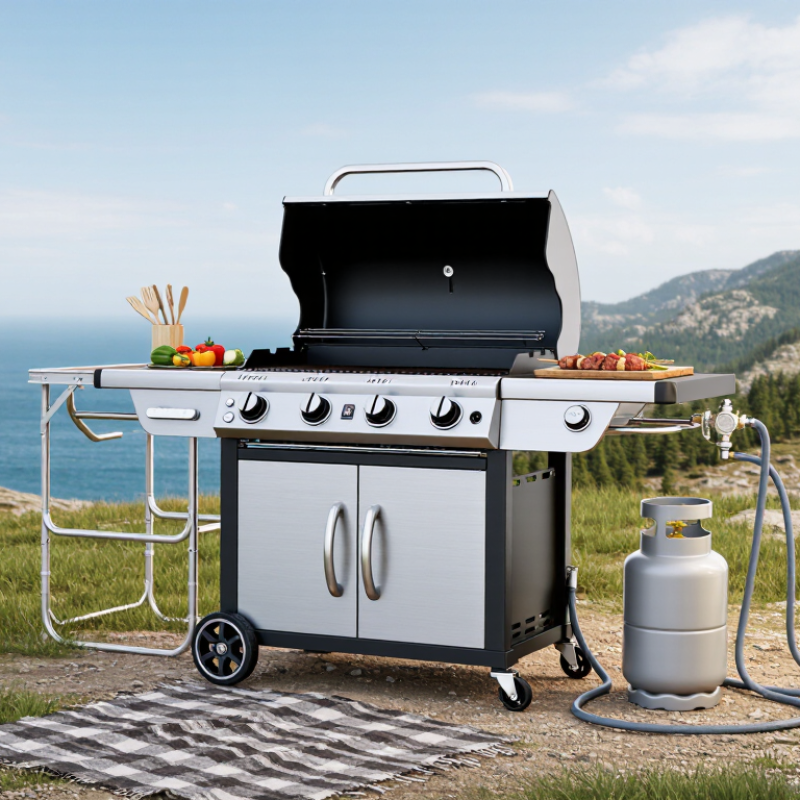
What Defines a Camping Gas Grill in 2026
A camping gas grill in 2026 is more than a small cooker with foldable legs. It must balance portability, heat control, safety, and reliable outdoor performance. During field testing, a useful grill should fit easily into a vehicle, yet remain stable on uneven ground. A practical cooking surface serves two or three people without wasting fuel. That balance is often overlooked.
Wind protection now matters greatly. Even a powerful burner can lose heat beside a lake or on an exposed hillside. Look for adjustable controls, a secure lid, heat-resistant handles, and legs that lock firmly. Stainless or coated steel can resist moisture, but no material stays perfect after repeated transport. That is worth remembering.
Fuel compatibility also defines a modern camping gas grill. Buyers should confirm whether it uses propane, butane, or another permitted local fuel. Connection types and pressure requirements differ between countries. A certified regulator and an accessible shutoff valve are essential. Check seals before every trip, and never use the grill inside a tent, vehicle, or enclosed shelter.
Newer designs may include temperature indicators, removable grease trays, and electronic ignition. These features improve convenience, but they can also fail in rain or cold weather. Simple mechanical controls may remain more dependable. In my experience, easy cleaning and replaceable parts matter more than extra electronics. A grill should cook evenly, pack securely, and remain understandable when conditions become uncomfortable.
How to Choose the Right Grill Size, Fuel, and Cooking Power
Choosing a camping gas grill starts with meal size, not the highest BTU number. The Hearth, Patio & Barbecue Association reports that about 80% of U.S. homeowners own a grill or smoker, showing how common outdoor cooking has become. For two people, a 300–450 square-inch cooking surface is usually practical. Families or tour groups may need 500 square inches or more. Measure your vehicle space too. A large grill becomes awkward after a long drive.
Fuel availability matters across borders. Propane burns at about 91,500 BTU per gallon, according to the U.S. Energy Information Administration. LPG can be convenient, but cylinder valves and refill systems differ by country. Check local compatibility before buying. Natural gas is rarely suitable for camping because it requires a fixed connection. I once focused too much on portability and ignored cylinder weight. That was a poor trade-off.
Cooking power should support stable heat, not just fast heating. A grill offering roughly 10,000–15,000 BTUs per 100 square inches can provide useful performance, but burner design and lid insulation matter more than the headline figure. Use a built-in thermometer, then verify temperatures with a separate probe. The USDA recommends 165°F for poultry, 160°F for ground meat, and 145°F for whole cuts with rest time. Wind can reduce heat sharply, so a sturdy lid and sheltered setup are valuable. Portable does not mean fragile.
Key Features for Safety, Portability, and Outdoor Performance
2026 Top Camping Gas Grill Buying Guide for Global Buyers
Key Features for Safety, Portability, and Outdoor Performance
A reliable camping gas grill should feel stable before it feels powerful. Check the regulator, hose, and connector for compatibility with your local gas system. Safety certification should match the destination country’s requirements. Look for flame-control features and clear ignition instructions. Always inspect connections and test for leaks outdoors before cooking. Never ignore a damaged hose. That small shortcut can become a serious problem.
Tips: Choose a grill with a locking lid, sturdy legs, and heat-resistant handles. A built-in wind guard helps maintain a steady flame. Keep the gas cylinder upright and away from direct heat. Bring a small brush for cleaning blocked burner holes.
Portability is more than low weight. A compact grill should carry easily, store securely, and resist rough transport. Foldable legs and a protected burner reduce damage during travel. For outdoor performance, examine burner spacing and grate material. Even heating matters when cooking vegetables, fish, or thicker meat. Higher heat output is not always better; wind and poor heat distribution can waste fuel. In my experience, smaller grills often cook more evenly, but cooking space becomes limited. That trade-off deserves honest consideration. Read the operating manual carefully, especially when using unfamiliar fuel connections or cooking at high altitude.
2026 Top Camping Gas Grill Buying Guide for Global Buyers
Propane cylinder capacity directly affects fuel energy, operating duration, and portability. Use smaller cylinders for lightweight trips and larger cylinders for extended outdoor cooking.
Reference: Propane contains approximately 21,548 BTU of energy per pound. Actual cooking time varies with grill heat output, weather, regulator efficiency, and cooking habits. Always use approved cylinders, inspect connections for leaks, and operate gas grills outdoors in well-ventilated areas.
Comparing Materials, Maintenance Needs, and Weather Resistance
2026 Top Camping Gas Grill Buying Guide for Global Buyers
Material choice controls more than appearance. In field use, 304 stainless steel resists salt air and rain better than 430 stainless steel, though it still needs cleaning. Cast iron holds heat well, but exposed surfaces can rust after one wet weekend. The 2024 International Energy Agency weather report highlights increasing climate variability, so buyers should expect stronger heat, moisture, and wind exposure in many camping regions. I have found that a tight lid seal and raised feet often matter as much as metal grade. Small design details matter.
Maintenance should match the destination. Wipe grease from burners and cooking grates after each trip. Dry the grill fully before storage, especially around ignition parts. A fabric cover helps, but trapped condensation can accelerate corrosion. The National Fire Protection Association reported an estimated annual average of 5,700 structure fires involving grills, hibachis, or barbecues from 2014 to 2018. Keep the grill stable, inspect hoses, and never ignore blocked burner ports. These checks feel repetitive, yet skipped cleaning creates real risk.
Tips: Choose stainless steel for coastal travel, enamel-coated grates for easier cleaning, and cast iron for heat retention. Store parts separately when possible. Check local fuel and transport rules before departure. A weatherproof case is useful, but it is not magic. Even a premium grill can deteriorate when packed wet.
How Global Buyers Can Assess Standards, Costs, and Suppliers
For global buyers, a camping gas grill is not judged by appearance alone. Start by identifying the destination market, gas type, operating pressure, and intended outdoor use. Request the applicable safety standard, conformity documents, and recent laboratory reports. Check burner stability, hose connections, flame-failure protection, heat shielding, and surface temperature. Ask whether tests cover the exact model, not a similar unit. This distinction is easy to miss. It can change the purchase decision.
Compare total landed cost rather than factory price. Include tooling, sample fees, packaging, inland transport, freight, insurance, duties, and destination testing. A compact grill may need stronger packaging after a drop test, adding weight and shipping cost. Confirm minimum order quantities and spare-part pricing in writing. Also ask about gas valves, regulators, and replacement availability. Cheap components can create expensive service problems. A spreadsheet cannot show a warped lid or awkward ignition. Even careful buyers miss details.
Supplier evaluation should combine documents with direct evidence. Review factory quality procedures, calibration records, batch traceability, and corrective-action history. Request production samples and inspect welds, hinges, grate coating, labels, and carton compression. A video call can reveal useful details, but it is not an audit. Use an independent pre-shipment inspection when order value justifies it. Clarify warranty response times and responsibility for nonconforming units. Documents are not enough. Some suppliers respond quickly before payment, then become vague later. That warning deserves attention, even when the quotation looks excellent.