
10 Best Organic Turmeric Root Powder Suppliers?
Choosing the right Organic Turmeric Root Powder supplier requires more than comparing bright color and low prices. Organic certification, botanical identity, curcumin testing, drying methods, and traceability deserve close attention. A powder should smell warm and earthy, not dusty or artificially sharp. Its packaging should also protect it from light, moisture, and contamination.
Industry research shows steady growth in turmeric applications across food, beverages, supplements, and personal care. Grand View Research identifies clean-label demand and functional ingredients as major market drivers. The World of Organic Agriculture report from FiBL and IFOAM also documents continued expansion in certified organic production worldwide. However, market figures differ between reports. That inconsistency deserves careful review.
Dr. Bharat B. Aggarwal described curcumin as a “multitargeted agent.” His research helped bring turmeric compounds into wider scientific discussion. Still, Organic Turmeric Root Powder is a food ingredient, not a guaranteed treatment. Supplier claims should never replace laboratory evidence or professional advice.
This guide reviews ten leading suppliers using practical criteria. These include certification validity, country of origin, batch testing, heavy-metal controls, microbial safety, and supply reliability. Some suppliers look impressive online but provide limited documentation. That is a warning sign. Others may offer excellent laboratory results but weak customer service. The strongest choice depends on your intended use, order volume, budget, and quality expectations. This comparison may not identify one perfect supplier. It should make the decision more transparent, evidence-based, and easier to question.
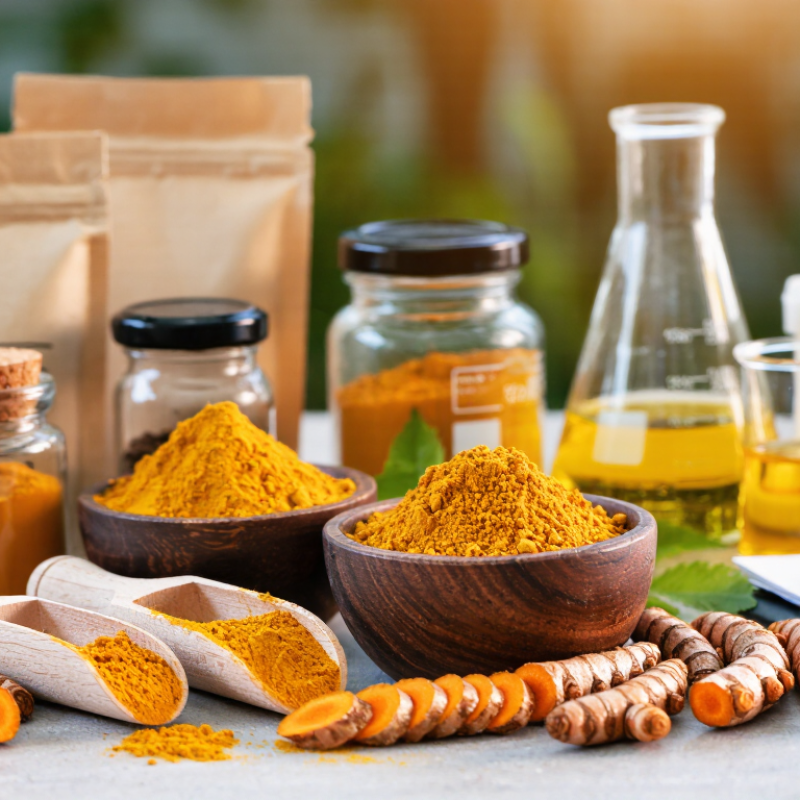
What Makes an Organic Turmeric Root Powder Supplier Reliable
10 Best Organic Turmeric Root Powder Suppliers?
A reliable organic turmeric root powder supplier shows evidence before making promises. Ask for a current organic certificate covering the exact product and processing site. The certificate should match the selling company, not merely a distant farm. That detail matters. A supplier should also provide batch-specific laboratory reports for curcumin content, pesticides, heavy metals, microbes, and moisture. Generic reports are weak evidence.
Traceability reveals practical experience. The supplier should identify the growing region, harvest period, drying method, milling location, and lot number. A sealed sample should match the production batch, including its golden color, earthy aroma, and fine texture. Ask how the powder is protected from heat, humidity, and cross-contact during storage. Keep records. A dependable technical team can explain testing methods without hiding behind vague phrases such as “premium quality.”
Reliability also appears in uncomfortable answers. Ask what happens when a batch fails inspection. A responsible supplier should describe quarantine procedures, retesting rules, and corrective actions. No supplier is flawless. However, transparent suppliers admit limitations and improve their controls. Check whether independent laboratories perform relevant tests, and verify that documents are recent and readable. Pricing deserves attention too: unusually low prices may reflect weaker testing, older stock, or inconsistent sourcing. A small trial order can reveal packaging quality, delivery accuracy, and communication speed before larger commitments. One overlooked issue is flavor variation. Soil, harvest timing, and drying conditions can change the powder’s taste, even when specifications remain acceptable.
| No. | Reliability Dimension | Recommended Supplier Evidence | Reliable-Supplier Benchmark | Why It Matters |
|---|---|---|---|---|
| 1 | Organic Certification | Current organic certificate showing the certified operator, product scope, facility location, certificate validity, and applicable market standard. | Verified Certificate can be checked directly with the relevant accredited certification body and matches the supplied product. |
“Organic” claims require documented compliance with the rules of the target market, such as USDA organic requirements or the applicable European Union organic regulation. |
| 2 | Batch-Level Traceability | Lot number, harvest or production date, country or region of origin, processing location, packing date, and one-step-back supplier records. | Complete records Each shipment can be traced from the finished powder back to the raw turmeric lot. |
Traceability supports targeted recalls, origin verification, and investigation of contamination or quality issues. |
| 3 | Independent Laboratory Testing | Recent certificate of analysis linked to the exact lot, with the laboratory’s accreditation information and test methods. | ISO/IEC 17025 lab Testing is performed by an appropriately accredited laboratory or an equivalent competent facility. |
ISO/IEC 17025 accreditation demonstrates that a laboratory has been assessed for technical competence and consistent testing practices. |
| 4 | Pesticide-Residue Control | Multi-residue pesticide report covering the requirements of the destination market, together with an organic farming control plan. | Passes applicable limits Results comply with the relevant maximum residue limits and organic production requirements. |
Organic certification does not remove the need for analytical verification, especially where cross-contamination or environmental residues are possible. |
| 5 | Microbiological Safety | Lot-specific results for relevant pathogens, yeast and mold, and total microbial counts, using clearly identified methods. | Specification compliant Results meet the buyer’s approved specification and the food-safety rules of the destination market. |
Turmeric powder is a low-moisture food, but spices can still carry microbial hazards if agricultural, processing, or storage controls are weak. |
| 6 | Heavy-Metal and Contaminant Control | Testing for contaminants relevant to the crop and market, such as lead, cadmium, arsenic, and mercury, with documented sampling procedures. | Risk-based testing Results comply with applicable legal limits and the customer’s contaminant specification. |
Soil, water, processing equipment, and environmental conditions can affect contaminant levels in botanical ingredients. |
| 7 | Identity and Adulteration Testing | Botanical identity confirmation, microscopy or equivalent identification, and suitable screening for undeclared fillers, dyes, or other turmeric substitutes. | Authenticity confirmed The material is identified as Curcuma longa root and matches the agreed product specification. |
Identity testing helps prevent substitution, dilution, unauthorized coloring, and other forms of botanical ingredient adulteration. |
| 8 | Processing and Hygiene Systems | Documented HACCP plan or equivalent preventive food-safety system, sanitation records, allergen controls, and pest-control records. | Preventive controls The facility operates a documented, regularly reviewed food-safety management system. |
Certification or implementation of HACCP-based controls reduces risks introduced during washing, drying, milling, blending, and packing. |
| 9 | Product Specification Consistency | Approved specification covering color, aroma, flavor, mesh size, moisture, foreign matter, curcuminoid declaration if applicable, packaging, and shelf life. | Lot-to-lot consistency Every lot is released against the same documented specification, with deviations formally investigated. |
Clear specifications prevent disagreements over quality and help buyers compare samples with delivered material. |
| 10 | Packaging, Storage, and Service | Food-grade packaging details, tamper evidence where appropriate, storage conditions, shelf-life support, shipping documents, and a documented complaint process. | Controlled supply Product remains protected from moisture, light, pests, and contamination, with responsive corrective-action support. |
Good packaging and communication protect powder quality after processing and make nonconformities easier to resolve. |
Related Posts
-
2026 Organic Ginger Extract Benefits and Uses for Global Buyers?
-
Innovative Directions for Best Ginger Powder Alternatives in 2025 Technology Evolution
-

Global Success of Best American Ginseng Extract Rising from China's Quality Standards
-
Unlocking the Benefits of Best Organic Kale Powder with Comprehensive Technical Specifications and Usage Guide
-
7 Insights on Why Apple Extract is Essential for Your Health and Wellbeing
-
Understanding the Quality Standards of Grape Fruit Seed Powder for Global Buyers